3 common Beagle behaviour problems (and how to fix them)
Remember: Your Beagle isn't being naughty. They have one of the best noses in the dog world, and they're doing what centuries of breeding designed them to do. Understanding their scent-driven nature is key to managing these behaviours.
Where do Beagles come from?
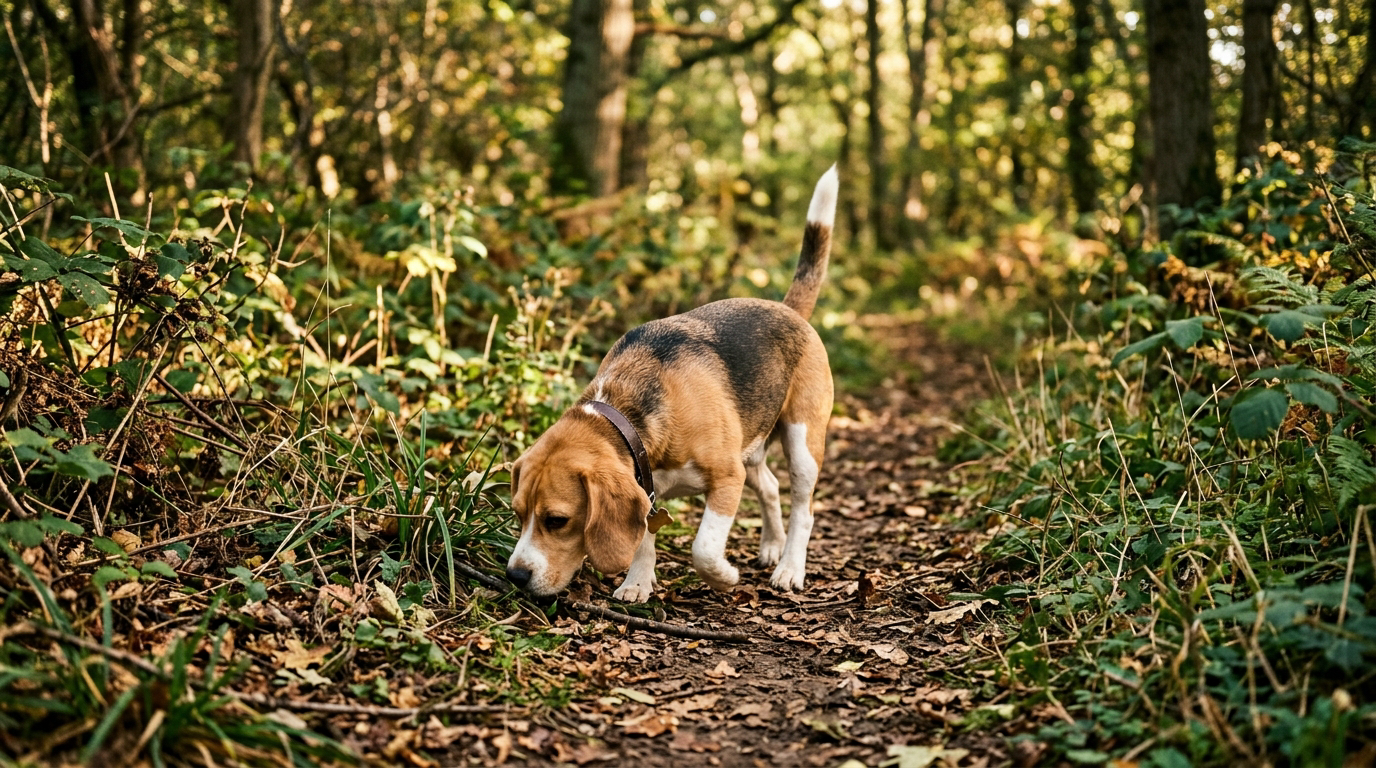
Beagles were developed in England over several centuries for rabbit and hare hunting with packs. The modern Beagle was refined in the 1800s. Emphasis was on scenting ability, stamina, and pack work. The name possibly comes from French "beugler" (to bellow) or "beag" (small). They were bred to work in large packs of 20-40 dogs, following scent trails for hours.
What were they bred to do?
- Track rabbits and hares by scent whilst running in packs
- Vocalise (bay/howl) constantly so hunters could follow by sound
- Follow scent trails hours old
- Track for 6-8 hours continuously
- Work cooperatively in large packs
- Follow prey through dense brush with their compact size
Beagles have one of the best noses in the dog world (estimated 220+ million scent receptors). Their voice was bred for volume and carrying distance. Their bay/howl carries for miles. They experience selective deafness when on scent (they literally cannot hear commands). They have pack mentality requiring minimal human direction once tracking. Food motivation sustains their energy during long hunts. They have a friendly temperament for living in large kennels with many dogs.
Why do Beagles have these behaviour problems?
Today, Beagles are primarily companion dogs. Some are still used for rabbit hunting in packs. Their scenting genetics remain incredibly strong. They live in a world dominated by smell that humans cannot comprehend.
Beagles are used extensively in detection work at airports and in agriculture due to their exceptional noses. But pet Beagles retain their full hunting drive with no appropriate outlets. Their nose-brain literally overrides everything else when they catch an interesting scent.
Problem 1: following scent and running away
What's happening: Your Beagle follows their nose and completely ignores your recall when they catch a scent.
Why it happens: Beagles were bred with a nose-brain that literally overrides all other inputs when on a scent trail. Their entire purpose was following scent trails for miles regardless of their handler's location. Once locked onto a scent, their brain shuts down to everything else. They were bred to work independently once tracking, not to stay near their person or respond to recalls.
The fix:
You need high-quality recall, built on relationship rather than bribery. You need to cut through their "nose tunnel vision" and get them to return. This means they must want to listen to you. You cannot bribe them to come back. If recall training isn't clicking on your own, 1:1 adult dog training can help you rebuild it properly.
- Use 30-50 foot long lines in all outdoor areas as safety nets whilst practising recalls. Never assume they'll come back once scenting starts.
- If you have a serious wanderer, whistle training is worth it. It takes real practice. Most people expect it to work after one blow of the whistle. It doesn't.
- Rotate between "structured" and "unstructured" walks throughout your time outdoors. This gives them time to explore whilst ensuring you retain control.
Beagle completely ignoring your recall? Our free community has specific whistle training protocols and long-line progression exercises. Get feedback on your recall training during live Q&As.
Problem 2: excessive howling and baying
What's happening: Your Beagle howls and bays, especially when they notice something interesting or are left alone.
Why it happens: They were specifically bred to vocalise loudly whilst tracking so hunters could follow the pack by sound across long distances and dense terrain. Their howling and baying was their primary job function, alerting humans to prey location. This vocalisation is hardwired and deeply satisfying to them, not something they can easily suppress.
The fix:
Accept that some level of vocalisation is breed-standard. You won't train it out completely, and shouting only adds more noise to the situation.
- When the baying starts, move calmly towards whatever's triggered it and lead your Beagle away without saying anything. Silence is the interruption, not a word.
- If the baying continues, take your Beagle to a separate room and leave them there without speaking. Once you get 30 seconds of calm, let them back out. Still no talking.
- Repeat this every time it happens. Consistency matters more than any single response.
Neighbours complaining about the howling? Community members share what's worked for managing excessive baying and help you set realistic expectations for this vocal breed.
Problem 3: food obsession and counter surfing
What's happening: Your Beagle steals food from counters and is obsessed with eating anything they can find.
Why it happens: As pack hunting dogs, they evolved to be opportunistic foragers who eat whenever food is available. They needed to fuel long hunts, and competition with pack members meant eating fast and often. Food drive is more intense than most breeds due to hunting heritage.
The fix:
Management is critical and non-negotiable. Never leave food within reach. Ask for a calm sit-wait before you put the bowl down. This is impulse control. It's not about who eats first. Never leave any food out. Your Beagle will eat anything they can reach.
When counter surfing occurs, stay silent and calm. Lead your Beagle away using a short lead. Place them in a quiet room for 5-10 minutes without speaking. If they repeat immediately, double the time.
- Keep control of what's accessible. Never leave out rawhide, pig's ears, or bones. If food is left in the bowl, pick it up.
- Ask for a sit-wait before every meal. If they won't settle, pick the bowl back up and try again in a minute.
- Set them up for success. Don't leave scraps out anywhere they can reach.
Can't stop the counter surfing? Get troubleshooting help for your specific kitchen layout and learn how other Beagle owners manage food obsession in the community.
Is a Beagle right for a new owner?
Beagles can be excellent for the right first-time owner.
An excellent family dog - Beagles are friendly and patient with children. They were bred to work in large packs, so they're naturally social and good-natured. Their size makes them manageable for families.
A sturdy, low-maintenance dog - Beagles are robust and healthy. Their short coat requires minimal grooming, weekly brushing is enough. They're physically easy to care for compared to high-maintenance breeds.
A happy, cheerful personality - Beagles are typically happy dogs with a playful nature. They bring joy and laughter to homes. Their friendly temperament makes them pleasant to live with.
Good with other pets - Their pack heritage means they usually get along well with other dogs. They're not aggressive or dominant. This makes them suitable for multi-pet households.
Moderate exercise needs - Whilst they need daily walks (about 1 hour), they're not as demanding as working breeds. They're active enough to be fun but not exhausting for most families.
Beagles do need secure gardens (they will follow their nose and escape). They're vocal, which can be challenging in apartments. But if you can manage their scent drive and accept their howling, they're wonderful family dogs. Not sure if a Beagle fits your home? Book a free meet and greet and we'll talk it through.
Get the full support system for your Beagle
This article gives you real solutions you can start using today. But training a Beagle takes ongoing work, not a one-time fix.
That's why we created our free Skool community - to give you continuous support every step of the way.
Inside the community, you'll get:
- Weekly live Q&A sessions where you can ask about your specific Beagle and get personalised advice from experienced trainers
- Full breed-specific courses covering everything from puppy raising to advanced behaviour modification
- A supportive community of other Beagle owners who understand exactly what you're going through
- Video demonstrations so you can see techniques in action, not only read about them
- Troubleshooting help when things don't go to plan (because they won't always)
- Updated resources as we add new courses and training blueprints
Best part? It's completely free. No subscription. No catch. Only dog owners helping dog owners.
Join The Toe Beans Co community today and get the ongoing support you need to build the best relationship with your Beagle.