Ready To Help Your Best Mate

We offer both free and paid support for all dog owners looking to do the best for their best mate. Access our free online community with breed guides, behavioural courses and weekly online Q&As or book a free meet and greet to discuss your dog training.

Bernese Mountain Dogs: A Good Time, Not A Long Time

3 Bernese Mountain Dog Behavioural Issues Nobody Warns You About

Let me guess why you're here:

  1. You own a Bernese Mountain Dog who follows you to the bathroom (and cries outside the door)
  2. You're thinking about getting one because they're "perfect family dogs"
  3. You just googled "Bernese Mountain Dog lifespan" and your heart sank

I'm going to be direct with you because I think you deserve honesty: Bernese Mountain Dogs are incredible, gentle, loving souls. They're also one of the most heartbreaking breeds to own.

Not because they're difficult to train. Not because they're aggressive or reactive. But because you're going to fall completely in love with a dog whose average lifespan is 6-8 years.

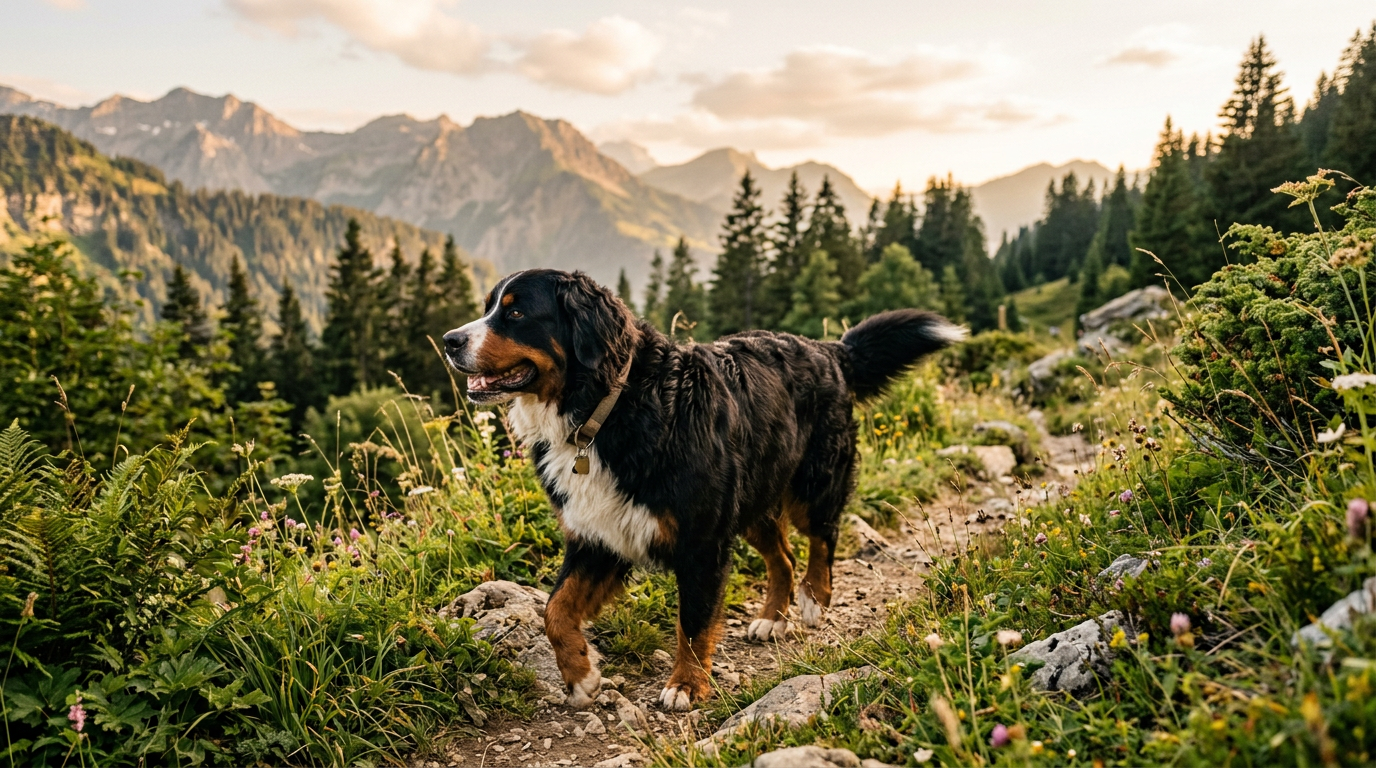
Most breed guides will gloss over this. They'll show you photos of beautiful tri-colour dogs playing with children and tell you they're "gentle giants" and "perfect for families." All of that is true. But it's not the whole truth.

Let's talk about what Bernese Mountain Dog ownership actually looks like - the behavioural challenges, the health reality, and what you can actually do about it.

Before We Start: Our Training Philosophy

At The Toe Beans Co, we completely disagree with any method that uses fear, force, pain, or aggression. This has been mostly removed from modern dog training, but it still exists in pockets.

Here's what we believe: any ethical method done consistently is more likely to drive results than any other method done inconsistently. Different human and dog personalities match better with different approaches, but consistency always wins.

Our trainers work within the Relational Leadership quadrant - calm, consistent leadership creates safety and trust. That's the lens for everything we discuss here.

Understanding What You've Got: The Bernese Background

Bernese Mountain Dogs are ancient breeds from the Swiss Alps, specifically the Bern region. We're talking over 2,000 years of history, dating back to when Roman legions brought large mastiff-type dogs to Switzerland.

Through centuries of farm work in isolated Swiss mountain valleys, they developed into something specific: large, strong, calm dogs suited to mountain farm life.

Their job was threefold:

  1. Drafting - pulling carts loaded with milk, cheese, and produce to market (they could pull over 1,000 pounds)
  2. Livestock droving - moving cattle between pastures and to market
  3. Farm companionship/guarding - alerting to strangers but not aggressive

They were bred to be calm, steady workers. Gentle while being large enough to deter threats. They worked long days but not at high intensity.

That genetics - the calm temperament, the intense family bonding, the need to be near their people - that's what's wired into your dog's brain today.

And it creates some very specific challenges.

Issue #1: Short Lifespans and Cancer Rates (The Elephant in the Room)

Why This Matters for Behaviour

I know this isn't technically a "behavioural issue," but it profoundly affects behaviour and ownership. So we're addressing it first.

Bernese Mountain Dogs have the shortest average lifespan of any large breed: 6-8 years. Many die at 5-6 years old.

Over 50% die from cancer. Histiocytic sarcoma is particularly aggressive and common in the breed.

Why? Limited gene pool from breed revival. Breeding for appearance over health. Lack of genetic diversity.

This isn't just sad. It affects every decision you make about training, socialisation, and quality of life. You're not planning for a 12-year relationship. You're cramming everything into 6-8 years if you're lucky.

What You Can Actually Do

Only purchase from breeders doing extensive health testing:

  • OFA hip/elbow certification
  • Cardiac clearance
  • Eye clearance
  • Genetic testing for DM and VWD minimum

Interview the breeder about lifespan in their lines. What's the average age of death? What do dogs die from? Are they breeding away from cancer lines?

Purchase pet insurance immediately that covers cancer and hereditary conditions. Bernese are expensive to own due to vet care. Budget £2,000-5,000+ annually even when "healthy."

Watch for early cancer signs:

  • Unexplained lumps
  • Lethargy
  • Loss of appetite
  • Weight loss
  • Limping

Aggressive early treatment sometimes extends lifespan. Yearly exams aren't enough - these dogs need thorough monitoring.

Appreciate their presence. These dogs give their whole hearts for a short time. Make their years count with training, adventures, and love.

This is the reality. I'm not telling you this to discourage you from the breed - I'm telling you this because you deserve to go in with your eyes open.

Issue #2: Over-Excitement with Physical Affection

Why This Happens

Similar to Newfoundlands, Rotties, and Boxers, Bernese love to give you affection. The problem? They're massive dogs who sometimes forget they're not lap-sized puppies anymore.

Many Bernese owners talk about the breed's personality as a core reason for getting the dog. That gentle, loving, affectionate nature is genuinely wonderful. But a 90-pound dog jumping on you in excitement isn't cute - it's dangerous.

Combined with their size and strength, this becomes a management issue quickly.

The Real Solution

Start training at 8 weeks before size is an issue. Every behaviour you allow at 15 pounds becomes a 95-pound habit.

Implement management immediately:

No jumping ever. Everyone in the household must be consistent. When they jump, turn away and ignore until four paws are on the floor. No exceptions. No "just this once."

Loose leash walking from first walk. Use the "tree method" - the moment they pull, you stop. You become a tree. Wait until the leash loosens, then continue. Pull = stop. Every. Single. Time.

No furniture until invited. This prevents resource guarding and maintains your control of the environment.

Exercise appropriately for giant breeds: Avoid extensive running or jumping until growth plates close (18-24 months). Focus on mental work and moderate walks during growth. Their joints are developing - you can cause permanent damage with too much high-impact exercise too young.

Use appropriate equipment: Front-clip harness for walking. You need mechanical advantage with giant breeds during training.

Accept their personality. They won't be energetic, eager Labs. They're calm, gentle giants requiring patience and motivation, not force. They never respond well to corrections and can become quite shy. They're sensitive souls.

Issue #3: Separation Anxiety & Velcro Behaviour

Why This is Common in Bernese

These were bred as farm dogs working alongside farmers all day. They're "shadow dogs" - following their person everywhere, bonding intensely to family, struggling when separated.

They're not independent. They were never meant to be. They were bred for constant companionship.

Their gentle, sensitive temperament means separation causes genuine distress.

Many owners inadvertently create separation anxiety by:

  • Allowing constant companionship (working from home, retirement, COVID puppies)
  • Never teaching independence
  • Then expecting them to handle absences without preparation

The Real Solution

Practice mini-departures 40-50 times on weekends:

Leave for 30 seconds. Return and ignore completely for 5 minutes. They must be calm before you acknowledge them.

When you come back into the room, let them calm down before you acknowledge them. No excited greetings. Boring returns.

Gradually increase duration, but keep it random. Sometimes 30 seconds, sometimes 2 minutes, sometimes 5 minutes. Build unpredictability so they can't anticipate your return.

Teach "settle with purpose":

Give them a specific job like "watch the house" when alone. Make it a task rather than abandonment. Use consistent language and routine.

Desensitise all leaving rituals:

Pick up keys 20 times without leaving before using them to actually depart. Put on shoes, pick up your bag, jingle keys randomly throughout the day without leaving. This reduces their predictive power.

Do your "leaving routine" then just go to another room. They need to learn these cues don't always mean you're leaving.

Graduated departure cues:

Make your leaving predictable and non-threatening. Consistent routine reduces anxiety. They know what to expect.

The key insight: Independence must be taught deliberately. It won't happen naturally with this breed.

What the Breed Guides Won't Tell You

Bernese Mountain Dogs are marketed as "perfect family dogs." And in the right situation, with the right preparation, they can be wonderful.

But here's what they don't tell you:

Their massive size requires extensive training. An unmanaged 90-pound dog is dangerous, especially around children and elderly people.

Their guardian instincts require socialisation to prevent reactivity. They're naturally wary of strangers - without proper socialisation, this can become problematic.

Their health issues make ownership expensive and emotionally devastating. You need to be financially and emotionally prepared for this reality.

Their velcro nature means they struggle being left alone. If you work long hours away from home, this breed will struggle unless you put serious work into independence training.

They're highly temperature-sensitive. They overheat easily and should never live in hot climates. If you're in Australia, Southern US, or anywhere with hot summers, seriously reconsider this breed.

Well-bred Bernese from health-tested lines, placed with families prepared for giant breed management and short lifespans, can be wonderful. But most people are unprepared for the reality.

The Honest Truth About Bernese Ownership

I'm not trying to talk you out of this breed. I'm trying to prepare you for reality.

If you get a Bernese Mountain Dog:

  • You're signing up for 6-8 years, not 12-14
  • You're going to spend thousands on vet care
  • You're going to cry when they die younger than you expected
  • You're going to have to manage their size and strength from day one
  • You're going to need to teach independence deliberately
  • You're going to need to accept being followed everywhere

But you're also getting:

  • One of the gentlest, sweetest souls in the dog world
  • A loyal companion who loves you with everything they have
  • A dog who's patient with children
  • A calm presence in your home
  • Years of incredible memories (even if there aren't as many as you hoped)

The question isn't "are Bernese Mountain Dogs good dogs?" They're incredible dogs.

The question is "are you prepared for what Bernese ownership actually requires?"

What Next?

If you're struggling with your Bernese's behaviour, or you're thinking about getting one and want proper preparation, join our free community at The Toe Beans Co.

We have owners from around the world at all stages of the dog ownership journey. Weekly Q&As where you can ask questions. Comprehensive training resources. Support from people who understand what you're going through.

No catch. No monthly subscription. Just dog owners who want the best for their dogs - and support from people who get it.

Back to blog

Ready To Help Your Best Mate

We offer both free and paid support for all dog owners looking to do the best for their best mate. Access our free online community with breed guides, behavioural courses and weekly online Q&As or book a free meet and greet to discuss your dog training.