3 Common Blue Heeler Behaviour Problems (And How To Fix Them)
Remember: Blue Heelers are one of the toughest, most loyal dogs you'll ever meet. They were built to survive the Australian outback and work harder than almost any other breed. That intensity and dedication can become your greatest asset when channelled properly.
Where Do Blue Heelers Come From?
Blue Heelers were developed in 1800s Australia. Breeders crossed British herding dogs with Dingoes to create a dog that could handle extreme heat. Later, they added Dalmatians, Kelpies, and Bull Terriers to refine the breed.
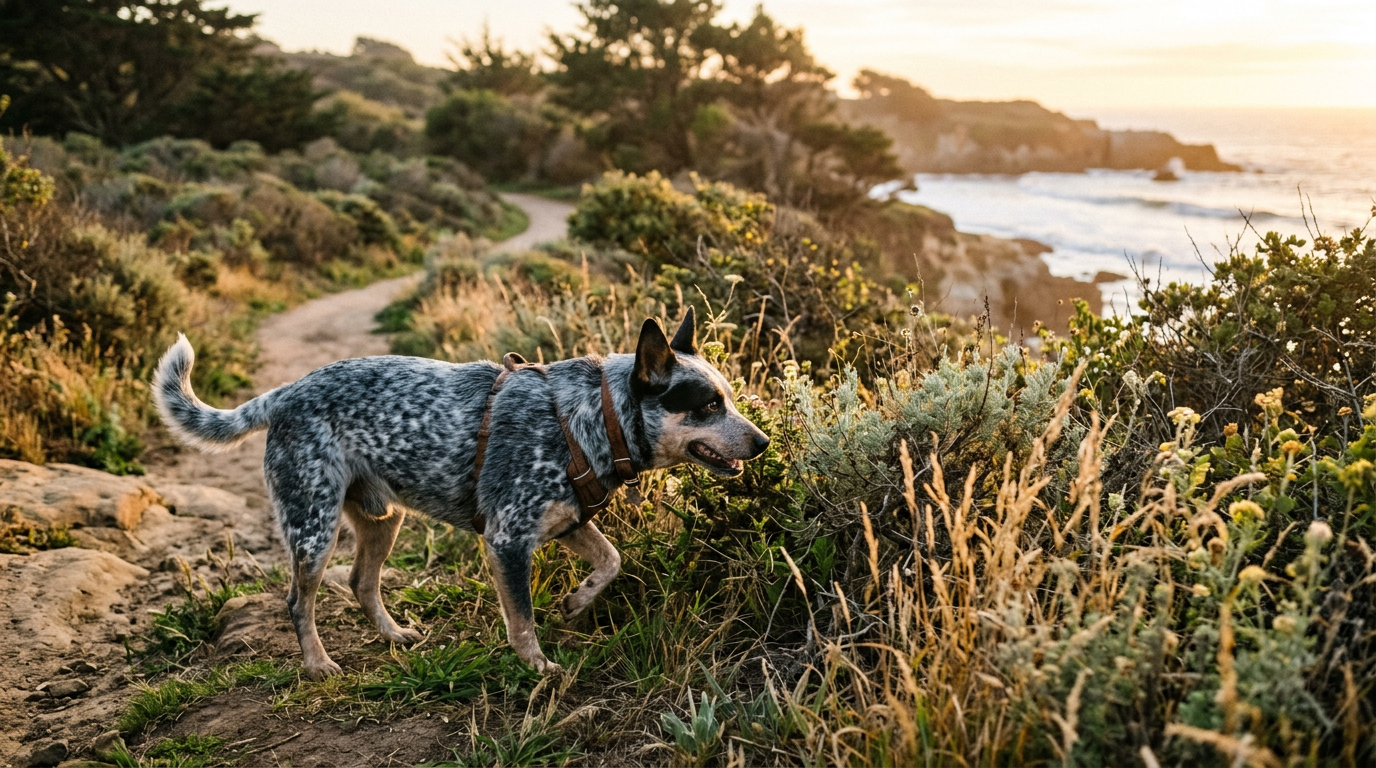
What were they bred to do?
- Drive cattle across vast Australian outback distances (up to 50+ miles daily)
- Heel cattle by biting their heels to move them forward
- Work independently making decisions without constant handler input
- Withstand kicks from cattle whilst maintaining focus
- Survive in harsh outback conditions with minimal resources
Blue Heelers have extreme stamina and heat tolerance bred for outback work. They have a natural heeling behaviour that involves nipping. They can tolerate high levels of pain. They were built to be tough enough to withstand cattle kicks. Their work drive borders on obsessive. They're highly intelligent but independent. They're suspicious of strangers because they protected cattle from thieves and dingoes. They bond strongly with one person. They were bred to work alone with minimal human contact for days.
Why Do Blue Heelers Have These Behaviour Problems?
Many Blue Heelers now live as pets in urban or suburban homes. But their genetics remain absolutely unchanged. They still have the drive and stamina for all-day cattle work.
The mismatch between their intense working needs and modern pet life creates some of the most severe behavioural issues of any breed. These aren't problems with your dog. These are features bred into them over generations to make them exceptional at their job.
Understanding this helps you see that your Blue Heeler isn't being difficult. They're just doing what they were designed to do.
Problem 1: Nipping & Mouthing (Especially Heels)
What's happening: Your Blue Heeler nips at heels, ankles, or anything that moves away from them.
Why it happens: They were literally bred to bite cattle on the heels. "Heeling" is their primary job. The urge to nip at moving objects is overwhelming and involuntary.
The fix:
- When nipping occurs, calmly take them by the collar and say nothing
- Place them in a separate room for 5-10 minutes every single time
- If they nip again upon release, double the time to 20 minutes
- Use a house lead when children are present to prevent chase situations
- Never allow children to run away or scream near your dog
- Get your entire family involved in training and be consistent
Struggling with heel nipping that won't stop? Join our free Skool community for live Q&A sessions where you can get personalised help on your specific situation, plus video demonstrations showing exactly how to implement these techniques with your Blue Heeler.
Problem 2: Extreme Exercise Needs & Destructiveness
What's happening: Your Blue Heeler is destroying furniture, digging holes, or showing excessive energy despite daily walks.
Why it happens: They were bred to drive cattle up to 50 miles per day in Australian heat. A walk doesn't even begin to touch their needs. They need physical and mental work from sunup to sundown.
The fix:
- Join a local dog sports club or herding club for structured outlets
- Teach complex commands that have no real-life use but tire them mentally
- Provide 1.5-2+ hours of exercise daily minimum
- Consider agility, flyball, or herding trials as regular activities
Is destructiveness taking over your home? Our Skool community has dedicated courses on mental stimulation techniques and members who've successfully channelled their Blue Heeler's energy. Get troubleshooting help when standard exercise isn't enough.
Problem 3: Suspicion of Strangers & One-Person Bonding
What's happening: Your Blue Heeler bonds intensely with one person but acts suspicious or reactive around strangers.
Why it happens: They were bred to work independently with a single handler in remote areas. They needed to be suspicious and territorial to protect cattle from dingoes and thieves. Friendliness toward strangers was actively bred against.
The fix:
- Socialise extensively before 16 weeks (this is critical)
- Use controlled introductions where visitors completely ignore your dog
- Never force interactions with strangers
- Get everyone in the family involved in training and feeding
- Use the calm freeze technique when strangers appear
- Place yourself between your dog and the person if needed
Worried about stranger reactivity developing? Our community provides week-by-week socialisation protocols and connects you with other Blue Heeler owners who understand exactly what you're going through.
Is a Blue Heeler Right for a New Owner?
A Blue Heeler can work for new owners who understand what they're signing up for.
A dog that thrives on work - If you want a dog that can join you on long hikes, runs, or outdoor adventures every single day, Blue Heelers will keep pace with you for two hours and then look around for what is next.
A loyal, devoted bond - Blue Heelers form one of the strongest bonds of any breed. Once they're your dog, they're YOUR dog. That loyalty is unmatched.
An intelligent problem-solver - These dogs work things out fast. They learn quickly and love having a job to do. Training can be deeply rewarding.
A low-maintenance coat - Weekly brushing is enough. They're not high-maintenance in the grooming department.
A long-lived companion - With a 12-16 year lifespan, Blue Heelers stick around. You're getting a long-term relationship.
Blue Heelers demand serious commitment. But if you're ready to meet their needs, you'll have one of the most dedicated, capable dogs you could ask for.
Get Continued Support Managing Your Blue Heeler's Drive
The heel-nipping, the digging, the destructive energy come evening - these aren't one-read fixes. A herding breed with this much drive needs ongoing management, not a single article.
That's why we created our free Skool community, to give you continuous support as your Blue Heeler's needs change.
Inside the community, you'll get:
- Weekly live Q&A sessions where you can ask about YOUR specific Blue Heeler's nipping, herding or destructive habits and get personalised advice from experienced trainers
- Herding-breed specific courses covering structured outlets, mental stimulation and channelling working drive into everyday life
- A supportive community of other Blue Heeler owners managing the same nipping, high energy and one-person bonding traits
- Video demonstrations of the collar-and-remove technique and calm freeze method in action, not just described on a page
- Troubleshooting help when your dog is still nipping or destroying furniture after weeks of consistent training
- Updated resources as we add new courses on herding breeds and working-dog behaviour
Best part? It's completely free. No subscription. No catch. Just dog owners helping dog owners.
Join The Toe Beans Co community today and get the ongoing support you need to keep up with your Blue Heeler's drive.