3 Common Boxer Behaviour Problems (And How To Fix Them)
Remember: Your Boxer was bred to be powerful and surprisingly gentle with family. The same genetics that make them playful, loving companions also create challenges that need understanding, not punishment.
Where Do Boxers Come From?
The Boxer was developed in Germany in the 1800s from now-extinct Bullenbeisser dogs (bull biters) crossed with British Bulldogs. Munich hunters created them wanting a versatile dog for hunting large game (boar, bear, deer). Later they were refined for butcher work, cattle driving, and eventually police and military service. The breed was standardised in the 1890s with emphasis on working ability.
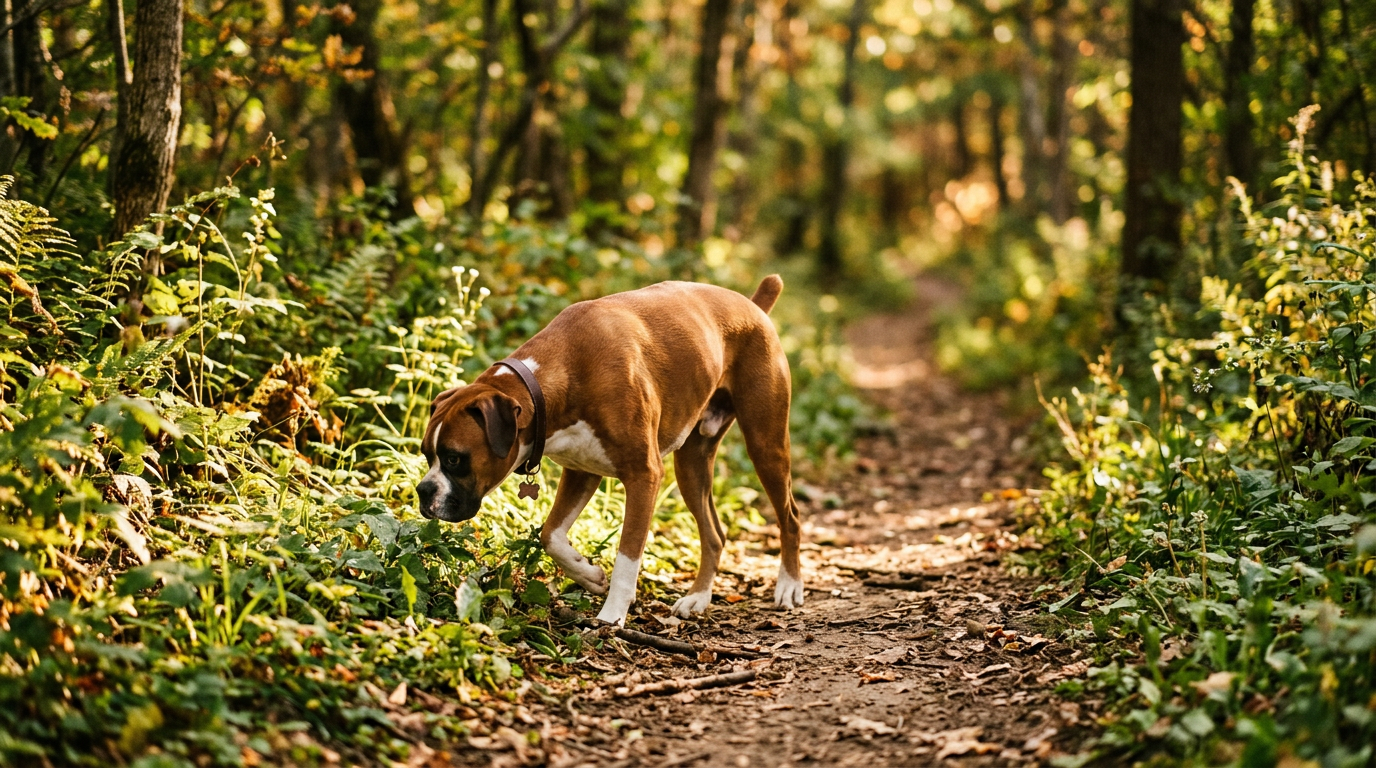
What were they bred to do?
- Bull-baiting and holding large game by the nose until hunters arrived
- Hold large animals steady, taking kicks and thrashing without letting go
- Drive cattle and guard butcher shops
- Work in police and military roles
- Make independent decisions whilst hunting dangerous game
- Be gentle with their handler's family despite their fighting background
Key breeding traits: Powerful build with strong jaws and athletic ability, tendency to use front paws for interaction (the "boxing" behaviour), high energy and playfulness that extends well into adulthood, stubborn independence from bull-baiting heritage, strong protective instinct for family, delayed maturity (puppyhood lasting 2-3 years), and surprising gentleness with children despite their tough appearance. Their exuberance and lack of awareness of their size creates management challenges.
Why Do Boxers Have These Behaviour Problems?
Your Boxer's behaviour issues aren't failures. They're working dog genetics showing up in family life.
Now primarily family companions and occasionally working dogs (police, protection), their working genetics remain strong but pet life provides no outlet for their power and energy. The breed has been refined to be more family-friendly, but their extended puppyhood and physical exuberance remain challenging for many owners.
Their "boxing" heritage creates a tendency to use front paws for interaction. They were bred to physically engage with large animals and have retained this full-body greeting style. Their enthusiasm and complete lack of awareness of their size and strength creates problems, especially with children and elderly people.
Problem 1: Jumping & Excessive Physical Exuberance
What's happening: Your Boxer jumps on people, uses their front paws during greetings, and gets physically overwhelming with their enthusiasm.
Why it happens: Their "boxing" heritage creates a tendency to use front paws for interaction. This is literally where their name comes from. They were bred to physically engage with large animals and have retained this full-body greeting style. Their enthusiasm and complete lack of awareness of their size and strength creates problems, especially with children and elderly people.
The fix:
- When you enter the home, ignore your dog. Any verbal communication or affection will reinforce this behaviour.
- Have all visitors and family completely ignore your dog for the first 5 minutes (no eye contact, touching, or talking).
- Once they are calm and relaxed, you can then call them over for affection.
- You can use treats to train a "4 paws" command, but this isn't a long-term solution on its own.
- Don't be afraid to use another room if greeting is excessive. Calmly place them in a separate room for a few minutes to let them calm down.
- Then, without speaking to them, just let them back into the room with you. This isn't punishment. It's giving them a chance to calm down and then rejoin you.
Struggling with a Boxer who knocks everyone over? Our Skool community has live Q&A sessions where you can get personalised advice on managing jumping behaviour, plus video demonstrations of calm greeting techniques that actually work.
Problem 2: Extended Puppyhood & Hyperactivity
What's happening: Your Boxer maintains puppy energy and impulsiveness far longer than other breeds, sometimes up to 3 years old.
Why it happens: Boxers have one of the longest puppyhood periods of any breed (up to 3 years), maintaining puppy energy and impulsiveness far longer than other breeds. This extended adolescence was unintentional but has become a breed characteristic. Their working drive and energy needs remain extremely high throughout this extended youth, making them exhausting companions during this period.
The fix:
- Accept the timeline and prepare for an extended training period. They simply won't mature as quickly as other breeds, and pushing them faster doesn't work.
- Keep up your routine and make sure you're providing sufficient mental stimulation daily through training.
- Use crate training for enforced naps. Overtired Boxers become more hyperactive, not less. They need 14-16 hours of sleep daily even at 18-24 months old.
- Provide appropriate outlets for mouthing and physical play through structured tug sessions with clear rules: play starts and stops on your command, they must release when asked.
- If your Boxer becomes hyperactive on the lead, simply stop. Place your back to whatever they're focused on and take them calmly by the collar. Hold them until they give a good yawn or shake. This could take 5 minutes.
Exhausted by your high-energy Boxer who won't calm down? Join our community for troubleshooting help on managing extended puppyhood, plus learn structured play sessions that provide appropriate outlets for their energy.
Problem 3: Stubbornness & Selective Hearing
What's happening: Your Boxer ignores commands they know perfectly well, especially when something more interesting is happening.
Why it happens: Bred to make independent decisions whilst hunting dangerous game and to be tough enough to withstand bull-baiting without giving up. Their genetics include strong-willed determination. They were never bred for blind obedience, only for working independently. You cannot win a Boxer with a bribe. They need to want to choose to follow you. This is only achieved by being a high-quality decision maker in their eyes.
The fix:
- Make sure you don't allow your Boxer to control food by leaving food out or hiding bones. If you put any food down and your Boxer chooses not to eat it immediately, pick it up.
- A Boxer's stubbornness and extended puppyhood means you need to constantly practise recall. Make sure you're doing your recall lottery (and including tug toys in that) and use a long line to keep control.
- These dogs will test you for years. The more decisive you can be, the more likely they are to understand there is nothing to be gained from this. The quicker they will ease up.
- Strong calm leadership is the most effective tool to improving behaviour. The independence bred into dogs that exhibit stubbornness makes winning their mind more important than any bribe.
Fed up with a Boxer who only listens when they feel like it? Our community provides live help sessions where you can learn how to build genuine leadership with your Boxer, plus connect with other owners managing stubborn behaviour.
Is a Boxer Right for a New Owner?
A Boxer can be an excellent choice if you're looking for certain qualities.
An excellent family dog - Boxers are known for being wonderful with children. Despite their tough appearance, they have surprising gentleness with kids and strong protective instincts for family. They genuinely love being part of family life.
A playful, fun-loving companion - If you want a dog who maintains playfulness and enthusiasm well into adulthood, Boxers excel at this. They bring energy and joy to active families who appreciate their exuberance.
A loyal, protective dog - Boxers have strong protective instincts for their family. They're naturally watchful and will alert you to anything unusual, providing both companionship and security.
A low-maintenance coat - Boxers have short, easy-care coats. Weekly brushing keeps them comfortable, and they don't require professional grooming or complicated coat care.
An athletic, active companion - If you're active and want a dog who can keep up with running, hiking, and outdoor adventures, Boxers have the stamina and athleticism to match your energy.
Owning a Boxer is a commitment to managing extended puppyhood and providing consistent training for years. They need patient, experienced handlers who can provide structure and outlets for their energy. But if you want a playful, loving, protective dog who brings endless enthusiasm to family life, Boxers are exceptional.
Every Boxer I've worked with needed a real outlet for that energy before anything else clicked. Skip the exercise and every other piece of training gets harder.
Get the Full Support System for Your Boxer
A Boxer's energy and jumping don't fade with age the way some breeds do. Most owners need a few weeks of consistent handling before the excitement settles into something you can actually live with.
That's why we created our free Skool community, to give you continuous support every step of the way.
Inside the community, you'll get:
- Live Q&A where you can bring your Boxer's specific jumping or chewing pattern
- Courses that cover the puppy stage through to managing an adult Boxer's energy long-term
- Other Boxer owners in the community who know exactly what 'cuddle monster with no brakes' means
- Video walkthroughs of the redirection techniques covered here
- Support for the setbacks, because Boxers test consistency more than most breeds
- New material as the course library expands
Best part? It's completely free. No subscription. No catch. Just dog owners helping dog owners.
Join The Toe Beans Co community today and get the ongoing support you need to build the best relationship with your Boxer.