
Cockapoo: The OG Doodle?
When bred well, they combine the friendly, social nature of Cocker Spaniels with Poodle intelligence.

3 common Cockapoo behaviour problems (and how to fix them)
Cockapoos bark at everything, fight you on ear handling, and shadow you from room to room. None of that means you got a difficult dog. It means you got two breeds built for close handler contact and a strong voice, stacked into one small, clever body, and nobody told you how to manage either half.
Where do Cockapoos come from?
Cockapoos are one of the oldest designer dog crosses. They date back to the 1960s in the United States. Early breeders wanted to combine Cocker Spaniel friendliness with Poodle intelligence and low-shedding coats.
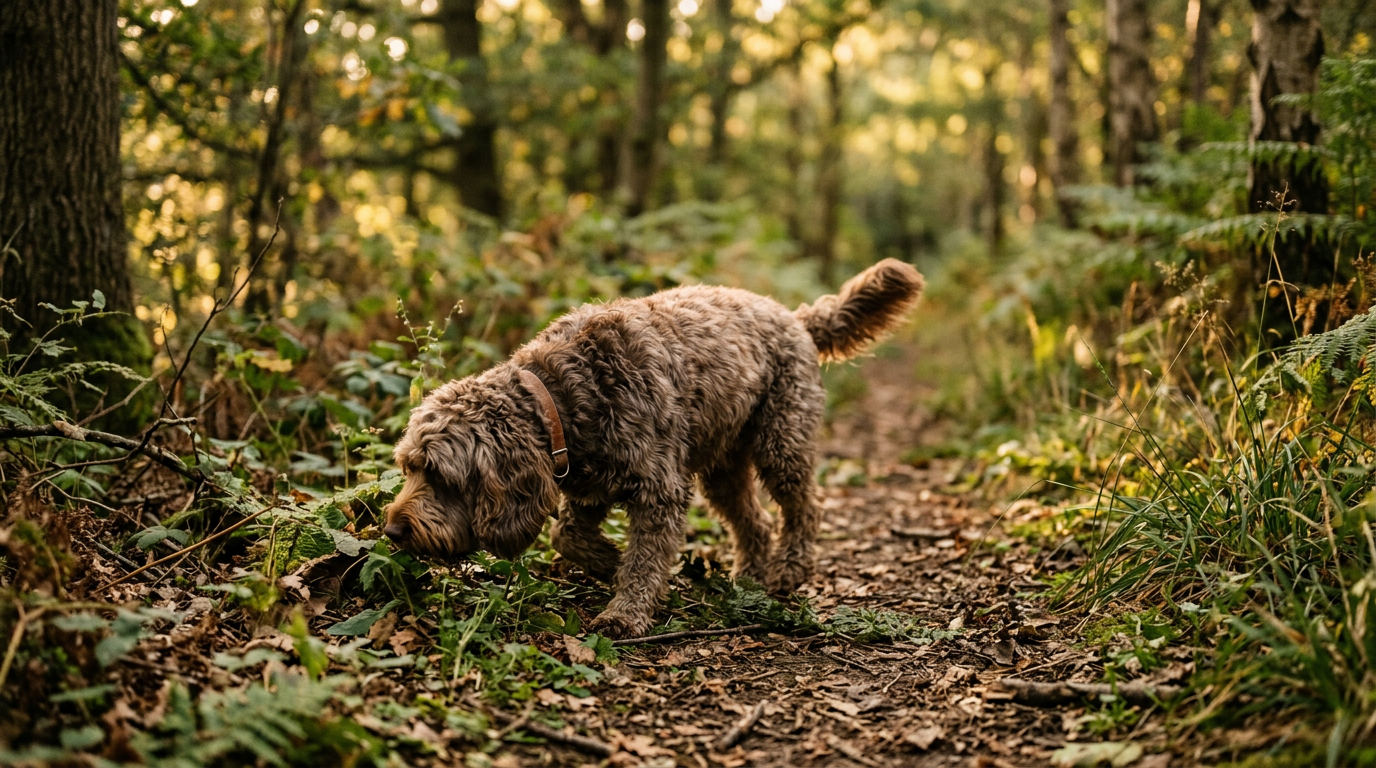
However, modern breeding is mostly done by backyard breeders. Most Cockapoos are F1 crosses. This means variation in size, coat type, and temperament that no puppy photo will tell you about. An F1 is a genetic lottery rather than a standardised breed, and the breeder genuinely cannot tell you where your puppy will land between its Cocker Spaniel parent and its Poodle parent. So go and meet both parents, and read those two dogs rather than the cross name or the description on the ad.
What were they bred to do?
- Be a family dog
- Provide companionship with lower shedding
- Combine the gentle nature of both parent breeds
Key breeding traits: Of all the doodles, Cockapoos have the narrowest behavioural variation when bred well. They're friendly and social from both breeds. Energy levels range from moderate to high depending on which parent they favour. Their coats need regular professional grooming, whatever the breeder told you at pickup.
Why do Cockapoos have these behaviour problems?
The popularity of Cockapoos has led to mass production. Most come from breeders prioritising profit over health and temperament. American Cocker Spaniels were bred down from working gun dogs to show dogs and pets. Poodles were originally water retrievers requiring high intelligence and handler focus. Mix these breeds and you get unpredictable combinations. You cannot predict which you'll get until adolescence.
Problem 1: Barking and vocalisation
What's happening: Your Cockapoo barks at sounds outside, at people passing, out of excitement, boredom, and to get your attention.
Why it happens: Both parent breeds are genetically wired to use their voices. Cocker Spaniels were bred to flush birds. Poodles are alert dogs bred to warn of strangers. Their intelligence means they work out fast that barking gets a response.
These are actually two different problems, and they need two different responses.
Alert barking (a knock, a dog walking past, a sound outside) is your Cockapoo doing its job. Acknowledge it once, calmly, so they know you've heard it. If they don't settle, go to them and acknowledge it again. If it carries on past that, remove them calmly to another room for a few minutes.
Demand barking (barking at you, for you) is a different animal. No response works here, not eye contact, not a raised hand, nothing. If it keeps going, a calm removal for a proper reset, five to twenty minutes rather than a few seconds, and longer again if it starts up the moment you let them back in. Release only once they've actually gone quiet, not because a timer ran out.
Yelling doesn't help either type. From your Cockapoo's perspective, you've just joined in.
Bark rate goes down fast with the right response in both cases. It rarely disappears completely, and for two breeds built to use their voice, that's a fair trade.
Struggling with barking that isn't settling? Book a 1:1 session and we'll work through your Cockapoo's specific triggers, or join our live Q&A sessions for video demonstrations of both responses in action.
Problem 2: Ear infections and grooming sensitivity
What's happening: Your Cockapoo shakes their head, scratches their ears, or snaps when you try to touch them.
Why it happens: Both parent breeds have floppy ears that trap moisture and restrict airflow. Cocker Spaniels are notorious for chronic ear infections. Poodles have hair that grows in the ear canal and needs regular plucking.
The fix:
- Stay neutral. Soothing a flinch with "it's okay, it's okay" confirms to your Cockapoo that there's something to worry about. Calm, slightly bored energy tells them there isn't.
- Start with a light touch, not a full ear check, and only build up once they're relaxed at that level. Puppies who start this in the Complete Puppy Program from 8 weeks rarely develop the resistance at all.
- Reward after a calm moment, not during a flinch. A treat mid-reaction rewards the reaction.
- Never hold your dog down to get through a grooming task they're fighting. Back off, shorten the session, and rebuild from a lower intensity next time.
- At the first sign of trouble (head shaking, smell, redness), see your vet.
Need help getting your Cockapoo comfortable with handling? Our community has video walkthroughs showing exactly how to desensitise your dog to grooming.
Problem 3: Co-dependency
What's happening: Your Cockapoo follows you everywhere, panics when left alone, and constantly demands attention.
Why it happens: Both breeds were bred to work closely with their handler, so they're wired for near-constant companionship. Some of it is temperament. Some of it is your Cockapoo deciding it's their job to keep track of everyone in the house, and panicking when they can't. Plenty of Cockapoos were also bought during lockdowns as full-time company, then suddenly left alone for eight-hour days.
The fix:
- Reward calm and independence. If your Cockapoo is settled across the room and not asking for anything, that's the moment for quiet praise or a treat, not when they're pawing at you.
- Don't comfort a dog that's actively anxious or attention-seeking, not with a pat, not with baby talk, not with a treat to quiet them down. It tells them the clingy state is what gets your attention.
- Skip the big departure and the big hello. Leave without a fuss, and ignore your Cockapoo for a few minutes after you walk back in, even if they're desperate to see you.
- Practise short absences while you're still home. Step into another room for twenty seconds, come back, and ignore them until they've properly settled. Repeat it a dozen times over a weekend and stretch the gap out gradually.
- Set up a defined space, a gated area or a closed door, with something that smells like you and some background noise.
If it's gone past mild clinginess into destruction or barking the whole time you're out, that's separation anxiety territory and worth a 1:1 session rather than troubleshooting alone.
Get the full support system for your Cockapoo
That's why we built a free Skool community, for ongoing support between sessions.
Inside the community, you'll get:
- Weekly live Q&A sessions where you can ask about YOUR specific Cockapoo
- Full breed-specific courses covering everything from puppy raising to advanced behaviour modification
- A supportive community of other Cockapoo owners
- Video demonstrations so you can see techniques in action
- Troubleshooting help when things don't go to plan
Join The Toe Beans Co community, or book a free meet and greet and we'll work out where to start with your Cockapoo specifically.
