3 Common English Bulldog Behaviour Problems (And How To Fix Them)
Remember: Your English Bulldog might face health challenges, but that gentle, loyal temperament is absolutely real. They're softies at heart who just need understanding.
Where Do English Bulldogs Come From?
English Bulldogs were originally bred in England between the 1200s and 1600s for bull-baiting. This was a brutal blood sport where dogs attacked tethered bulls. The breed was specifically designed for this purpose.
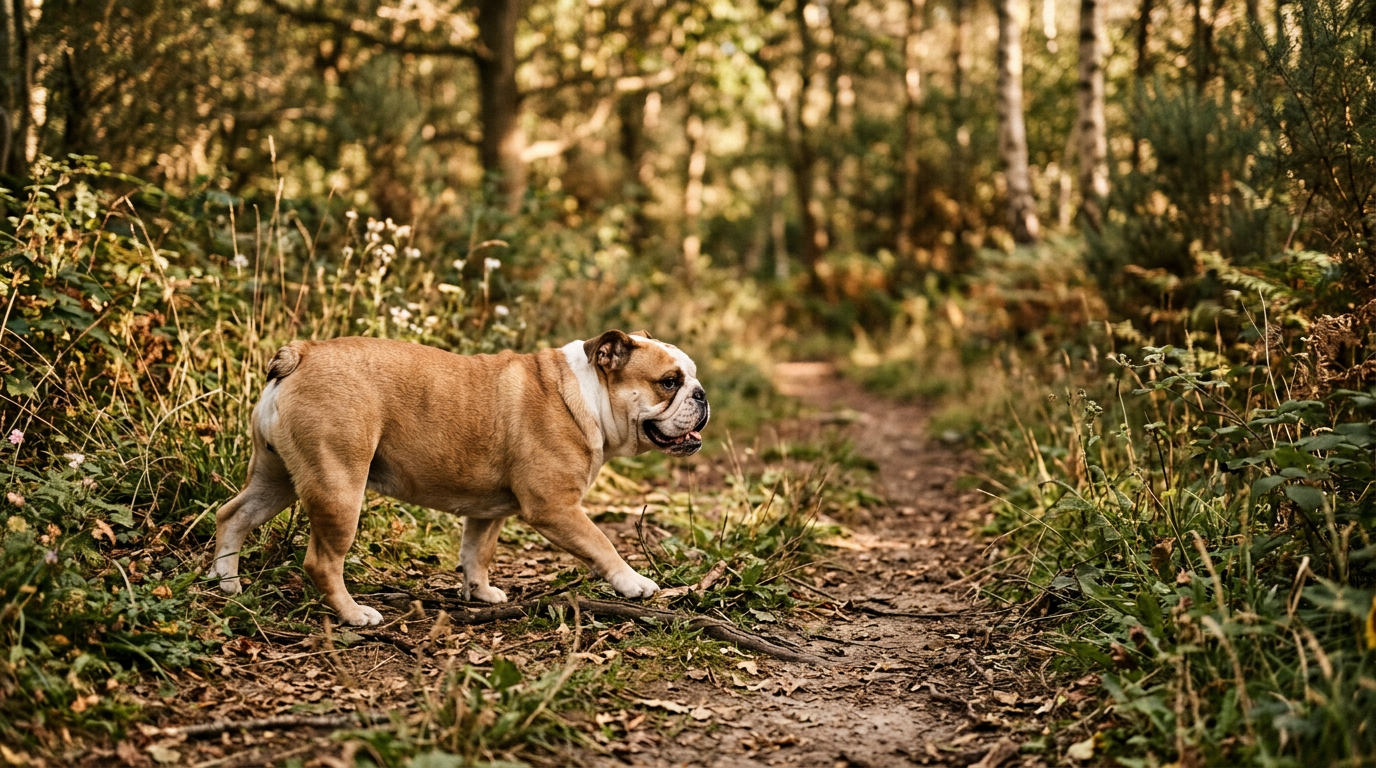
After bull-baiting was banned in 1835, the breed nearly died out. Breeders saved it by breeding aggression out and companionship in. Modern Bulldogs were refined in the late 1800s to early 1900s.
What were they bred to do?
- Bull-baiting, gripping bulls by the nose and holding on
- Withstand being thrown or trampled
- Never letting go despite pain
- Remain handleable by humans during matches
Key breeding traits: English Bulldogs have extreme flat faces causing severe breathing difficulties. They have massive heads and underbites from their bull-baiting heritage. They show stubborn tenacity, once committed to something, they don't quit. Surprisingly, they're gentle with humans because human-aggressive dogs were culled. They have heat intolerance and exercise limitations from their facial structure. Unfortunately, they suffer numerous health problems from extreme breeding. The modern Bulldog bears little resemblance to the athletic bull-baiters of old.
Why Do English Bulldogs Have These Behaviour Problems?
Here's what you need to understand: many English Bulldog behaviour problems aren't behavioural at all. They're health problems disguised as behaviour issues.
Modern breeding has created one of the most health-compromised breeds. Many cannot breathe properly, reproduce naturally, or give birth without C-section. Dogs in chronic discomfort develop behaviour issues. When you're struggling to breathe all day, you're going to be irritable.
The stubborn temperament from their bull-baiting past remains intact. That same determination that made them grip bulls now makes them dig in their heels during training.
Problem 1: Severe Health Issues Causing Behaviour Problems
What's happening: Your Bulldog seems grumpy, won't exercise, sleeps poorly, and shows frustration behaviours you can't explain.
Why it happens: Extreme flat-face breeding creates breathing difficulties, overheating, joint pain from massive heads and poor body structure, skin fold infections, and general discomfort. They're uncomfortable most of the time. This leads to irritability, inability to exercise, poor sleep quality, and frustration. Their physical limitations prevent normal dog behaviours.
The fix:
Focus on "mental marathons, not physical". Provide extensive mental stimulation instead of long walks.
Implement "cool exercise" protocols. Only walk early morning before 7am or late evening after 8pm at the coolest temperatures. Keep walks to 10-15 minutes maximum with frequent breaks in shade. Use cooling vests, wet towels, and air conditioning.
Clean facial folds daily to prevent infections that cause discomfort. Use tear stain remover, then dry every fold completely with a clean cloth before you finish. A fold left damp is where the infection starts, and an infected fold causes pain and irritability.
Accept that many behaviour issues are actually health issues requiring medical solutions, not behavioural ones. If behaviour changes suddenly, consult your vet before assuming it's behavioural.
Is your Bulldog's grumpiness health or behaviour? Our Skool community's weekly live Q&As help you distinguish between medical issues and training problems so you're not trying to train away pain.
Problem 2: Stubbornness & Training Resistance
What's happening: Your Bulldog ignores commands, digs in their heels on walks, and seems to actively resist training.
Why it happens: Bull-baiting required extreme tenacity and determination. Once they committed to gripping the bull, they wouldn't quit regardless of pain or commands. This same genetics makes them dig in their heels during training. They were never bred for obedience or handler cooperation, only independent fighting ability that didn't respond to commands to stop.
The fix:
Accept they'll never be eager-to-please dogs. Celebrate small successes and focus on essentials only, sit, basic recall, minimal lead walking. Don't expect extensive obedience.
These dogs will test you for years. The more decisive you can be, the more likely they are to understand there's nothing to be gained from resisting. The quicker they'll ease up.
Manage their food well and leave nothing out. They need to understand you're a good owner who provides, and they'll choose to follow you.
Keep practising recall time and time again. Use a long line to keep control. Include pull toys in your recall lottery, not just treats.
Struggling with their stubborn streak? The Skool community offers video demonstrations of techniques that actually work with bull breeds so you can see exactly how to win their mind, not just bribe their stomach.
Problem 3: Resource Guarding & Possessiveness
What's happening: Your Bulldog growls over food, toys, or spaces. They become obsessive over certain items and won't let go.
Why it happens: Bull-baiting required them to hold resources, the bull, against all opposition with extreme tenacity. They can easily become obsessive around food, toys, spaces, and people. Breathing difficulties make eating and resting more important and valuable, increasing resource guarding. They were bred to never let go once they possessed something.
The fix:
Constantly rotate items they could get obsessive over. Put everything else away. If you rotate items, you stop any one toy becoming a trigger point.
Never, under any circumstances, leave these dogs with bones, pig's ears, or rawhides unsupervised. Check their home and crate for the remainders of bones and any secret stash they may have.
Don't leave any food out. If they ignore their food, pick up the bowl and put it away.
Never play keep-away or tease with items, this intensifies guarding. If resource guarding escalates to snapping or biting, consult a professional immediately.
Don't chase them for any items. If they won't give something back, take their collar or short line and move them calmly to a separate room.
Resource guarding escalating quickly? Our Skool community connects you with trainers who specialise in possession issues and can troubleshoot your specific situation before it becomes dangerous.
Is an English Bulldog Right for a New Owner?
An English Bulldog might be perfect for you if you're looking for:
A low-energy companion - They require minimal exercise. Short walks are sufficient. They're happy lounging around the house most of the day.
Excellent with children - Bulldogs are famously gentle with kids. Their calm temperament makes them wonderful family dogs.
Apartment-friendly dog - Their low exercise needs and minimal barking make them ideal for apartment living.
A loyal friend - Bulldogs form deep bonds with their families. That gentle, devoted temperament is real.
Low grooming needs - They need weekly brushing and facial fold cleaning, but grooming isn't extensive.
Owning an English Bulldog requires serious financial commitment for vet care. Be prepared for potential health expenses and shorter lifespans than other breeds. If you're considering this breed, find a good breeder, even well-bred Bulldogs have issues, but poor breeding creates dogs who struggle with daily living.
With English Bulldogs I've trained, the biggest shift usually comes from managing the environment around resource guarding, not from correcting the dog. Health and behaviour are tangled together in this breed more than most.
Get the Full Support System for Your English Bulldog
An English Bulldog's behaviour and their health often sit close together, so the fixes in this guide work best alongside good vet care, not instead of it. That's an ongoing relationship, not a single visit.
That's why we created our free Skool community, to give you continuous support every step of the way.
Inside the community, you'll get:
- Weekly live Q&A where you can raise your Bulldog's specific issue and get a direct answer
- Courses covering guarding, stubbornness, and the health-linked behaviours this breed is known for
- A community of Bulldog owners who get why 'stubborn' undersells what you're actually dealing with
- Video demonstrations of the exact techniques used in this guide
- Help when progress stalls, which happens often with this breed
- New resources added as the course library grows
Best part? It's completely free. No subscription. No catch. Just dog owners helping dog owners.
Join The Toe Beans Co community today and get the ongoing support you need to build the best relationship with your English Bulldog.