3 Common Kelpie Behaviour Problems (And How To Fix Them)
Remember: Your Kelpie might be intense and demanding, but that work ethic and intelligence make them extraordinary dogs. They were bred to be tireless.
Where Do Kelpies Come From?
Kelpies were developed in Australia in the 1800s from Scottish collies mixed with possibly dingo blood (this is debated). They were bred specifically for herding sheep in extreme Australian conditions.
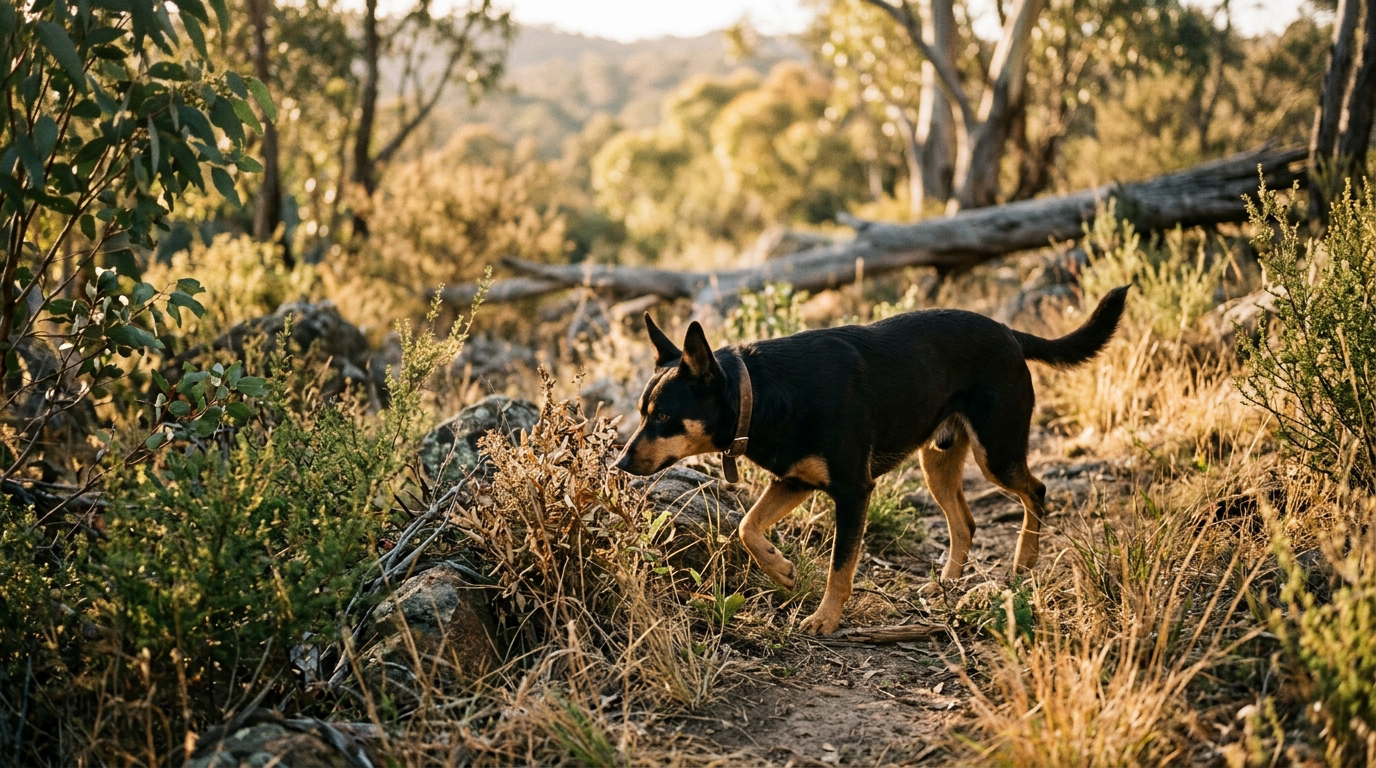
They were named after an early female dog "Kelpie" whose offspring were exceptional workers. They were refined through ruthless selection for working ability only, appearance was irrelevant if the dog couldn't work.
What were they bred to do?
- Work independently across vast Australian stations (ranches)
- Herd sheep in extreme heat covering 60+ kilometres daily
- Work all day in temperatures exceeding 40°C (104°F)
- Make independent decisions without constant handler input
- Work with minimal food and water breaks
- Maintain intense focus for 12+ hour workdays
Key breeding traits: Kelpies have extreme stamina and heat tolerance bred for outback work, they can work 12+ hours in extreme heat. They show obsessive work drive bordering on compulsive (they don't have an off-switch), intelligence combined with independence requiring minimal direction, intense focus that can become fixation without outlets, natural herding instinct including eye contact and nipping, and surprisingly, sensitivity despite their toughness (they respond to subtle cues). They were bred to work until they drop.
Why Do Kelpies Have These Behaviour Problems?
Here's the honest truth: Kelpies were bred to work 10-12+ hour days in extreme heat covering enormous distances whilst herding. They have arguably the highest sustained energy levels of any breed.
Without sufficient work, they develop obsessive behaviours, shadow chasing, spinning, self-mutilation, tail chasing, and become severely destructive. Pet life cannot meet their needs without extraordinary commitment.
They're still extensively used for sheep herding in Australia and worldwide, but many are kept as pets in urban or suburban environments. This is arguably the worst breed for pet life. Their genetics are completely unchanged, they still have the drive for gruelling 12-hour workdays. The mismatch between their needs and pet life creates some of the most severe behavioural issues possible.
Problem 1: Extreme Exercise Needs & Neurotic Behaviours
What's happening: Your Kelpie is destructive, chases shadows or lights obsessively, spins, or shows other compulsive behaviours. They never seem to settle.
Why it happens: They were bred to work 10-12+ hour days in extreme heat covering enormous distances whilst herding. They have arguably the highest sustained energy levels of any breed. Without sufficient work, they develop obsessive behaviours and become severely destructive. Pet life cannot meet their needs without extraordinary commitment.
The fix:
If you're at the destructiveness point, you will need to change your lifestyle. There are 3 potential options:
Increase exercise and stimulation. Find your local dog sports club, or if in a more rural area there can be herding clubs. This can be great fun with your dog and a lot of owners who are dreading this come to love it and the community.
Mental stimulation. The easiest way to do this is training commands. Most of these commands have absolutely no utility in real life but they can be difficult for your dog to learn and that tires them out.
The "working method". Some schools of thought try to teach your dog that "monitoring the home" is a job. Some people have tried this and then had other issues with their dog around herding, nipping, and general reactivity.
For working breeds you need to provide sufficient mental stimulation. This is not a behavioural solution but a minimum requirement.
Exercise not making a dent? Our Skool community's weekly live Q&As help you distinguish between under-exercised and genuinely neurotic behaviour, and connect you with dog sports clubs that can actually tire out a Kelpie.
Problem 2: Obsessive Behaviours & Fixations
What's happening: Your Kelpie fixates on shadows, lights, reflections, or movements. They cannot settle and seem constantly "on" mentally.
Why it happens: Their intense focus and drive, bred for single-minded herding concentration on sheep for 12 hours, misfires without appropriate outlets. Their brain is designed for sustained, intense focus on moving objects. In pet homes, this intensity redirects to shadows, lights, reflections, movement, or repetitive behaviours that become compulsive. They literally cannot turn their brain off without exhaustion.
The fix:
For working breeds you need to provide sufficient mental stimulation. This is not a behavioural solution but a minimum requirement.
Teach a specific "that'll do" or "all done" cue that ends playtime sequences. This means they can be fully focused and then relax.
Rotate items and give them plenty of room to run. Find a safe area and let them chase.
When fixation begins, immediately interrupt by calmly taking them by the collar (keep a short lead on indoors). Hold them in a steady, calm hold under the collar until their entire body relaxes, a yawn or shake. This could take 2-5 minutes. Then release without speaking.
For dogs that cannot settle, you have a much wider behavioural issue where they feel they cannot turn off. This is very stressful for your dog and you should immediately seek training support.
Shadow chasing becoming dangerous? The Skool community offers video demonstrations showing exactly how to interrupt fixations and helps you recognise when obsessive behaviour has crossed into compulsive disorder territory requiring professional help.
Problem 3: Nipping & Herding Behaviours
What's happening: Your Kelpie nips at heels, circles people (especially children), or tries to control movement around the house.
Why it happens: They were bred to control stubborn sheep through heel nipping, intense eye contact, and body blocking. They herd everything that moves including children, pets, and vehicles. This is their primary job function, not a behavioural problem. The urge is overwhelming, involuntary, and intensifies without appropriate outlets.
The fix:
When nipping occurs, immediately take them calmly by the collar (use a house lead attached when children are present). Say absolutely nothing and place them in a separate room for 5-10 minutes every single time without exception.
If you have small children, it's important to get them involved in dog ownership (where it's safe and proper to do so). Never allow children to run away or scream near your dog. This will make it clear they don't need to be herded.
Build a recall that holds under pressure. Make sure you have a variety of "prizes" for your recall lottery, toys, affection, food, and scents. You need to be able to cut through this ingrained herding "tunnel vision" and get them over to you. This takes huge amounts of practice and will not happen overnight.
Under no circumstances should you begin chasing them. You will create this into a game, and that is not good. If you have a dog that really exhibits this characteristic, use a short line to give you some more space to catch them.
Nipping escalating with kids? Our Skool community connects you with trainers who specialise in managing herding breeds around children and can help you create safe protocols before someone gets hurt.
Is a Kelpie Right for a New Owner?
A Kelpie might be perfect for you if you're looking for:
An extremely trainable dog - Kelpies think fast and learn fast. They excel at dog sports and complex training.
A dog for active sports - If you want a partner for agility, herding trials, or endurance sports, Kelpies deliver. They thrive on physical and mental challenges.
An independent thinker - They make decisions on their own. This intelligence can be rewarding for experienced handlers.
Extreme heat tolerance - They work in temperatures exceeding 40°C. They handle hot weather better than most breeds.
A long-term working partner - If you have land, livestock, or serious dog sports ambitions, Kelpies are unmatched. They live 12-14 years of tireless work.
Owning a Kelpie requires extraordinary commitment to exercise (2-3+ hours daily minimum), mental stimulation requirements that exceed almost any breed, accepting they're arguably the worst breed for typical pet life, and managing herding behaviours around children and pets. They're not suitable for first-time dog owners or sedentary lifestyles.
Every Kelpie owner I've worked with underestimated the exercise requirement at first. Two walks a day isn't enough for a dog bred to work sheep from dawn until dusk, and the herding nips and obsessive tendencies almost always trace back to unmet drive.
Get the Full Support System for Your Kelpie
A Kelpie's exercise and mental stimulation needs are genuinely unusual, and most of the behaviours in this guide come back to that one fact. Getting on top of it takes longer than a single read-through.
That's why we created our free Skool community, to give you continuous support every step of the way.
Inside the community, you'll get:
- Live Q&A sessions where you can ask about your Kelpie's specific herding or nipping pattern
- Full courses covering the puppy stage right through to managing an adult working-drive dog in a suburban home
- A group of Kelpie owners who understand the exercise commitment because they're living it too
- Real demonstrations of the redirection techniques in this guide
- Troubleshooting for the setbacks, which are common with a breed this driven
- New material as the library grows
Best part? It's completely free. No subscription. No catch. Just dog owners helping dog owners.
Join The Toe Beans Co community today and get the ongoing support you need to build the best relationship with your Kelpie.