3 Common Maltese Behaviour Problems (And How To Fix Them)
Remember: Your Maltese might be tiny, but that gentle, affectionate nature is what makes them such special little dogs. They were bred to love you completely.
Where Do Maltese Come From?
Maltese are an ancient breed from the Mediterranean region dating back over 2,000 years. They possibly originated from Malta, though this is debated, they may be named after the Sicilian town Melita.
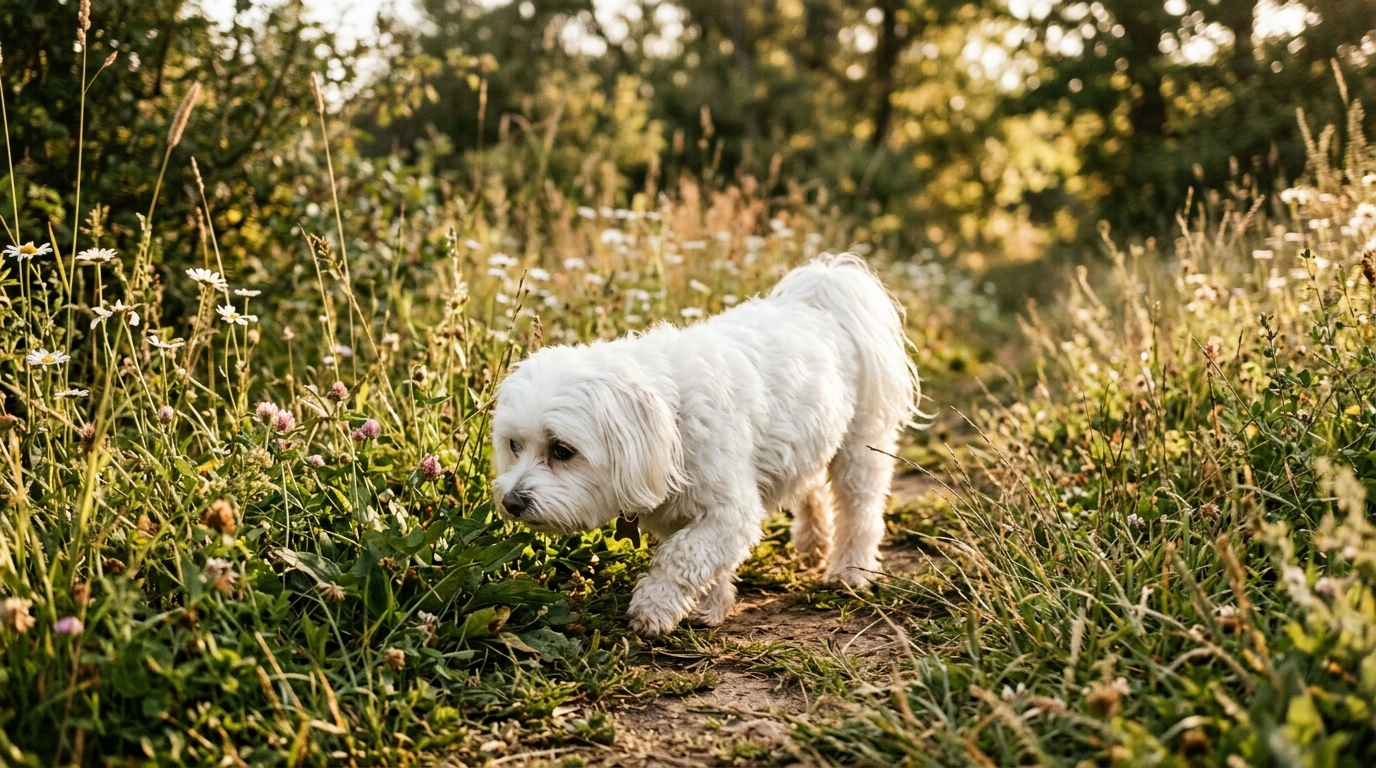
They were bred exclusively as companion dogs for nobility. Roman and Greek aristocratic women particularly favoured them. They were status symbols and appear in ancient art and literature. They never had any working function.
What were they bred to do?
- Companion dogs for wealthy women in ancient civilisations
- Living accessories through the Renaissance
- Provide companionship and warmth
- Status symbols of wealth and refinement
- Carried everywhere, never expected to work
Key breeding traits: Maltese have pure white coats requiring extensive grooming. They're extremely small, perfect for carrying at 4-7 lbs. They show gentle and affectionate temperaments with attachment to one person. Despite being lap dogs, they're alert, they needed to alert to threats in palaces. They're adaptable to indoor living and have complete lack of independence or working drive. Any assertive traits were bred out, only the softest dogs were kept.
Why Do Maltese Have These Behaviour Problems?
Here's the honest truth: Maltese were bred for millennia to be carried everywhere by nobility. They're living accessories who provided continuous companionship.
They were never expected to be alone. They have no independent working history whatsoever. Being separated contradicts thousands of years of selective breeding.
Modern life expects them to tolerate owners working away from home. Their genetics demand constant human contact, but contemporary lifestyle provides extended alone time. This mismatch creates severe separation anxiety and other behaviour challenges.
Problem 1: Separation Anxiety & Extreme Neediness
What's happening: Your Maltese follows you everywhere, panics when you leave, and can't function unless they're touching you constantly.
Why it happens: They were bred for millennia as constant companions to nobility who carried them everywhere as living accessories. Their entire genetic purpose is providing continuous companionship. Being separated contradicts thousands of years of selective breeding.
The fix:
Never give in to your dog's demands, especially barking for attention. If your Maltese likes to "space invade", pawing for attention or sitting right on top of you, only allow this when you're happy to do so.
If they're too close, use your hand to create a gap. The gap should be "if someone you didn't know sat closer to you than this, you'd ask them to move over". If they require more than 3 repetitions, calmly place them in a separate room and wait for 30 seconds of calm before releasing them.
Don't allow them to space invade when they're on the couch. Obviously you can give them a cuddle, but on your terms.
Under no circumstances use treats for "not attention seeking". This may work short-term but creates long-term issues.
Struggling with their constant neediness? Our Skool community's weekly live Q&As help you establish boundaries without feeling guilty, plus support from other Maltese owners who understand how hard it is to say no to those faces.
Problem 2: Excessive Barking
What's happening: Your Maltese barks at everything. Visitors, noises, movements outside, anything sets them off.
Why it happens: Despite being bred as lap dogs, Maltese had a secondary role as alert dogs in palaces and on ships. They were popular with sailors for rodent control and companionship. Their small size required vocal alarm systems as their only defence. They're naturally vigilant and their bark is their primary protection mechanism.
The fix:
Establish a two-part acknowledgement system. When they bark, calmly go toward what they're alerting to for 2 seconds. Then turn your back and walk away without speaking.
If barking continues after your acknowledgement, immediately place them in a quiet room without a word. Release them only after complete silence for at least 30 seconds. Do not release during any noise, you must wait for silence.
Never shout in response to barking. Shouting reinforces the exact opposite behaviour you want.
Everyone must be on the same page. The way you respond to barking must be the same across the whole household. Be calm and have a designated consequence.
Know what excessive barking is. Not all barking is excessive. Excessive barking is unnecessary demand barking. They're a dog, they will still bark sometimes.
Need help staying consistent with barking protocols? The Skool community offers video demonstrations showing exactly how to implement the acknowledgement system so your entire household can respond the same way.
Problem 3: Difficulty with Housetraining
What's happening: Your Maltese keeps having accidents inside, even after months of training. They don't seem to "get it" like other dogs.
Why it happens: Tiny bladders can only hold small amounts of urine. Combined with centuries of being carried everywhere and using indoor potty solutions, they were palace dogs who used designated indoor areas. They were never required to "hold it" like larger working breeds. Their small size makes accidents less noticeable to owners, leading to inconsistent correction and reinforcement of indoor elimination.
The fix:
Implement frequent scheduling with bathroom breaks every 2-3 hours minimum. Puppies need every 1-2 hours. Their bladders physically cannot hold more.
Use "designated spot" training. Take them to the exact same spot every time, say "go potty", and reward within 3 seconds of elimination.
Practice immediate reward protocol. The moment they finish eliminating outside, mark with "yes" and give a high-value treat before coming back inside.
Consider indoor potty options like grass pads or pee pads in a designated area. This is historically appropriate for the breed, they were bred to use indoor facilities. This may be more realistic than expecting them to signal and hold it for hours.
Use enzymatic cleaners for all accidents to completely eliminate odour. Any remaining scent tells them that spot is appropriate for elimination.
Supervise constantly or use a pen or crate when unsupervised. They cannot be trusted loose in the house until fully trained, often 12-18 months. Accept housetraining takes longer in toy breeds due to bladder size.
Housetraining taking forever? Our Skool community connects you with other Maltese owners who've been through the long process and can share what actually worked when traditional methods failed.
Is a Maltese Right for a New Owner?
A Maltese might be perfect for you if you're looking for:
A devoted lap dog - If you want a dog who lives to be with you, Maltese deliver. That gentle, affectionate nature is real.
An apartment-friendly size - At 4-7 lbs, they're perfect for small living spaces. They adapt brilliantly to indoor living.
A dog with minimal exercise needs - They don't need long walks or huge gardens. Short daily walks and indoor play are sufficient.
An alert watchdog - Despite their size, they'll let you know when someone's at the door. They're naturally vigilant.
A long-term friend - Maltese often live 12-15 years. You're getting a companion for a significant portion of your life.
Owning a Maltese requires commitment to professional grooming every 4-6 weeks or their coat becomes severely matted. They also need owners who can provide the constant companionship they were bred for.
Get the Full Support System for Your Maltese
This article gives you real, actionable solutions you can start using today. But here's the reality: managing Maltese behaviour challenges takes ongoing work, especially with separation anxiety and housetraining.
That's why we created our free Skool community, to give you continuous support every step of the way.
Inside the community, you'll get:
- Weekly live Q&A sessions where you can ask about YOUR specific Maltese and get personalised advice from experienced trainers
- Full breed-specific courses covering everything from puppy raising to advanced behaviour modification
- A supportive community of other Maltese owners who understand exactly what you're going through
- Video demonstrations so you can see techniques in action, not just read about them
- Troubleshooting help for the weeks when the plan does not land, which happens more often than most training advice admits
- Updated resources as we add new courses and training blueprints
Best part? It's completely free. No subscription. No catch. Just dog owners helping dog owners.
Join The Toe Beans Co community today and get the ongoing support you need to build the best relationship with your Maltese.