3 common Maltipoo behaviour problems (and how to fix them)
Remember: your Maltipoo isn't broken. Two breeds built for constant human contact were crossed together, and the anxious, demanding streak you're living with is exactly what that combination produces.
Where do Maltipoos come from?
Maltipoos emerged in the 1990s and 2000s as part of the designer dog trend, marketed to apartment dwellers who wanted a small, hypoallergenic companion.
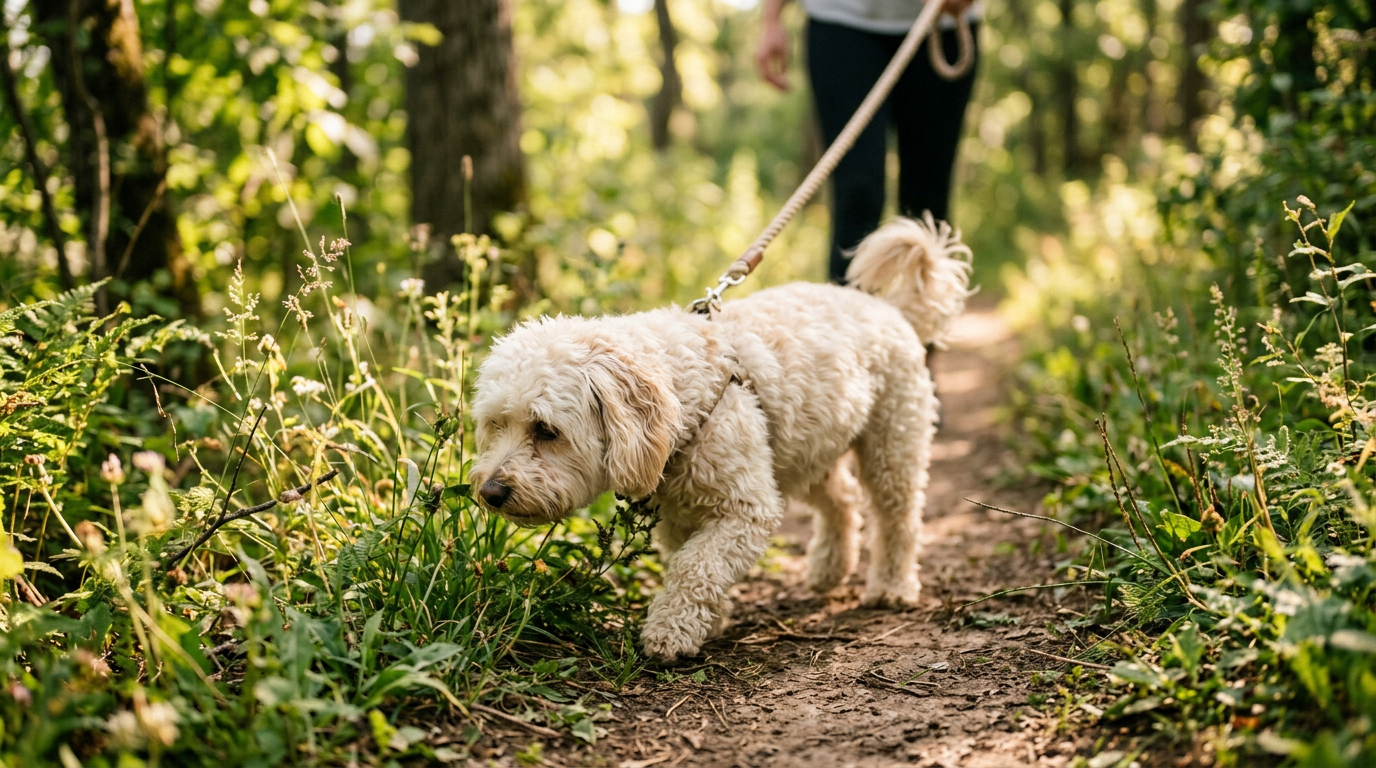
Unlike purpose-bred dogs with centuries of development behind them, most Maltipoos are first-generation crosses with no breed standard and no consistency. Two breeds that were never meant to work together genetically ended up in the same litter. An F1 is a genetic lottery, and a puppy can land anywhere between its Maltese parent and its Poodle parent on coat, size and temperament. The breeder genuinely cannot tell you where, so meet both parents when you visit a litter and read those two dogs rather than the cross name.
What were they bred to do?
- This cross has no working purpose. It was created for looks and temperament, not a job
- Maltese were bred for over 2,000 years as lap dogs for Mediterranean nobility
- Toy and Miniature Poodles were bred down from working gun dogs into circus performers and companion dogs
- Mixing the two produces a dog with two different sets of inherited needs, both pointing towards constant human contact
Key breeding traits: size is a genuine unknown, from small lap dogs under 2kg to dogs closer to 9kg, roughly the size of a small spaniel. Coat type is inherited unpredictably. Shedding varies litter to litter despite what breeders promise. The hypoallergenic claim doesn't hold up either. No dog is completely hypoallergenic, and this genetic mix is no exception.
Why do Maltipoos have these behaviour problems?
Maltese were bred for two thousand years to be carried everywhere by their owners. Toy Poodles were bred as human-focused performers who needed constant handler interaction to do their job. Put those two histories in one dog and you get an animal genetically wired against being alone, which is where most of the behaviour problems in this guide start.
Problem 1: extreme separation anxiety
What's happening: your Maltipoo panics when you leave, becomes destructive, or shows real distress the moment you're out of sight.
Why it happens: two companion breeds with double the attachment genetics were combined into one dog. Being alone doesn't just feel uncomfortable to a Maltipoo, it runs against what they were bred for.
The fix:
Practise mini-departures throughout the day, starting with 20 seconds. Come back in without any greeting, eye contact, or touching, and wait a full 5 minutes until your dog is genuinely calm before engaging.
Don't make departures dramatic. Pick up your keys and put your shoes on at random times when you're not actually leaving, so those cues stop predicting an absence.
On a weekend, run 20 to 30 mini-departures back to back, even if it's only as far as the car and back. Short, repeated absences build the skill faster than a handful of long ones.
When you come home and your dog is excited, freeze. No movement, no talking, no acknowledgement until they settle. Then invite interaction on your terms.
You can't exercise separation anxiety out of a dog, but a Maltipoo that's mentally and physically tired starts each departure in a calmer state.
Struggling to get mini-departures to stick? Our Skool community runs weekly live Q&As where you can bring your Maltipoo's specific pattern and get help working through it.
Problem 2: reactivity and small dog syndrome
What's happening: your Maltipoo barks at people and dogs, lunges on lead, or shows aggression that gets excused because of their size.
Why it happens: Maltese were bred as alert watchdogs, and Poodles carry high environmental awareness. Put both in a dog this small and the barking gets dismissed as cute rather than corrected. Picking your dog up the moment they react teaches them that reacting works.
The fix:
Train and socialise your Maltipoo to the same standard you'd use for a large breed. Introduce them to a real variety of dogs and sizes early on, not only the small breeds at the local park.
Teach a single acknowledged bark: when they alert, look towards whatever triggered it, then turn and walk away. If the barking continues, move them into a separate room for 3 to 5 minutes without talking to them.
Don't pick your Maltipoo up when they see a trigger on a walk, and don't let them greet a person or dog while they're lunging or barking.
Small dog syndrome getting worse instead of better? The Skool community has video walkthroughs of exactly this, built for owners who've been told their dog is only being small.
Problem 3: coat maintenance
What's happening: your Maltipoo's coat mats constantly, grooming appointments are expensive, and your dog hates being handled for it.
Why it happens: the low-maintenance, hypoallergenic marketing around this cross doesn't hold up. Both Maltese and Poodle coats grow continuously and mat easily without regular care, and combining them doesn't cancel that out.
The fix:
Start grooming conditioning the day your puppy comes home. Two to three minutes a day of handling, touching paws, brushing one small section while feeding treats, builds tolerance before it's urgent.
Book professional grooming every 6 to 8 weeks from 12 to 14 weeks old, and keep your dog in a puppy cut rather than a teddy bear cut that needs constant upkeep.
A slicker brush, a metal comb, and a mat splitter are worth the money. Five minutes of daily brushing is cheaper and kinder than an occasional painful de-matting session.
Grooming bills climbing? Owners inside our Skool community share realistic grooming schedules and groomers who know how to handle an anxious Maltipoo.
Is a Maltipoo right for a new owner?
Maltipoos work well for owners who are home often, or can take their dog with them, and who want a dog that's genuinely tuned in to them.
A deeply affectionate dog - once settled, a Maltipoo wants to be wherever you are. That closeness is the whole point of both breeds behind the cross.
A small dog that suits apartment living - space isn't the issue with this breed. Time alone is.
An intelligent, quick learner - the Poodle side means Maltipoos pick up training fast when it's paired with consistency.
Maltipoos don't work well for owners who are out of the house for long stretches, or who want a low-maintenance dog they can leave to groom itself. The Maltipoos I see with the fewest problems belong to owners who commit to alone-time training from week one, rather than waiting for separation anxiety to show up first.
Get the full support system for your Maltipoo
This guide gets you started, but a Maltipoo's attachment to you doesn't switch off after one read. Ongoing practice is what changes it.
Our free Skool community gives you weekly live Q&As, breed-specific courses, video demonstrations, and other Maltipoo owners working through the same problems.
If you're starting from puppyhood, our Complete Puppy Program builds alone-time and socialisation habits in from week one, before separation anxiety or reactivity get a chance to set in.
Join The Toe Beans Co community, or book a meet and greet if you'd rather start with 1:1 support for your Maltipoo.