3 common Schnoodle behaviour problems (and how to fix them)
Remember: Your Schnoodle carries the genes of Schnauzers who hunted rats on German farms. That alertness and prey drive? It's not misbehaviour, it's centuries of breeding that rewarded focus and determination.
Where do Schnoodles come from?
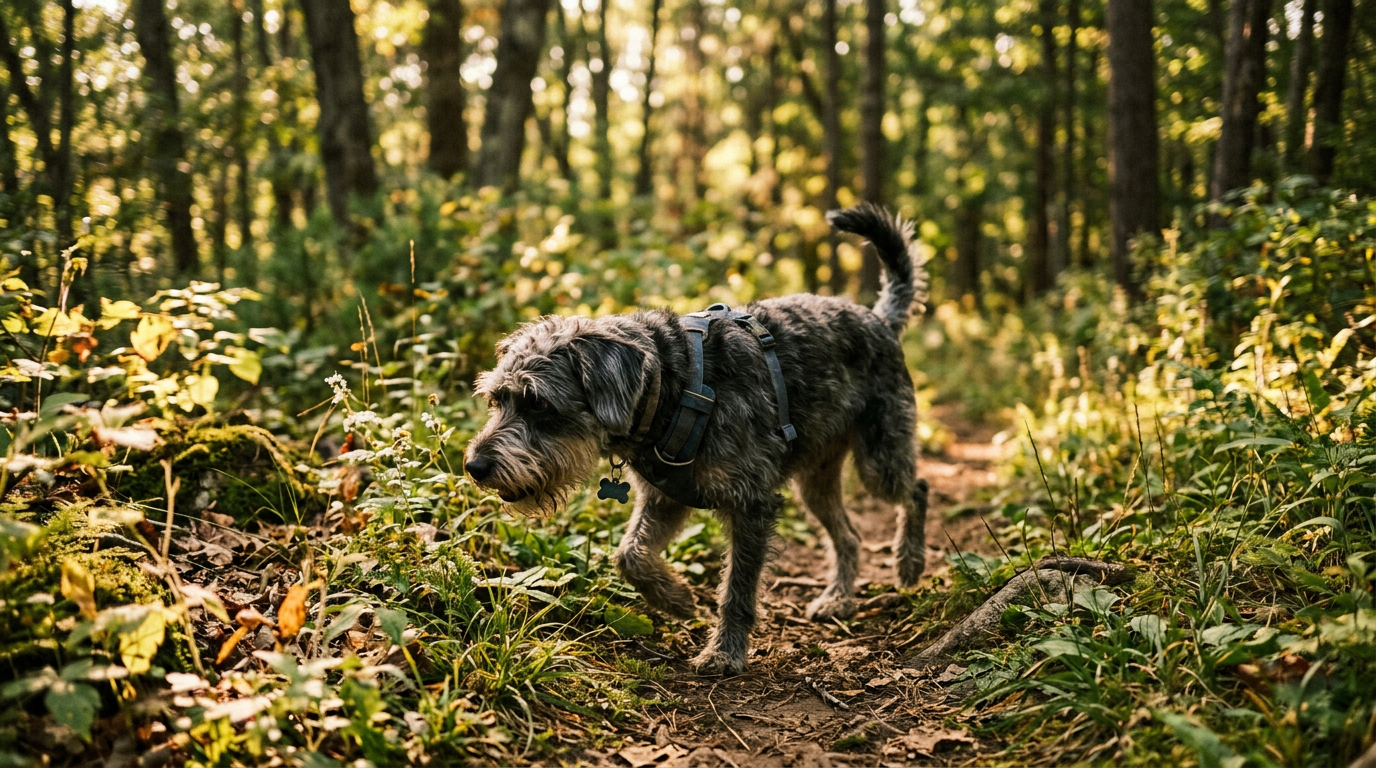
Schnoodles emerged in the 1980s-1990s as one of the earlier doodle crosses. The intent was combining Schnauzer temperament and coat with Poodle intelligence whilst creating a companion dog. Size varies wildly depending on which Schnauzer and Poodle are used.
What were they bred to do?
- No working purpose, purely a companion cross
- Miniature Schnauzers were ratters (killing vermin)
- Standard Schnauzers were versatile farm dogs (herding, guarding, pest control)
- Giant Schnauzers were cattle driving and guard dogs
- Poodles were retrievers or companions requiring intelligence and handler focus
Key breeding traits: Schnoodles inherit unpredictable temperaments from mixing two distinct breeds. They have high prey drive from Schnauzer genetics, making them chase small animals and cats. They're vocally alert, Schnauzers are watchdogs and Poodles are alert, so you get dogs who bark constantly. They're stubborn from terrier genetics. The prey drive is often stronger in crosses than purebreds.
Why do Schnoodles have these behaviour problems?
Your Schnoodle carries genetics from two working breeds with strong personalities. Schnauzers were bred to hunt rats independently on German farms. They needed high prey drive, territorial behaviour, and suspicion of strangers. Mixing these creates dogs with terrier tenacity plus Poodle sensitivity. You get prey drive combined with anxiety. Stubbornness combined with intelligence.
Problem 1: dog aggression & cat chasing
What's happening: Your Schnoodle chases cats, squirrels, small dogs, or rabbits. This is predatory behaviour that can be fatal to small pets.
Why it happens: Miniature and Standard Schnauzers were bred as ratters and farm pest control. Killing small animals was their job. This prey drive is deeply genetic and even in crosses, this trait emerges strongly.
The fix:
- Practice recall training with your dog on a long line
- Use a reward lottery to find what motivates your dog
- Always have rewards on hand when walking
- Attach a piece of rope to their collar to control the environment
- If you see your dog about to go off, take them in calmly on the line
- Hold them by the collar and wait for a shake or yawn
- Put your back to the dog or cat they're worked up about
- As you progress, leave a short piece of rope on their collar and gradually shorten it
Struggling with prey drive? Our Skool community provides video demonstrations of long-line training and specific protocols for managing prey drive around cats and small animals.
Problem 2: excessive barking and arousal
What's happening: Your Schnoodle barks at everything. They're hypervigilant, constantly monitoring the environment, unable to settle because they're always on duty.
Why it happens: Schnauzers were bred as farm watchdogs. Alerting to strangers, changes, and threats was their job. They're extremely vocal, territorial, and suspicious. Poodles are similarly alert. Cross these and you get dogs who never stop barking.
The fix:
- Establish two-part acknowledgement: firstly, acknowledge the barking with a calm thank you, when they bark. If they repeat calmly go toward what they're alerting to for 2 seconds
- Say Thank You and Turn your back and walk away without speaking
- If barking continues after acknowledgement, immediately place them in a separate quiet space
- Release only after complete silence for at least 30 seconds
- Do not shout, shouting reinforces barking
- Everyone in the household must respond the same way
Finding the barking overwhelming? If it's persistent, our 1:1 in-home sessions for adult dogs can work through your Schnoodle's specific triggers directly.
Problem 3: stubbornness & training resistance
What's happening: Your Schnoodle knows what you want but chooses whether to comply. Training feels like negotiating rather than teaching.
Why it happens: Schnauzers, particularly Miniatures, are terriers. They're stubborn, independent, and selective. They were bred to work independently killing rats, not take orders from humans.
The fix:
- Find their currency: some are food motivated, others prefer toys or play
- Use what motivates YOUR dog, not what training books say should work
- Randomise rewards when you do use them
- Never reward a dog for not doing something
- Never physically manipulate them into positions, this triggers stubborn refusal
- Show them once with a lure, then wait
- If they don't respond within 5 seconds, the opportunity passes and you walk away
Struggling with stubbornness? Our Skool community teaches Relational Leadership approaches specifically designed for stubborn terrier breeds.
Get the full support system for your Schnoodle
That's why we created our free Skool community, to give you continuous support every step of the way.
Inside the community, you'll get:
- Weekly live Q&A sessions where you can ask about YOUR specific Schnoodle
- Full breed-specific courses covering everything from puppy raising to advanced behaviour modification
- A supportive community of other Schnoodle owners
- Video demonstrations so you can see techniques in action
- Troubleshooting help when things don't go to plan
Join the The Toe Beans Co community today and get the ongoing support you need to build the best relationship with your Schnoodle.