
Sheepadoodle: Not a Shepadoodle
English Countryside Charm Meets Poodle Elegance

3 Common Sheepadoodle Behaviour Problems (And How To Fix Them)
Remember: Your Sheepadoodle carries the genes of Old English Sheepdogs who worked alongside farmers all day. That fluffy teddy bear following you everywhere? They're just doing what centuries of breeding told them to do, stay close to their person.
Where Do Sheepadoodles Come From?
Sheepadoodles emerged in the 1980s-1990s, one of the earlier doodle crosses. The intent was combining Old English Sheepdog calm temperament with Poodle intelligence and creating a large companion dog. Most have zero working drive. They're large companion crosses, not working dogs, though a smaller number inherit stronger Old English Sheepdog herding instinct, which shows up as nipping at heels or trying to herd children and other pets. That's a specific behaviour to redirect early, not a sign of a difficult dog.
That range is worth understanding before you buy. A first generation cross is a genetic lottery rather than a standardised breed, so an F1 Sheepadoodle can land anywhere between its Old English Sheepdog parent and its Poodle parent on coat, size and temperament, and the breeder genuinely cannot tell you where. Meet both parents and read those two dogs, rather than trusting the cross name or how the puppies are described.
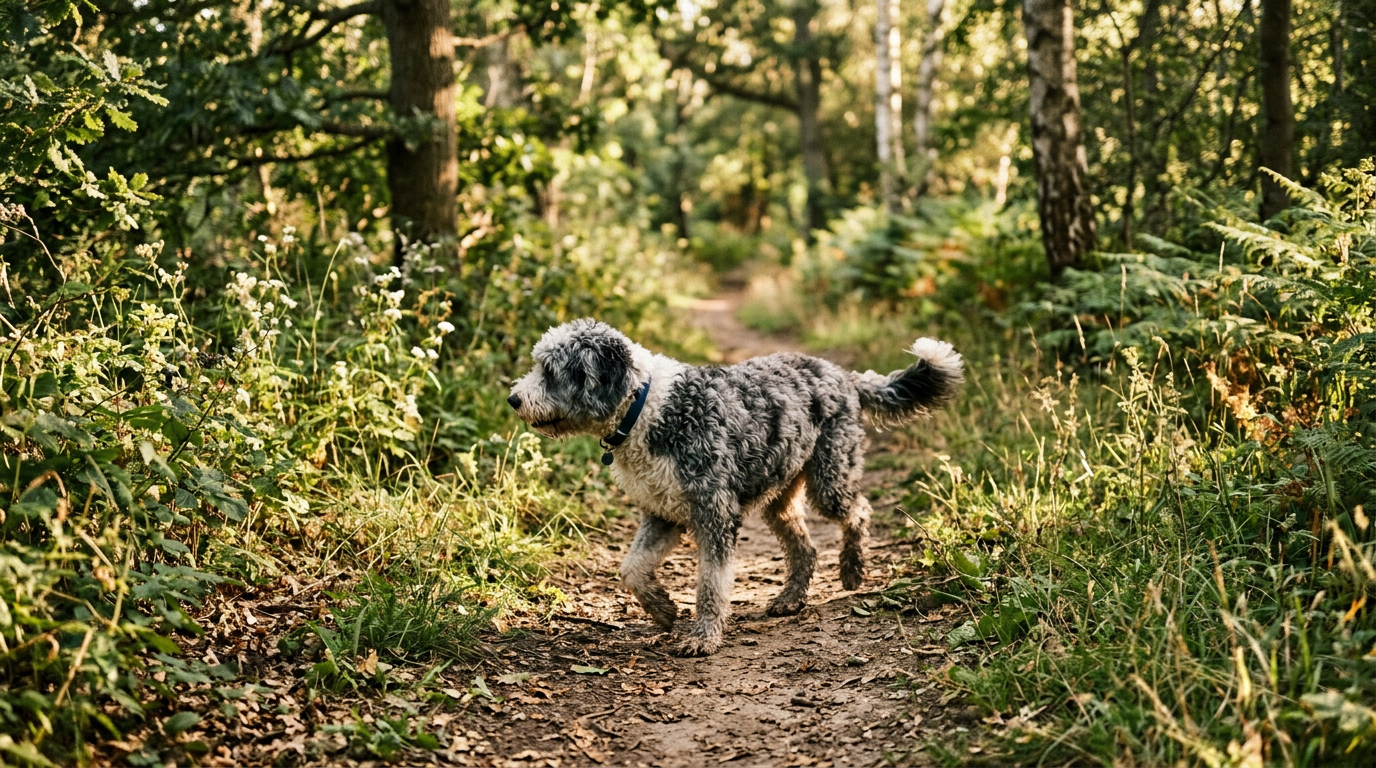
What were they bred to do?
- No working purpose, purely a companion cross
- Old English Sheepdogs were English herding and driving dogs moving livestock to market
- They required strength, endurance, and calm steady temperament
- They're actually more driving dogs than herding dogs
Key breeding traits: Sheepadoodles are large dogs weighing 30-40kg+. They have calm to moderate energy, lower than most doodle crosses. Their coat needs professional grooming every 6-8 weeks and daily brushing, or it becomes painfully matted. Neither Old English Sheepdogs nor Poodles have low-maintenance coats, so combining them creates grooming demands few new owners expect.
Why Do Sheepadoodles Have These Behaviour Problems?
Your Sheepadoodle was bred from two breeds with strong bonding tendencies. Old English Sheepdogs were farm dogs working alongside farmers all day. Poodles were bred as intelligent retrievers requiring handler focus. That cute fluffy puppy becomes a 35kg dog requiring constant grooming and training.
Problem 1: Extreme Coat Maintenance & Matting
What's happening: Your Sheepadoodle's coat mats constantly. Professional grooming isn't cheap. Daily brushing takes 15-30 minutes. Your dog becomes uncomfortable and irritable.
Why it happens: Both parent breeds have high-maintenance coats. Old English Sheepdogs have double coats that mat extremely easily. Poodles have continuously growing single coats that curl and mat without regular maintenance.
The fix:
- Accept high-maintenance coat is non-negotiable reality
- Daily brushing for 15-30 minutes is essential
- Professional grooming every 6-8 weeks at $100-150+ per session
- Start grooming conditioning at 8 weeks with daily handling sessions and high-value treats
- Check problem areas daily: behind ears, armpits, collar line, rear end
- Consider shaving short in summer, a comfortable dog is more important than aesthetics
- Invest in proper tools: slicker brush, metal comb, mat splitter, high-velocity dryer
Overwhelmed by grooming demands? Our Skool community provides grooming schedules specifically for Sheepadoodles, plus video demonstrations of proper brushing techniques.
Problem 2: Size Management & Strength
What's happening: Your Sheepadoodle jumps on people and knocks them over. Lead pulling makes walks impossible. Their fluffy appearance makes people underestimate their strength until the puppy is 25kg+ and habits are established.
Why it happens: These dogs regularly reach 30-40kg+. At this size, normal behaviours like jumping, lead pulling, and play become dangerous and difficult to manage.
The fix:
- Train from 8 weeks before size becomes an issue
- Every behaviour allowed as a puppy becomes an adult habit
- No jumping ever, everyone turns away and ignores until four paws are on floor
- Loose lead walking from first walk
- Socialise extensively (100+ positive experiences before 16 weeks)
- Exercise appropriate for giant breed, avoid running or jumping until growth plates close (18-24 months)
- If you cannot physically manage a 40kg+ dog, get professional help immediately
Struggling with size and strength? Join our Skool community for specific large breed management protocols and live Q&A sessions.
Problem 3: Separation Anxiety & Co-dependency
What's happening: Your Sheepadoodle panics when left alone, follows you from room to room, cries, destroys things, or refuses to settle when separated.
Why it happens: Old English Sheepdogs were velcro dogs bonding intensely to family and struggling when separated. Poodles are similarly handler-focused and prone to separation anxiety. You get double doses of co-dependency genetics.
The fix:
- Practice mini-departures throughout the day starting with just 20 seconds
- Return without any greeting, eye contact, or touching for 5 full minutes until they're completely calm
- Never make departures dramatic, do leaving actions randomly throughout the day to desensitise the cues
- Practice 20-30 mini-departures on weekends with very short absences
- When returning home and they're excited, freeze completely until they settle
Finding separation training exhausting? Our Skool community provides step-by-step separation protocols specifically for velcro breeds like Sheepadoodles.
Is a Sheepadoodle Right for a New Owner?
A Sheepadoodle can be an excellent choice if you're looking for certain qualities.
An affectionate, people-focused dog - Sheepadoodles bond deeply and want to be near you constantly. If you work from home or want a dog that follows you between rooms, this is a feature, not a fault.
A calmer doodle option - Compared to most doodle crosses, Sheepadoodles run calm to moderate energy. If you want the doodle temperament without the constant bounce, they're one of the settled options.
Good with children and other pets - Their farm-dog ancestry and steady temperament make them patient with kids when properly socialised, though the small subset with stronger herding instinct need that redirected early around toddlers and smaller pets.
A large dog for space and strength - At 30-40kg+, you need the space and physical capacity to manage them, especially through the boisterous adolescent stage.
Owning a Sheepadoodle is a genuine commitment to grooming, daily brushing plus professional grooming every 6-8 weeks, and to a large dog that wants to be near you most of the day. If you can't commit to the coat or you're away from home for long stretches most days, this isn't the easy-care family dog the fluffy photos suggest. If you can, few dogs are as steady and attached.
Get the Full Support System for Your Sheepadoodle
That's why we created our free Skool community, to give you continuous support every step of the way.
Inside the community, you'll get:
- Weekly live Q&A sessions where you can ask about YOUR specific Sheepadoodle
- Full breed-specific courses covering everything from puppy raising to advanced behaviour modification
- A supportive community of other Sheepadoodle owners
- Video demonstrations so you can see techniques in action
- Troubleshooting help when things don't go to plan
Join The Toe Beans Co community today and get the ongoing support you need to build the best relationship with your Sheepadoodle.
