3 Common Shetland Sheepdog Behaviour Problems (And How To Fix Them)
Remember: Your Sheltie might be vocal and sensitive, but that intelligence and devotion make them extraordinary dogs. They were bred to work closely with their people.
Where Do Shetland Sheepdogs Come From?
Shetland Sheepdogs were developed in the Shetland Islands of Scotland in the 1800s. They herded sheep, ponies, and chickens on small crofts (farms).
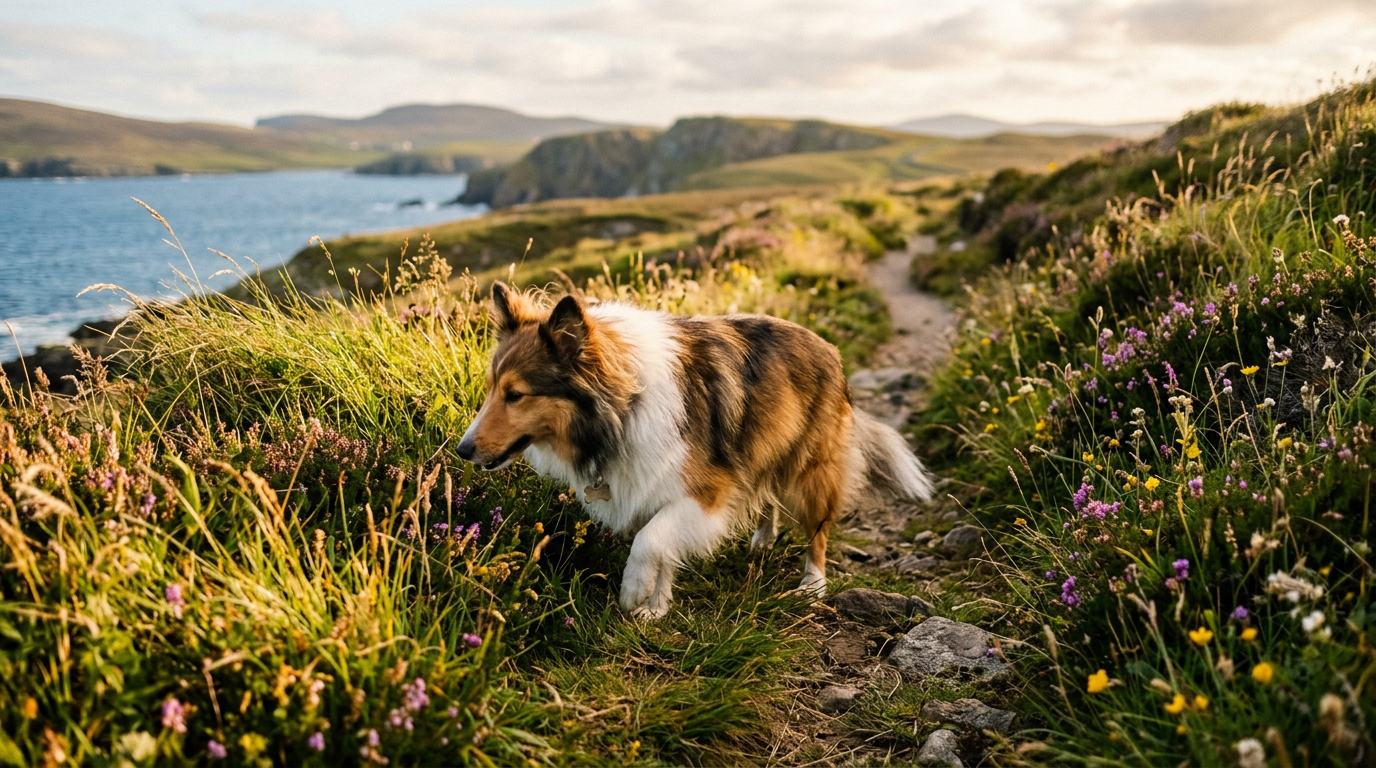
They needed to be smaller than mainland collies due to limited food resources on the isolated islands. They're essentially miniaturised rough collies, though not directly related. They were refined through selective breeding to maintain herding ability in a smaller package.
What were they bred to do?
- Herd sheep, ponies, and chickens on small Shetland crofts
- Work in harsh island conditions (wind, rain, cold)
- Control multiple species of livestock
- Use vocal commands to move animals (barking was essential)
- Protect flocks from predators
- Work closely with crofters in confined spaces
Key breeding traits: Shetland Sheepdogs have miniature size with full herding ability. They're vocal by nature, barking was essential for moving livestock on small farms. They show extreme sensitivity to sound and movement because they needed to detect predators. They have strong handler focus and responsiveness, intelligence for multi-species herding, tendency towards shyness with strangers from isolated island life with minimal outside contact, and alert watchdog nature. They were bred to notice everything and announce it vocally.
Why Do Shetland Sheepdogs Have These Behaviour Problems?
Here's what you need to understand: Shelties were bred on isolated islands with minimal stimulation. This made them hyper-alert to changes.
Their herding genetics required vigilance and quick response. Modern Shelties bred primarily as companions (not workers) have intensified sensitivity without building confidence through work. This leads to fearful responses to normal household sounds.
Without proper work outlets, their herding drive manifests as anxiety and reactivity. Modern breeding has emphasised companionship over working ability in many lines, intensifying sensitivity and reducing confidence.
Problem 1: Excessive Barking & Vocal Behaviour
What's happening: Your Sheltie barks at everything. Leaves blowing, people walking past, household noises, absolutely everything triggers barking.
Why it happens: They were bred to herd on small crofts where vocal commands to livestock were essential. Their size meant they needed to use their voice more than body to control animals. They needed to alert crofters to predators and strangers on isolated islands where threats were serious. Vocalisation was a critical job function for moving sheep and protecting flocks.
The fix:
Establish a two-part acknowledgement system. When they bark, calmly go toward what they're alerting to for 2 seconds. Then turn your back and walk away without speaking.
If barking continues after your acknowledgement, immediately place them in a quiet room without a word. Release them only after complete silence for at least 30 seconds. Do not release during any noise, you must wait for silence.
Never shout in response to barking. Shouting reinforces the exact opposite behaviour you want.
Everyone must be on the same page. The way you respond to barking must be the same across the whole household. Be calm and have a designated consequence.
Know what excessive barking is. Not all barking is excessive. Excessive barking is unnecessary demand barking. They're a dog, they will still bark sometimes.
Barking driving you crazy? Our Skool community's weekly live Q&As help you troubleshoot when the acknowledgement system isn't working and show you how to stay consistent when it feels impossible.
Problem 2: Obsessive Behaviours and Fixations
What's happening: Your Sheltie fixates on shadows, lights, specific toys, or movements. They cannot settle and seem constantly "on" mentally.
Why it happens: They were bred on isolated islands with minimal stimulation, making them hyper-alert to changes. Their herding genetics required vigilance and quick response. Modern Shelties bred primarily as companions have intensified sensitivity without building confidence through work, leading to fearful responses and obsessive fixations.
The fix:
Provide sufficient mental stimulation. Working breeds need mental marathons. This isn't a behavioural solution but a minimum requirement.
Teach a specific "that'll do" or "all done" cue that ends playtime sequences. This means they can be fully focused and then relax.
Rotate items and give them plenty of room to run. Find a safe area and let them chase.
When fixation begins, immediately interrupt by calmly taking them by the collar (keep a short lead on indoors). Hold them in a steady, calm hold under the collar until their entire body relaxes, a yawn or shake. This could take 2-5 minutes. Then release without speaking.
For dogs that cannot settle, you have a much wider behavioural issue where they feel they cannot turn off. This is very stressful for your dog and you should immediately seek training support.
Struggling with constant fixations? The Skool community offers video demonstrations showing exactly how to interrupt obsessive behaviour and help your Sheltie learn to settle, plus support when nothing seems to work.
Problem 3: Shyness with Strangers & Fear-Based Reactivity
What's happening: Your Sheltie hides from strangers, barks fearfully at new people, or becomes reactive when someone approaches.
Why it happens: They were bred on isolated crofts with limited human contact outside the family. They needed to be wary of strangers who might be sheep thieves. Modern breeding has emphasised this sensitivity without building confidence. Lack of early socialisation in companion lines has increased shyness dramatically, creating dogs that are fearful rather than just cautious.
The fix:
Early and extensive socialisation is critical before 16 weeks. Accept they'll never be social butterflies, but socialisation prevents fear-based reactivity.
Practice "controlled introductions" with specific protocols. Everyone meeting your Sheltie should completely ignore them.
Never force interactions with strangers, this increases suspicion. Allow them to approach on their terms or maintain distance. Pushing creates reactivity, not confidence.
If your dog begins to have issues when strangers appear, use techniques like the calm freeze or short lead control. If you feel safe, put your back to the stranger and place yourself between your dog and the person whilst holding them under the collar. This tells them there's nothing to worry about.
They're very sensitive to your emotions and latch onto stress easily. The biggest thing is huge socialisation as a puppy.
Shyness becoming fear-based aggression? Our Skool community connects you with trainers who specialise in fearful herding breeds and can help you build confidence without forcing interactions that make things worse.
Is a Shetland Sheepdog Right for a New Owner?
A Shetland Sheepdog might be perfect for you if you're looking for:
An intelligent, trainable dog - Shelties excel in obedience, agility, and rally. Their handler focus and intelligence make training rewarding.
An active companion - If you want a dog for hikes, runs, and outdoor adventures, Shelties deliver. They need 1-1.5 hours of daily exercise.
A devoted family dog - Shelties bond intensely with their families. They're very good with children when properly socialised.
A dog sports partner - If you're interested in agility, obedience, or rally, Shelties are superstars. Their intelligence and athleticism shine in competition.
An alert watchdog - They'll let you know when someone's at the door. Their vocal nature makes them excellent alert dogs.
Owning a Sheltie requires commitment to high grooming needs (daily brushing during shedding), managing heavy shedding, providing sufficient mental stimulation, and accepting they'll be vocal. They're not low-maintenance dogs.
The Shelties I see most often are barking at movement, not at threat. Once an owner understands that herding instinct, the barking becomes something you can redirect rather than fight.
Get the Full Support System for Your Shetland Sheepdog
A Sheltie's vocal habits and herding instinct are the same trait showing up in a suburban house instead of a paddock. Working through that takes more than one session, especially with a breed this sensitive to correction.
That's why we created our free Skool community, to give you continuous support every step of the way.
Inside the community, you'll get:
- Weekly live Q&A where your Sheltie's specific barking or nipping gets a direct answer
- Courses covering the herding instinct from puppyhood through to an established adult routine
- A community of Sheltie owners who understand the coat care and the vocal habits both
- Demonstrations of the techniques in this guide, not just a written description
- Support when a Sheltie's sensitivity makes progress slower than expected
- New resources as the library grows
Best part? It's completely free. No subscription. No catch. Just dog owners helping dog owners.
Join The Toe Beans Co community today and get the ongoing support you need to build the best relationship with your Shetland Sheepdog.