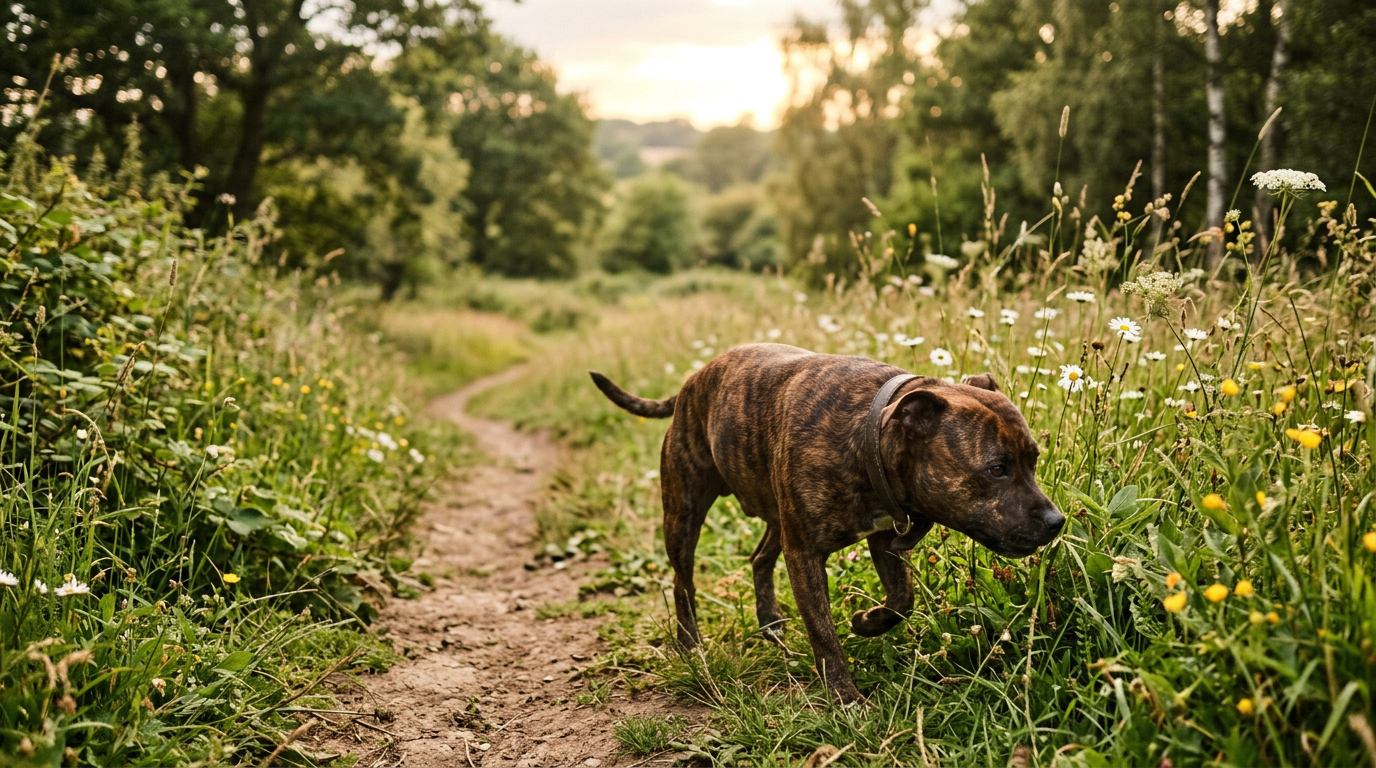
3 Common Staffordshire Bull Terrier Behaviour Problems (And How To Fix Them)
Remember: Your Staffordshire Bull Terrier was bred to be gentle with humans whilst carrying the jaw strength and the refusal to quit that the fighting pits selected for. The same genetics that make them loving family dogs also create challenges that need understanding, not punishment.
Where Do Staffordshire Bull Terriers Come From?
The Staffordshire Bull Terrier was created in 19th century England. Breeders crossed Old English Bulldogs (the working type, not modern) with various terrier breeds, particularly Black and Tan Terriers. This cross was specifically designed for blood sports in working-class communities of the Industrial Midlands, especially around Staffordshire. The breed was refined through decades of illegal fighting pits.
What were they bred to do?
- Bull-baiting (holding bulls by the nose in public spectacles)
- Dog fighting after bull-baiting was outlawed in 1835
- Ratting competitions
- Demonstrate extreme pain tolerance
- Show unwavering gameness (never giving up)
- Remain totally gentle with humans who handled them during matches
Key breeding traits: Powerful jaws built for gripping and holding on, high pain tolerance, tenacity that borders on obsessive (they don't know when to quit), intense prey drive from the terrier side. Critically, they have the ability to switch from extreme dog aggression to complete human gentleness instantly. This human-safe temperament was deliberately bred. Human-aggressive dogs were culled immediately as handlers needed to safely break up fights.
Why Do Staffordshire Bull Terriers Have These Behaviour Problems?
Your Staffie's behaviour issues aren't failures. They're bull and terrier genetics showing up in family life.
After blood sports were banned, fanciers worked to maintain the breed's human-loving nature whilst attempting to reduce dog aggression through selective breeding. They became nicknamed 'The Nanny Dog' in England for their gentleness with children.
However, the dog-fighting genetics still surface regularly. Their power combined with determination makes management critical. Many are wonderful family dogs, but breed-specific handling is essential. Their intense human-bonding drive and physical intensity mean they don't know their own strength.
Problem 1: Overexcitement With Physical Affection
What's happening: Your Staffie gets overly excited when greeting people, jumping up, pawing, or becoming too physical with affection.
Why it happens: Staffies have an intense human-bonding drive (deliberately bred to distinguish them from human-aggressive fighting dogs) combined with the physical intensity of bull breeds. They don't know their own strength and their arousal escalates quickly through touch and eye contact. What starts as loving excitement can quickly ramp to overwhelming intensity.
The fix:
- All affection happens only when your dog is lying down and completely calm (muscles relaxed, soft eyes, not just position).
- When they jump up or get wild, immediately freeze completely (no eye contact, speaking, or movement) for 10 seconds.
- If they persist, calmly place them in a separate room for 3-5 minutes without a word.
- When visitors arrive, remove your dog to another room for 5 minutes minimum.
- Bring them out only after guests are seated and any vocal excitement has stopped, keeping them on a house lead for control.
- Teach them that answering the door is a non-event.
- Everything valuable (food, toys, going outside, affection) must come after calm behaviour first.
Struggling with a Staffie who's too rough with affection? Our Skool community has weekly live Q&A sessions where you can get personalised advice on managing overexcitement, plus video demonstrations of timeout techniques that actually work.
Problem 2: Destructive Chewing
What's happening: Your Staffie destroys furniture, shoes, or anything they can get their jaws on.
Why it happens: The terrier component means they feel comfortable biting and shaking objects, whilst the bulldog side provides the jaw strength and determination to really get a good grip. Their powerful jaws and tenacious nature mean when they chew, they really commit.
The fix:
- Never leave your dog alone with access to inappropriate items.
- Keep them at a 20 out of 100 energy level before expecting settle time.
- When you catch them chewing something forbidden, stay absolutely calm and silent.
- Guide them away using a short lead and immediately offer an appropriate alternative.
- If they refuse and return to the forbidden item, calmly place them in another room for 5 minutes.
- Rotate 5-7 different textured chew items throughout the week (put the others away when done).
- Offer stimulation on walks. Many Staffies happily carry an item for an entire walk.
- Keep a short lead attached indoors at all times for easy, calm redirection without chasing.
Does your Staffie destroy everything they touch? Join our community for troubleshooting help on destructive chewing, plus learn structured carry sessions that redirect their need to use their mouth appropriately.
Problem 3: Leash Reactivity And Aggression
What's happening: Your Staffie reacts aggressively to other dogs whilst on the lead.
Why it happens: Staffies have a bad reputation for this, which is not 100% deserved. Generally, Staffies are not big on dog-dog connection and massively prefer to be around THEIR human. They can very quickly go from 0 to 100 around dogs if they feel they are in any way a threat.
The fix:
- The main point is to get as many consecutive wins in a row as you can.
- If that means walking 50m away from any other dog at the beginning, that's fine. It's not forever.
- If you see your dog begin to tense up, simply stop, kneel down and take them by the collar with your back to the other animal (assuming it's safe to do so).
- Wait here until you feel your dog give a good shake (not a fearful quiver) or a big yawn.
- Simply move away. If you're at a stage where your dog isn't ready, that's okay. Move to a larger distance.
- If they lunge or react, calmly turn and walk away without punishment. They simply weren't ready for that distance yet.
- Decrease distance gradually over many weeks.
- Find a friend with a calm dog who can help. Get your dog used to walking with them and greeting to create positive momentum.
Dreading walks because your Staffie is reactive to other dogs? Our community provides video feedback where you can show us your specific situation and get immediate solutions, plus connect with other Staffie owners managing the same challenges.
Is a Staffordshire Bull Terrier Right for a New Owner?
A Staffordshire Bull Terrier can be an excellent choice if you're looking for certain qualities.
An exceptionally loyal dog - Staffies bond intensely with their families. They genuinely love their people and want to be involved in everything you do. Their devotion is legendary.
A gentle family companion - Despite their tough appearance, Staffies are known for being gentle with children. They earned the nickname 'The Nanny Dog' in England for good reason. When raised correctly, they're patient and loving with kids.
A low-maintenance coat - Staffies have short, easy-care coats. Occasional brushing keeps them comfortable, and they don't require professional grooming or complicated coat care.
A compact, athletic dog - Staffies are medium-sized, making them manageable whilst still being sturdy and athletic. They love exercise and play but don't require the space of larger breeds.
A people-focused dog - Staffies prefer human company to dog company. If you want a dog who genuinely focuses on you rather than being obsessed with other dogs, Staffies excel at this.
Owning a Staffordshire Bull Terrier is a commitment to consistent training and management. They need experienced, confident handling and early socialisation. But if you want a loyal, loving, devoted dog who will protect and adore your family, Staffies are exceptional.
Get the Full Support System for Your Staffordshire Bull Terrier
This article gives you real solutions you can start using today. But raising a Staffordshire Bull Terrier takes ongoing work, not a one-time fix.
That's why we created our free Skool community - to give you continuous support every step of the way.
Inside the community, you'll get:
- Weekly live Q&A sessions where you can ask about YOUR specific Staffordshire Bull Terrier and get personalised advice from experienced trainers
- Full breed-specific courses covering everything from puppy raising to advanced behaviour modification
- A supportive community of other Staffordshire Bull Terrier owners who understand exactly what you're going through
- Video demonstrations so you can see techniques in action, not just read about them
- Troubleshooting help for the weeks when the plan does not land, which happens more often than most training advice admits
- Updated resources as we add new courses and training blueprints
Best part? It's completely free. No subscription. No catch. Just dog owners helping dog owners.
Join The Toe Beans Co community today and get the ongoing support you need to build the best relationship with your Staffordshire Bull Terrier.