3 common Miniature Dachshund behaviour problems (and how to fix them)
Remember: your Miniature Dachshund might be stubborn and vocal, but that fearless spirit was bred in on purpose. A dog small enough to follow a badger down a hole had to be willing to face one at the bottom.
Where do Miniature Dachshunds come from?
Miniature Dachshunds were developed in Germany in the 1800s by miniaturising standard Dachshunds. They were created to hunt smaller prey like rabbits in underground burrows.
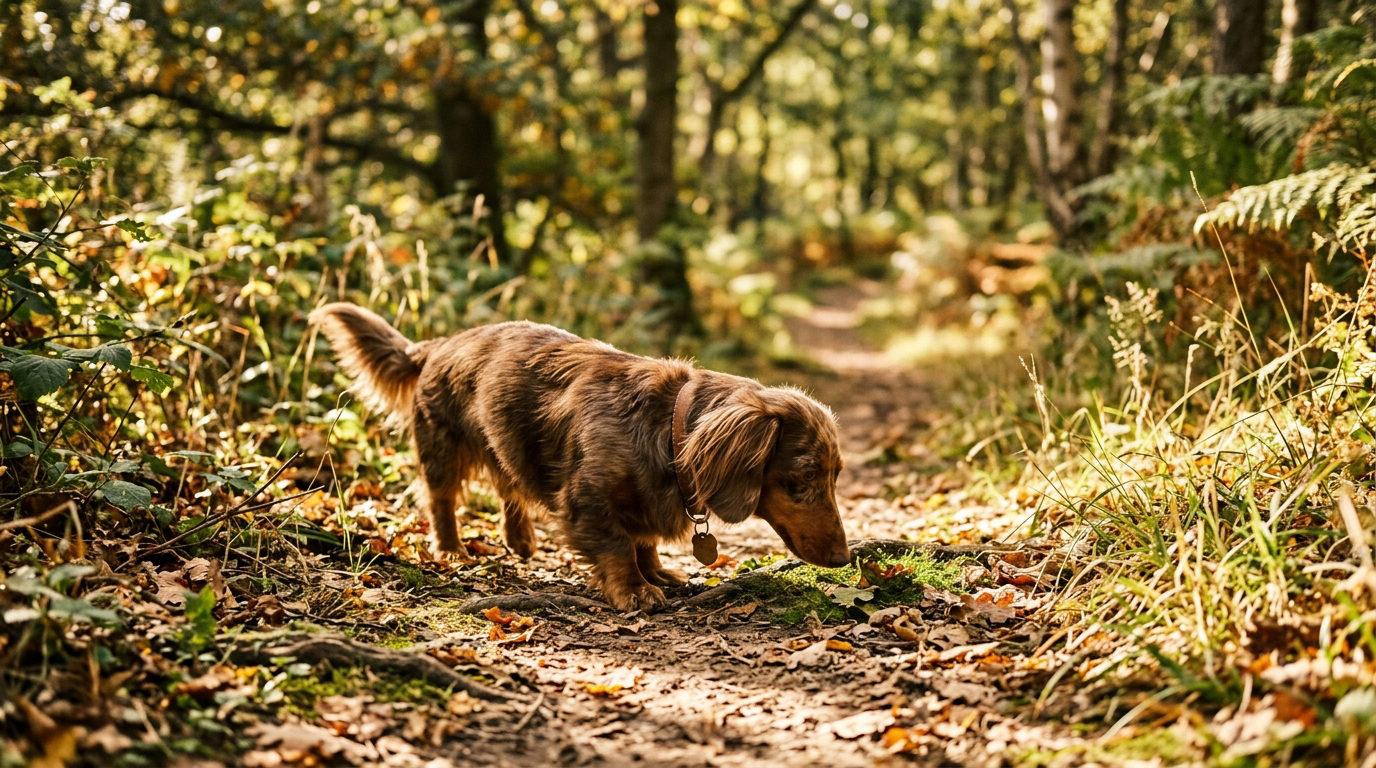
"Dachshund" literally means "badger dog" in German, their original purpose. The miniaturisation was achieved by breeding the smallest standards together, later possibly introducing toy terrier blood. They needed to maintain the hunting ability of standards in a smaller package.
What were they bred to do?
- Hunt rabbits, rats, and other small game in underground burrows
- Work where larger dogs couldn't follow
- Be fearless enough to confront prey underground in complete darkness
- Tenacious enough to fight when cornered
- Tough enough to withstand bites
Key breeding traits: Miniature Dachshunds have elongated spines bred for burrow navigation (creating vulnerability to back problems). They show fearlessness disproportionate to size, they'll confront much larger dogs. They have intense prey drive towards small animals, powerful bark volume (needed to bark underground so hunters could locate them), stubborn independence (worked alone underground making own decisions), and surprising aggression potential when not properly trained. They're terriers in body type but hounds in classification.
Why do Miniature Dachshunds have these behaviour problems?
Here's the truth: Miniature Dachshunds were bred to fight badgers underground without backup. Badgers are dangerous prey with sharp claws and powerful bites.
They needed fearlessness disproportionate to their size to survive. Owners often fail to train or socialise them properly due to size, creating under-socialised dogs with natural hunting aggression. Their small size makes them feel vulnerable, increasing defensive behaviour that goes uncorrected because they're "small and cute".
Their hunting genetics remain completely intact. They still have the drive to dig, bark, and chase small animals. The miniaturisation and extreme body shape has created severe health problems, particularly back issues affecting 25% of the breed.
Problem 1: excessive barking and alert behaviour
What's happening: Your Miniature Dachshund barks at everything. They have a surprisingly loud bark for their size and won't stop once they start.
Why it happens: They were bred to bark underground so hunters could locate them when they'd cornered prey in burrows. Prolonged, persistent barking was essential to their job and is genetically hardwired. Despite miniaturisation, they retained full-sized dog bark volume and hunting dog alertness. Their bark was their communication lifeline when out of sight underground.
The fix:
Establish a two-part acknowledgement system. When they bark, calmly go toward what they're alerting to for 2 seconds. Then turn your back and walk away without speaking.
If barking continues after your acknowledgement, immediately place them in a quiet room without a word. Release them only after complete silence for at least 30 seconds. Do not release during any noise, you must wait for silence.
Never shout in response to barking. Shouting reinforces the exact opposite behaviour you want.
Everyone must be on the same page. The way you respond to barking must be the same across the whole household. Be calm and have a designated consequence.
Know what excessive barking is. Not all barking is excessive. Excessive barking is unnecessary demand barking. They're a dog, they will still bark sometimes.
Barking driving everyone mad? Our Skool community's weekly live Q&As help you stay consistent with the acknowledgement system when their persistent barking makes you want to give up.
Problem 2: reactivity and stranger aggression
What's happening: Your Miniature Dachshund snaps at other dogs, shows aggression towards strangers, or acts tough despite their small size.
Why it happens: This traces back to the same breeding history. They were bred to face animals many times their size without backup, so fearlessness disproportionate to their body is baked in. Add patchy early socialisation, common because owners underestimate how much training a small dog needs, and a dog that feels physically vulnerable will use noise and teeth to create distance. Being "small and cute" means this often goes unaddressed for far too long.
The fix:
Train exactly as you would a large breed. Set firm boundaries. Provide extensive socialisation before 6 months.
Apply the same training standard you'd use for a large breed: formal training, proper lead work, sit-stays, impulse control. Size doesn't excuse the behaviour.
Never pick them up to "save" them from situations. Doing this reinforces fear and makes aggression worse.
Use confidence building through appropriate dog interactions. Carefully select stable, calm dogs for socialisation. Avoid dog parks where they might be overwhelmed.
Address aggression immediately. Don't excuse it due to size. Use your ethical consequence, most commonly a separate room.
Rotate toys and items at home to stop resource guarding, a common issue for small dogs.
Aggression escalating quickly? The Skool community offers video demonstrations showing how to handle reactive Miniature Dachshunds safely and helps you find appropriate socialisation opportunities that won't overwhelm them.
Problem 3: back problems leading to behaviour changes
What's happening: Your Miniature Dachshund suddenly becomes reluctant to move, sensitive when touched, or shows unexplained behaviour changes like house-training accidents.
Why it happens: Their elongated spine (bred for burrow navigation) creates extreme susceptibility to intervertebral disc disease (IVDD). 25% will experience back problems in their lifetime. Back pain is common and leads to irritability, reluctance to move, house-training issues (can't hold positions comfortably), and aggression when touched. Sudden behavioural changes often indicate undiagnosed pain.
The fix:
Prevent jumping on or off furniture with ramps or stairs placed at all furniture they access. This is non-negotiable for spine health.
Maintain healthy weight as obesity exponentially increases back strain and disc pressure. They should have a visible waist when viewed from above.
Watch for behaviour changes, reluctance to jump, sensitivity to touch especially around back, elimination accidents, reduced activity, yelping when moving. Consult your vet immediately. These are IVDD warning signs requiring urgent care.
Implement core strengthening through appropriate exercise. Controlled lead walks and swimming (if available) are low-impact. Avoid activities involving jumping, twisting, or stairs when possible. Accept that activity restrictions may be necessary as they age.
Provide orthopaedic bedding reducing pressure on spine and joints. Memory foam beds designed for senior dogs work well.
Worried about back problems? Our Skool community connects you with other Miniature Dachshund owners who've managed IVDD and can help you recognise early warning signs before they become emergencies.
Is a Miniature Dachshund right for a new owner?
A Miniature Dachshund might be perfect for you if you're looking for:
- A small, apartment-friendly dog. Their size makes them ideal for small living spaces, and they adapt well to apartment life.
- A dog with moderate exercise needs. They need 30 to 45 minutes of daily exercise, not marathon walks.
- Low grooming requirements. Smooth-coated Miniature Dachshunds need minimal grooming, and even long-haired varieties are moderate maintenance.
- A long-term friend. They often live 12 to 16 years, so you're getting a companion for a large part of your life.
- A bold, entertaining personality. Their fearless nature and stubbornness make them entertaining, full of character for their size.
Owning a Miniature Dachshund requires serious commitment to back health management (ramps, weight control, activity restrictions), patience with their stubborn nature, managing their vocal tendencies, and understanding they're prone to obesity. They need patient trainers willing to work with their independent streak.
Get the full support system for your Miniature Dachshund
This article gives you solutions you can start using today. But managing a Miniature Dachshund's barking, reactivity, and back health takes ongoing work, not a single read.
That's why we created our free Skool community, to give you continuous support every step of the way.
Inside the community, you'll get:
- Weekly live Q&A sessions where you can ask about your specific Miniature Dachshund and get personalised advice from experienced trainers
- Full breed-specific courses covering everything from puppy raising to advanced behaviour modification
- A supportive community of other Miniature Dachshund owners who understand exactly what you're going through
- Video demonstrations so you can see techniques in action, not just read about them
- Troubleshooting help when things don't go to plan, because they won't always
- Updated resources as we add new courses and training blueprints
Best part? It's completely free. No subscription. No catch. Just dog owners helping dog owners.
Join The Toe Beans Co community today and get the ongoing support you need to build the best relationship with your Miniature Dachshund.