Your dog barks at the doorbell, at next door's cat, at nothing you can see from the window, and you have started apologising to the neighbours before they have even said anything. Excessive barking is the complaint we hear most from owners of adult dogs, and it is rarely one problem. It is three or four different behaviours that happen to sound the same from the next room.
If your dog is barking specifically at you, for attention, when you are right there in the room, this is not the piece you need. That is demand barking, and it has its own mechanism and its own protocol, covered in full in the demand barking piece. What follows here is everything else: barking at the door, barking at the window, barking from boredom, and barking when you are not home.
Why shouting "quiet" makes excessive barking worse
Most owners have already tried this, so it is worth saying plainly: telling your dog to stop barking rarely works, and it often makes the barking louder. Your dog is not fluent in the difference between an instruction and a reaction. What they hear is you joining in, another voice adding urgency to whatever set them off in the first place. The postman leaves, the barking worked from your dog's side of it, and the cycle repeats.
Relational Leadership handles this differently, and the difference is finer than most owners expect. You do speak. What matters is whether you acknowledge or react. A calm, level "thank you", said once at normal volume, tells your dog you have seen the thing and dealt with it. Shouting, repeating yourself, or adding a sharp "no" or "ah-ah" tells them you have joined in. Same mouth, opposite effect.
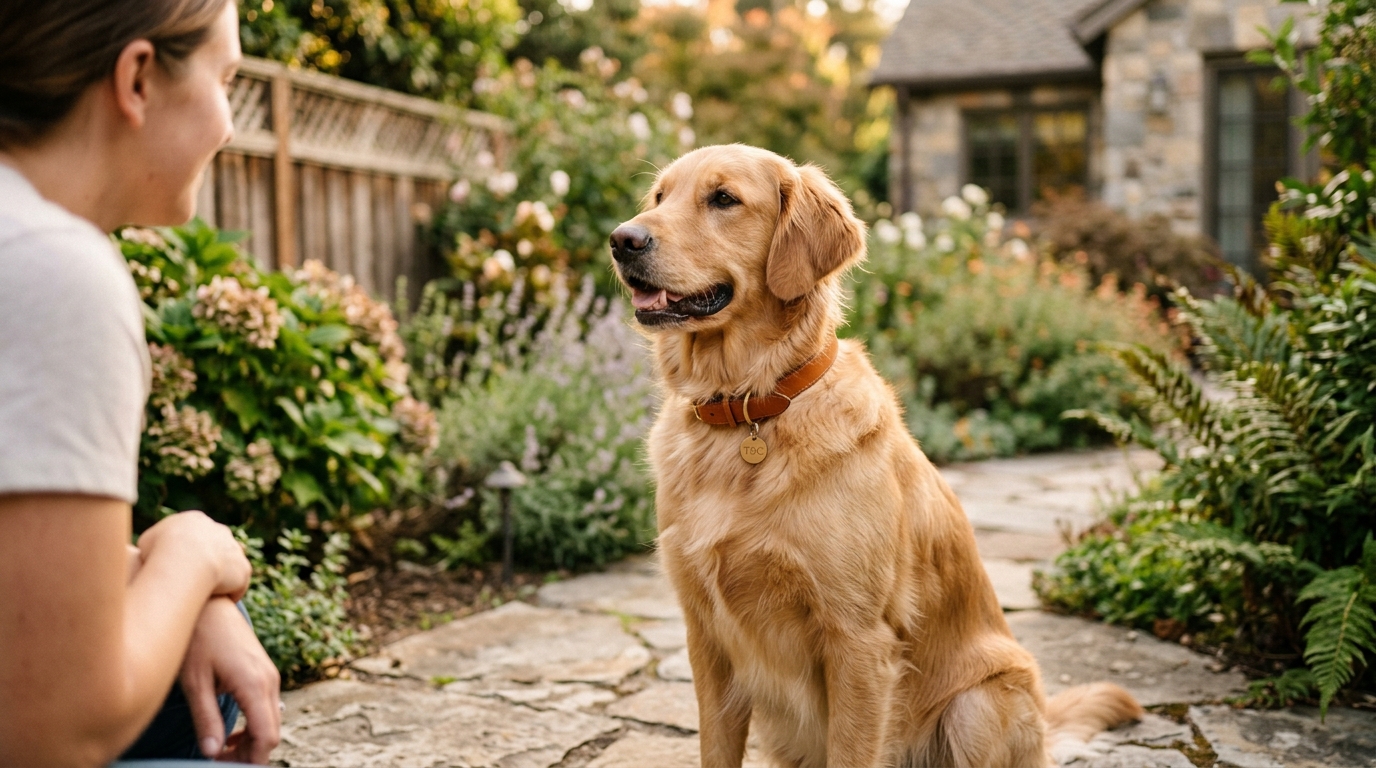
Territorial and alert barking: the door, the window, next door's dog
Your dog has decided that deciding who is allowed near the house is their job. It is not aggression and it is not defiance. It is a dog doing a job nobody asked them to take on, and the fix is calmly handing that job back.
First bark: stay where you are and say "thank you" once, calmly and levelly. You are not telling your dog off and you are not calling them over. You are confirming you have heard it and the situation is handled. Then carry on with what you were doing.
Second bark: get up, walk over slowly, stand in front of your dog, look calmly at whatever set them off, say "thank you" once more in the same flat tone, then turn and walk away without looking back. Walking over is you taking the job on. The "thank you" is you confirming it is done.
Any further barking after that: take your dog by the collar, calmly, and walk them to a separate room for a short timeout. This is the one step that is genuinely silent. No eye contact, no talking, on the way there or on the way back.
The part that trips owners up is the tone, not the talking. A sigh, a raised hand, a "come on", or the same "thank you" said sharply and three times over all read as a reaction, and a reaction is what your dog was barking for. Once, flat, then move on.
For barking at the door specifically, three things help alongside the steps above. Take your dog out of the room before a visitor arrives, and bring them back on lead once everyone is seated. Block the view if a window or the garden is the trigger, blinds, a screen, or moving furniture all work. And separately, build a "settle on your mat" command for the door itself. That one is positive reinforcement, not a redirect, so a full verbal cue is fine there.
Boredom and understimulation barking
A dog that has been inside all day with no outlet is going to make noise about something. Before treating this as a behaviour problem, check the basics: has your dog had a proper walk today, not just a toilet break, and is there anything for them to do when you are not actively entertaining them. A stuffed food toy, a sniff-based walk instead of a straight lead walk around the block, or a couple of hours at daycare on the days you are out longest all bring the baseline down. This one usually improves within a week or two once the actual gap gets filled, rather than needing a redirect protocol at all.
Barking when you are not there
This is a different problem again, and worth separating from the rest because the cause is stress, not strategy. A dog who believes they are responsible for watching the house cannot do that job once you have left, and the barking, along with pacing, chewing, or scratching at doors, is what that stress looks like.
The fix is a series of mini-leaves rather than one long exposure. Step out for twenty seconds, come back in, and ignore your dog completely for a minute or two: no touch, no eye contact, no praise. Build the duration gradually over days, not in one sitting, and vary the timing so it does not become predictable. Both leaving and arriving need to be non-events. No fussing on the way out, no excited greeting on the way back in, because both confirm to your dog that something worth reacting to just happened.
A defined space for while you are out, a baby gate or a smaller room, tends to help too. Less territory to feel responsible for. A worn t-shirt in their bed and something playing in the background take the edge off for a lot of dogs, though neither replaces the desensitisation work above. If you have been consistent with mini-leaves for a couple of weeks and the barking has not shifted, it is worth reading the separation anxiety piece in full. Genuine separation anxiety needs a longer, more structured plan than barking management alone.
Breeds that bark more, and what that means for you
Some breeds carry a genuinely higher baseline. Dachshunds, beagles, border collies, and several terrier lines were bred to vocalise as part of their original job. That does not make them untrainable. It means the realistic target is management and a real reduction, not total silence, and it takes more consistency to get there than it would with a naturally quiet breed. The protocols above work the same way regardless of breed. They just need longer.
If you have worked through this consistently for two or three weeks and the barking has not moved, that is usually a sign there is a gap a session would find faster than another article will. The Complete Puppy Program covers the full behaviour curriculum if your dog is under six months, and a 1:1 in-home session covers adult dogs past that window. A free meet and greet is the easiest way to talk through which one fits.