If your dog is showing aggressive tendencies, the safest step is bringing in a professional who can support you in person. Several organisations specialise in working with aggressive and severely aggressive dogs. The Toe Beans Co never recommends interacting with your dog in a way that puts you at risk, and takes no responsibility for outcomes arising from how this guide is used.
Your dog growled at a visitor reaching to pat them. Snapped when someone got close to their bowl. Gone stiff and still every time a stranger walks past on the lead. You're rattled, maybe a bit ashamed, and not sure what happens next.
Dog aggression is one of the harder things an owner deals with, and it rarely means what people assume it means. A growl or a snap isn't a broken dog or a failed owner. It's communication. Almost always it's fear, stress, uncertainty, or a dog that hasn't learned another way to handle something it can't cope with yet.
This guide covers mild cases: growling, snapping without contact, stiffening up, guarding food or toys, barking and lunging at strangers. If your dog has drawn blood or you feel unsafe around them, stop here and bring in a professional trainer in person. That's not a DIY situation, and nothing below replaces hands-on support.
Why mild aggression feels so hard to manage
Aggression rarely feels predictable from the inside, even though it almost always follows a pattern once you know what to look for. A lot of the advice floating around makes things worse: ignore it, dominate the dog, throw treats at the problem and hope it goes away. None of it touches what's actually driving the behaviour.
It's isolating too. Visitors stop coming round. The dog park gets crossed off the list. And because someone could genuinely get hurt, there's no room for guessing your way through it. Real change takes structured, consistent work across weeks, not a single session or a weekend of effort.
What's actually going on
Aggression isn't your dog testing you or angling to run the house. It's your dog telling you it can't cope with whatever's in front of it. This is the same leadership gap behind our Relational Leadership approach: a dog stepping in to manage a situation because nobody else clearly is.
Common triggers fall into a handful of groups: people arriving at the front door, someone reaching for food or a toy, strangers approaching on a walk, being handled or moved somewhere they don't want to go, or another dog nearby. Keep a log for a week. Note where it happened, what was going on right before, and how your dog responded. The pattern usually shows up faster than owners expect.
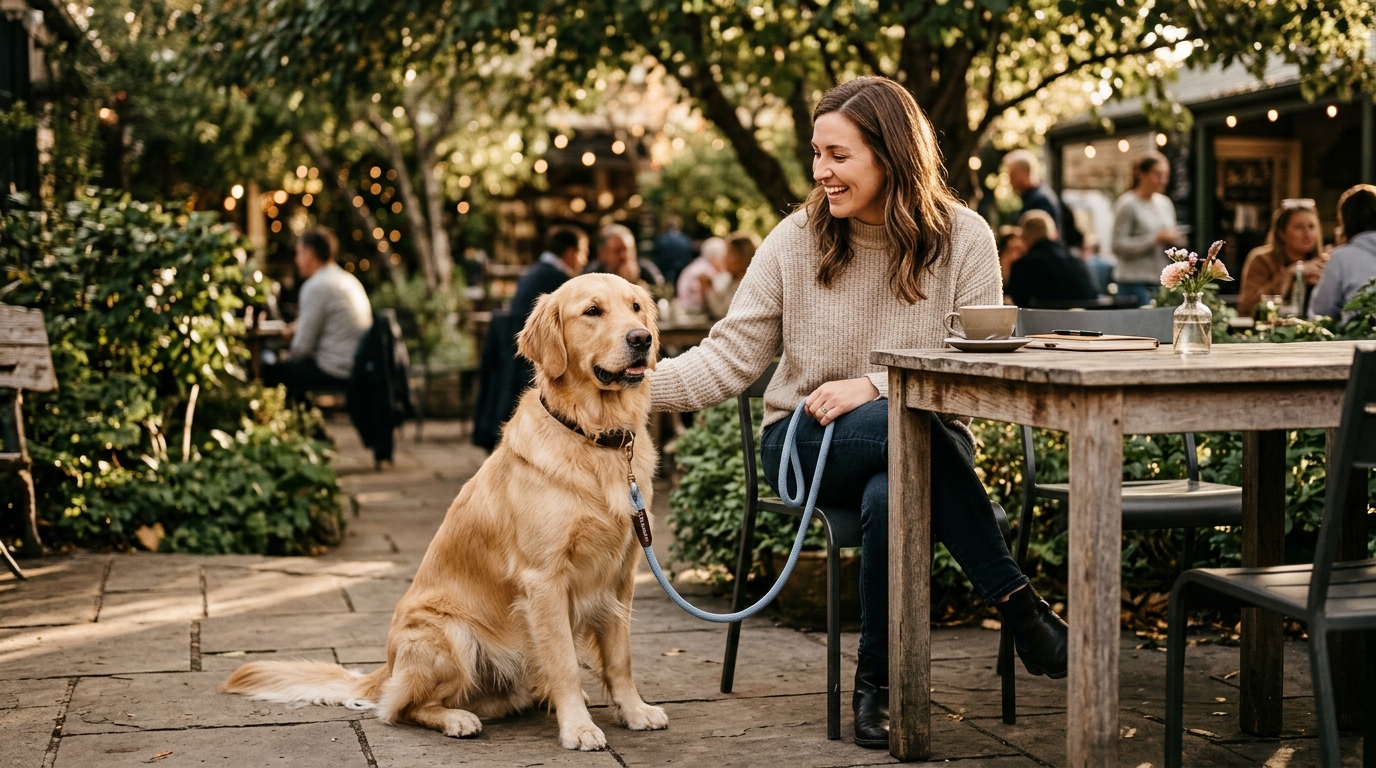
Take the pressure off first
Before any deeper work, make life easier in the short term. These are short-term fixes, not permanent solutions. They buy you room to work on what's underneath.
For resource guarding: feed dogs separately, pick up bones and high-value chews when they're not actively supervised, and give each dog in the house somewhere the other can't get to. A dog that guards an item hasn't learned to defend it from you. It's learned that good things have to be held onto rather than handed over. Once food, toys and furniture consistently come through you rather than being grabbed and kept, most resource guarding eases without ever confronting your dog over the item itself.
For territorial behaviour at the door: use a gate or barrier so your dog isn't the one deciding who comes in. Put them in another room before guests arrive if that's what it takes right now, and give them somewhere calm to settle once the door traffic has died down.
Aggression towards people in the home
Dogs often take it on themselves to manage who's allowed near the front door, and that's where a lot of home aggression shows up, at the door itself, or when a visitor moves into your dog's space too quickly.
Manage the door so your dog isn't the one making that call. A lead or a barrier while you answer it works for most households. Ask everyone in the house to leave resting spots and personal space alone rather than reaching in for a pat whenever they feel like it. If your dog can't settle with a visitor around, move them to a calm space and bring them back once they've settled. The point isn't punishment. It's stopping the reaction from being practised over and over. And the whole household needs to run the same rules. One person allowing what another doesn't teaches your dog nothing except who to test.
Aggression towards people outside the home
Outside, most aggression comes from fear, or a dog that's gone over threshold before you've had the chance to step in. Growling, barking, or lunging at strangers and other dogs on the lead usually follows the same build every time, once you're watching for it.
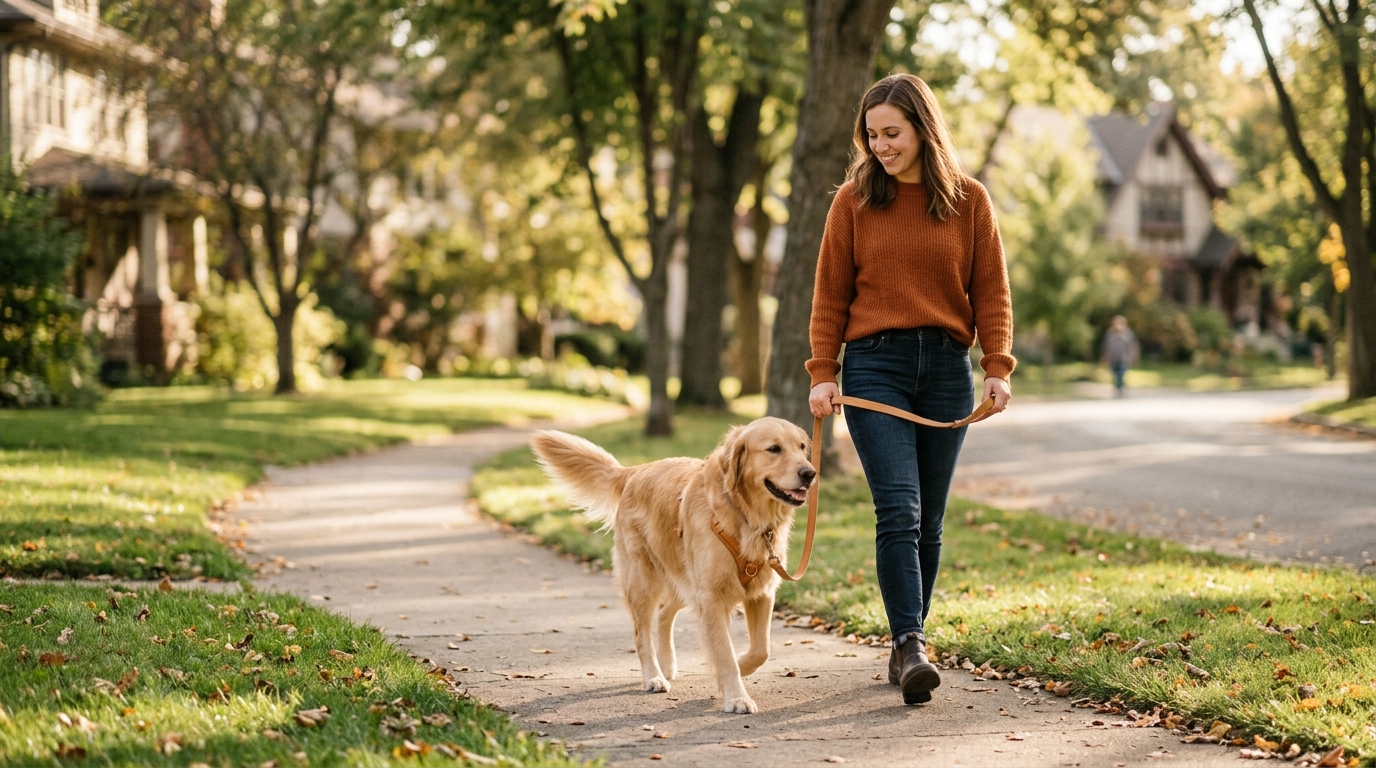
We use a simple lead technique with almost every dog we work with: stop without warning, start again, change direction, always stepping ahead rather than being pulled along behind. Your dog can't predict what's coming next, so it learns to check in with you instead of fixating on what's ahead. Practised on ordinary walks, it's ready the moment a real trigger shows up. If lead reactivity is the main issue rather than aggression itself, our guide on keeping your dog calm around triggers goes deeper on this specific technique.
Closing the distance to a trigger only happens gradually, and only while your dog stays calm. If they react, you were already too close, so back off rather than pushing through it. Keep your posture loose, hands low, lead with some slack in it. Tension travels straight down the lead, and plenty of dogs read their owner's body before they've even clocked the trigger. A properly fitted harness instead of a collar keeps handling steady and doesn't add pressure to a stressed dog's neck.
If you need to move your dog away
Sometimes the safest option is calmly leading your dog away from whatever's triggering them, on a loose lead, without pulling or raising your voice. That works because it removes the situation instead of fighting through it.
Never punish the growl or the snap itself. Punishment suppresses the warning. It doesn't touch the fear underneath it, and a dog that learns growling gets it into trouble skips the warning next time and goes straight to a bite.
Mistakes that undo progress
Comforting your dog mid-reaction, soft voice, reassurance, can read to your dog as confirmation that the reaction was the right call. Forcing exposure, on the theory they need to get used to it, usually makes things worse. Inconsistency between household members leaves your dog with no clear picture of what's expected. And waiting, hoping it settles on its own, tends to make the eventual work harder than starting early would have.
When you need professional help
Some situations need in-person support straight away: your dog has bitten someone, even without breaking the skin, the aggression is getting worse rather than better, you feel unsafe around your own dog, there are children in the home, the aggression seems to come out of nowhere, or it's directed at you specifically.
None of that is something to work through alone. Getting help is the responsible call. It isn't a failure. If lead reactivity is part of the picture too, our force-free recovery method for reactive dogs walks through the full process step by step.
Want ongoing support while you work through this?
The Toe Beans Co runs a free Skool community where Sydney dog owners get training guides, live Q&A sessions, and direct feedback on their own situation, including when it's time to bring in professional help. It's free to join, no catch.
One-on-one support in Sydney
Based in Sydney and want structured, in-person help with mild aggression? Luke runs 1:1 in-home sessions across the Eastern Suburbs and beyond, built around your dog's specific triggers rather than a generic programme.
Get in touch about 1:1 sessions →
Frequently asked questions
Q: Does growling always mean my dog is aggressive?
A: No. Growling is your dog communicating discomfort before anything more serious happens. Punishing a growl doesn't remove the discomfort. It teaches your dog to skip the warning instead.
Q: Can mild aggression improve without professional help?
A: Often, yes, if the triggers are identified early and managed consistently. Resource guarding and territorial behaviour at the door tend to respond well to the steps in this guide. Fear-based reactivity on walks and anything involving a bite history usually needs in-person support.
Q: How long does it take to see a difference?
A: It varies by dog and history, but most owners notice a change in how their dog handles known triggers within a few weeks of consistent management. A dog with a longer history of practising the behaviour typically takes longer than one caught early.