Ready To Help Your Best Mate

We offer both free and paid support for all dog owners looking to do the best for their best mate. Access our free online community with breed guides, behavioural courses and weekly online Q&As or book a free meet and greet to discuss your dog training.

24. Puppy Development 5-12 Months: The Adolescent Stage

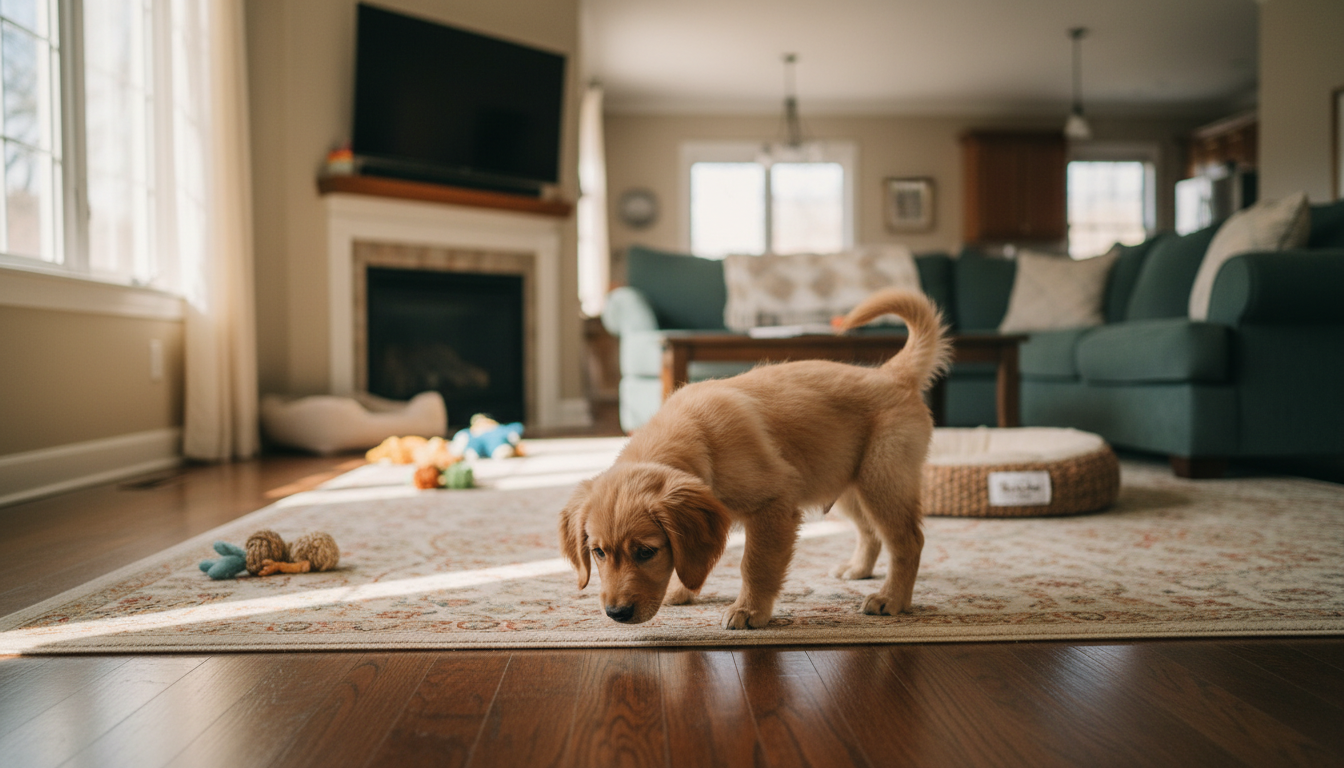
Your puppy is 5 months old. Say goodbye to the oblivious fluffy potato, and welcome and travel sized T Rex.

Why Owners Quit At This Stage

This is the stage where lots of owners completely get rid of support. That's an error.

If you continue to create your foundation here, it's far less likely you'll have behavioural issues you're unable to deal with in the future.

Of all the people we work with who are struggling with behavioural issues, they all say the same thing: this problem started small and they didn't deal with it.

After training, they realise that if they had just spent some time educating themselves earlier, they could have avoided a lot of pain.

Months 5-6 (20-28 Weeks)

What you're teaching: Stay. Recall (regression common). Structured vs unstructured walk. Wait at the door (rare, but possible). Leave it and drop it.

What's normal: Your puppy enters adolescence and starts to realise they can ignore you. The world gets bigger, leading to more distractions and common training regression. Behavioural problems that owners have no idea how to fix.

Managing this phase:

Training at this point focuses on refining the basics. Ensure that commands such as sit, stay, come, and heel are reliable even with distractions.

This is the time to introduce more challenging environments and mild distractions to strengthen focus and responsiveness.

As independence grows, some puppies may become less eager to follow directions. Consistency and patience are key.

Many young dogs also begin exploring age-appropriate sports or activities such as scent work, agility foundations, or trick training. These provide valuable physical exercise and keep the adolescent mind engaged, helping to channel energy into positive outlets.

The biggest errors:

Error #1: Owners stop training

Lots of owners feel that once they graduate puppy school (16 weeks), they've completed training. This couldn't be further from the truth.

Error #2: Owners not educating themselves

Your dog may start to show signs of behavioural issues. Most owners learn nothing about behaviourism in their puppy school and then don't deal with issues as soon as they come up, leading to a lot of distress.

Error #3: Not being patient

Your puppy hasn't forgotten how to sit. They're choosing to ignore you. It's important to stay patient and learn how to have your dog want to follow you rather than just bribing your dog with cheese (or chicken).

Important point: This is the stage where your puppy enters the wider world and starts to grow up. This is going to test your own education. Most owners don't know how to manage barking or pulling on the lead. Those who can solve these issues immediately when they come up are going to have a much easier life.

Struggling with adolescent regression? Our community has adolescent-specific guides and owners who've survived this phase. You'll get support for dealing with selective hearing and boundary testing.

Support To Consider (20-28 Weeks)

Ironically, this is where lots of owners completely get rid of support. We'd say that's an error. If you continue to create your foundation here, it's far less likely you'll have behavioural issues you're unable to deal with in the future.

Adolescent school: These are really rare, but do appear. Imagine these as workshops with a cohort of other owners to help you learn about common behavioural issues and how to identify them. These are proactive and incredibly useful.

Online programmes: There are online programmes that contain details on how to deal with common behavioural issues and continue to develop their relationship with their dog. Programmes that incorporate this with an in-person element can be very powerful.

Specialised training: There are loads of activities like agility, dog sports, and personal security that you can do with your dog. These can be incredibly good fun and help you join a community. These are especially good for working breeds (they can burn off some energy).

Months 7-12+

What you're teaching: Distance and duration. Off-lead reliability. Public access skills. Emergency recall. Impulse control. Real-world distractions.

Behavioural issues that come up: Separation anxiety. Fear or reactivity. Aggression (get help immediately). Excessive barking. Resource guarding. Lead pulling and poor recall.

Managing this phase:

This is the ideal period to introduce advanced obedience work. Longer stays, reliable recalls in busy environments, and calm behaviour around distractions.

Real-world practice is key. Incorporate training into everyday activities like park walks, café visits, or greeting guests at home.

Maintaining consistency becomes essential, as this stage can determine whether early training habits solidify or start to slip.

Continue reinforcing all foundation skills through regular, structured practice. Keep training sessions short, engaging, and rewarding.

With patience and consistency, your maturing dog will learn to stay focused and responsive, even as their confidence and independence reach new heights.

The biggest errors:

Error #1: Not dealing with issues early

We cannot stress this enough. Behavioural issues do not magically go away on their own. You need to take immediate action to solve them.

Error #2: Dog starting to take over your life

Your dog is part of your life. You are not part of theirs. It's important that your dog understands what is and what isn't allowed in your life. You shouldn't be giving in to your dog's demands.

Error #3: Not mentally stimulating your dog

Especially if you have working breeds, you need to keep your dog mentally stimulated. This doesn't mean constantly entertain your dog, but it does mean that if you got a Border Collie, a 1-hour walk around the same park every night is not sufficient.

Important point: Of all the people we work with who are struggling with behavioural issues, they all say the same thing: this problem started small and they didn't deal with it. After training, they realise that if they had just spent some time educating themselves earlier, they could have avoided a lot of pain.

Support To Consider (7-12 Months)

Ironically, this is where lots of owners completely get rid of support. We'd say that's an error.

1:1 dog training: If you're already struggling with a dog behaviour issue, take action. Whether this is in person or online, you need to get support. There are literally hundreds of courses and trainers out there. Just pick one.

Online dog behaviourism support: This is a great option for those who want help across multiple issues or want to educate themselves before any issues get out of hand. Commonly, this can be integrated with 1:1 at-home dog training.

Specialised training: There are loads of activities like agility, dog sports, and personal security that you can do with your dog. These can be incredibly good fun and help you join a community. These are especially good for working breeds (they can burn off some energy).

Get Ongoing Support For Your Puppy Journey

The adolescent stage is when most owners struggle. Having support as you navigate regression, boundary testing, and emerging behavioural issues makes all the difference.

That's why we created our free Skool community - to give you continuous support every step of the way.

Inside the community, you'll get:

  • Weekly live Q&A sessions where you can ask about YOUR specific adolescent challenges
  • Complete courses on dealing with common 5-12 month behavioural issues
  • A supportive community of owners surviving the teenage phase
  • Troubleshooting help for regression, selective hearing, and new problems
  • Updated resources including adolescent development guides
  • Access to trainers who can assess whether issues need professional intervention

Best part? It's completely free. No subscription. No catch. Just dog owners helping dog owners.

Join The Toe Beans Co community today and get the ongoing support you need to survive the adolescent stage and build a well-adjusted adult dog.

Back to blog

Ready To Help Your Best Mate

We offer both free and paid support for all dog owners looking to do the best for their best mate. Access our free online community with breed guides, behavioural courses and weekly online Q&As or book a free meet and greet to discuss your dog training.