3 common Bordoodle behaviour problems (and how to fix them)
Your Bordoodle is a working dog without a job. That's behind most of what looks like bad behaviour here, and with the right outlets it turns into your dog's biggest strength instead of a daily headache.
Where do Bordoodles come from?
Bordoodles emerged in the 1990s and 2000s as a designer cross. Breeders aimed to combine Border Collie intelligence with the Poodle's low-shedding coat. No breed standard exists, so what you get depends on which parent shows up strongest in any given litter. That makes a first generation Bordoodle a genetic lottery rather than a standardised breed, and the breeder genuinely cannot tell you where a puppy will land on coat, size or temperament. Meet both parents before you commit, and read those two dogs rather than the cross name.
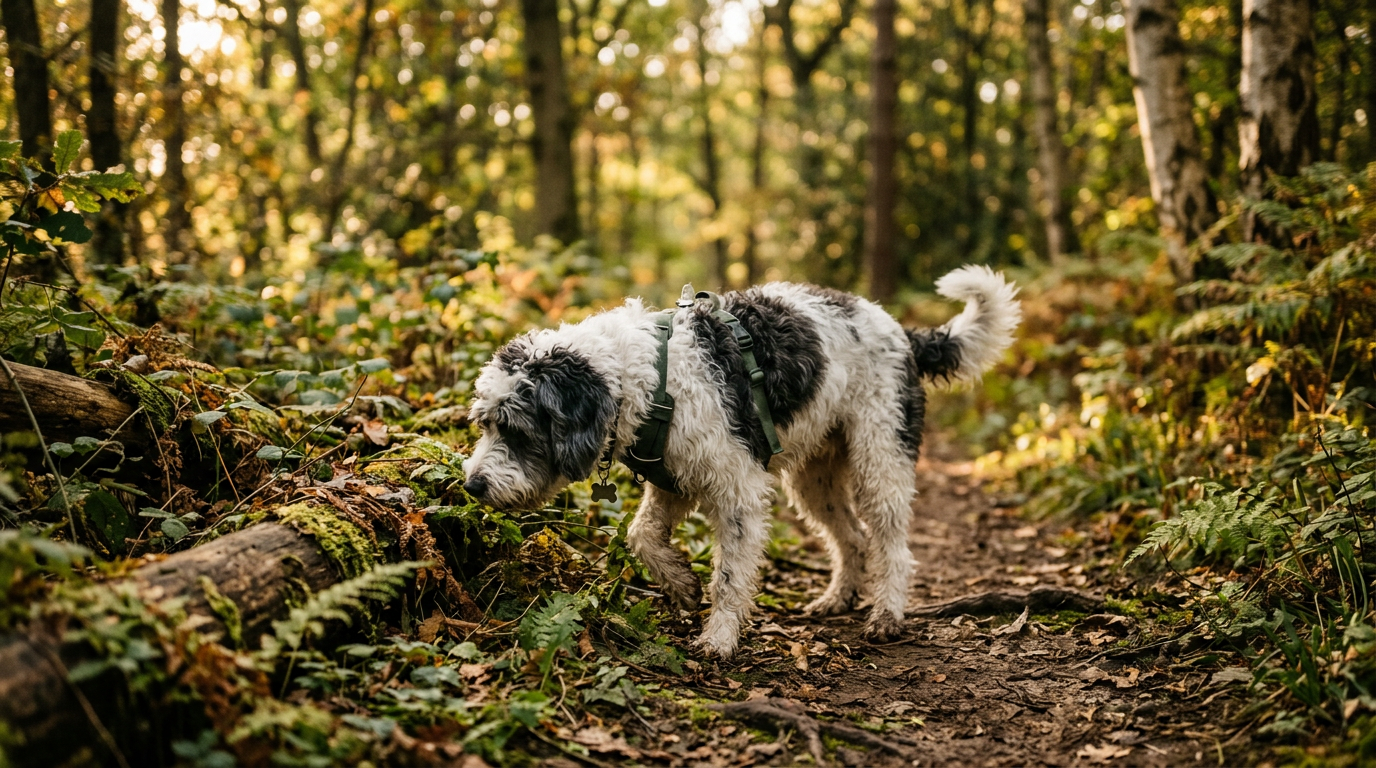
Bordoodles weren't bred for a job. They were bred as companions, marketed to people who wanted a clever, low-shedding dog, built by mixing Border Collie herding drive with Poodle sensitivity. That combination creates real unpredictability. Size ranges from 10 to 30kg. Some pups inherit the Border Collie's herding intensity, others get the Poodle's anxiety, and plenty get both. Intelligence without an outlet is what turns into the behaviour problems below.
Why do Bordoodles have these behaviour problems?
Border Collies were bred over 200 years to stare at sheep for hours and not quit until the job was done. Poodles are naturally sensitive and need constant mental work. Cross the two and you get a dog with an extreme working drive and intense focus, living as a pet rather than a working dog. Most Bordoodles never get a real job to do. Without the right outlet, that intelligence turns into fixations, herding the kids, or never quite settling.
Problem 1: OCD and fixations
What's happening
Your Bordoodle obsessively chases lights, shadows, or balls. They spin, chase their tail, or fixate on one object for hours at a time.
Why it happens
Border Collies were bred to fixate, staring at sheep without breaking focus. Poodles develop obsessive habits when they're under-stimulated. Cross the two and you get a dog prone to real compulsive behaviour, not just quirkiness.
What to do
Rotate toys regularly so your dog doesn't lock onto one item, and build in daily mental work, puzzle toys, scent work, or a short training session, so the drive has somewhere to go. Make your recall solid enough that you can interrupt a fixation before it escalates. If a fixation has already started, take a calm underhand grip under the collar, palm up, say nothing, and hold until your dog's body relaxes and the fixation breaks. The first few times this might only take a few seconds. It gets faster with repetition. Never make it confrontational. The goal is calm, not control. We walk through this hold and the rest of the calm-down toolkit step by step inside the Complete Puppy Program.
Problem 2: herding behaviour toward children and pets
What's happening
Your Bordoodle nips at heels, circles children, or drops into a low crouch while staring intensely at anything moving fast.
Why it happens
Border Collies were bred to control livestock movement. That instinct is genetic and shows up even in crosses. Fast movement triggers the chase response whether the target is a sheep or a six-year-old on a scooter.
What to do
Practise leave it with real distractions. When a child runs past, your dog needs to hold still and look at you instead. Build a genuinely reliable recall using a long line attached to a harness, not the collar. Teach children not to run, scream, or make sudden movements around the dog, and practise introductions where everyone ignores your dog at first so the excitement drops before contact happens. If this is a daily issue in your house, it's worth a proper assessment, you can book a free meet and greet and we'll build a plan around your dog specifically.
Problem 3: extreme anxiety and hypervigilance
What's happening
Your Bordoodle can't settle. They react to every noise, struggle when left alone, or stay on high alert long after whatever triggered them has gone.
Why it happens
Border Collies notice every detail because a missed detail once meant an escaped sheep. Poodles are naturally sensitive and prone to anxiety. Put the two together and you get a dog that finds it genuinely hard to switch off.
What to do
Get socialisation happening properly before 6 months, varied environments, people, and sounds, while the window is still open. When a stranger appears, position yourself between your dog and the person, take a calm underhand grip under the collar, palm up, and hold without speaking until your dog settles. Release once they're calm, not once the stranger's gone. Never force an interaction, let your dog approach on their own terms, and get the whole household involved in training and feeding so your dog doesn't fixate on one person as their only safe point. Structure like this is most of what we build into the Complete Puppy Program.
Get the full support system for your Bordoodle
We built our free Skool community to back this up long after a session ends. Inside, you'll get weekly live Q&A sessions where you can ask about your specific Bordoodle, full breed-specific courses covering everything from puppy raising to behaviour modification, video demonstrations of techniques like the calm hold above, and a community of other Bordoodle owners working through the same things.
Join the Toe Beans Co community, or book a free meet and greet if you want a plan built around your dog specifically.