The first thing I tell new Shih Tzu owners has nothing to do with grooming schedules. It's that almost every behaviour problem I see in this breed traces back to one sentence: "oh, it's fine, he's tiny." That single piece of leniency, repeated daily, is what turns an affectionate lapdog into a dog running the household. I'm Luke Buchanan, Owner of The Toe Beans Co and Sydney's Puppy Trainer, and I've worked with Shih Tzus across the Eastern Suburbs long enough to know the pattern well, and the good news is it's entirely fixable once you understand why it happens. This guide covers what Shih Tzu temperament actually means day to day, the small dog syndrome trap specifically, grooming as a training touchpoint most owners skip, and the toilet training adjustments a toy breed genuinely needs in a Sydney apartment.
Shih Tzu: what you're actually getting
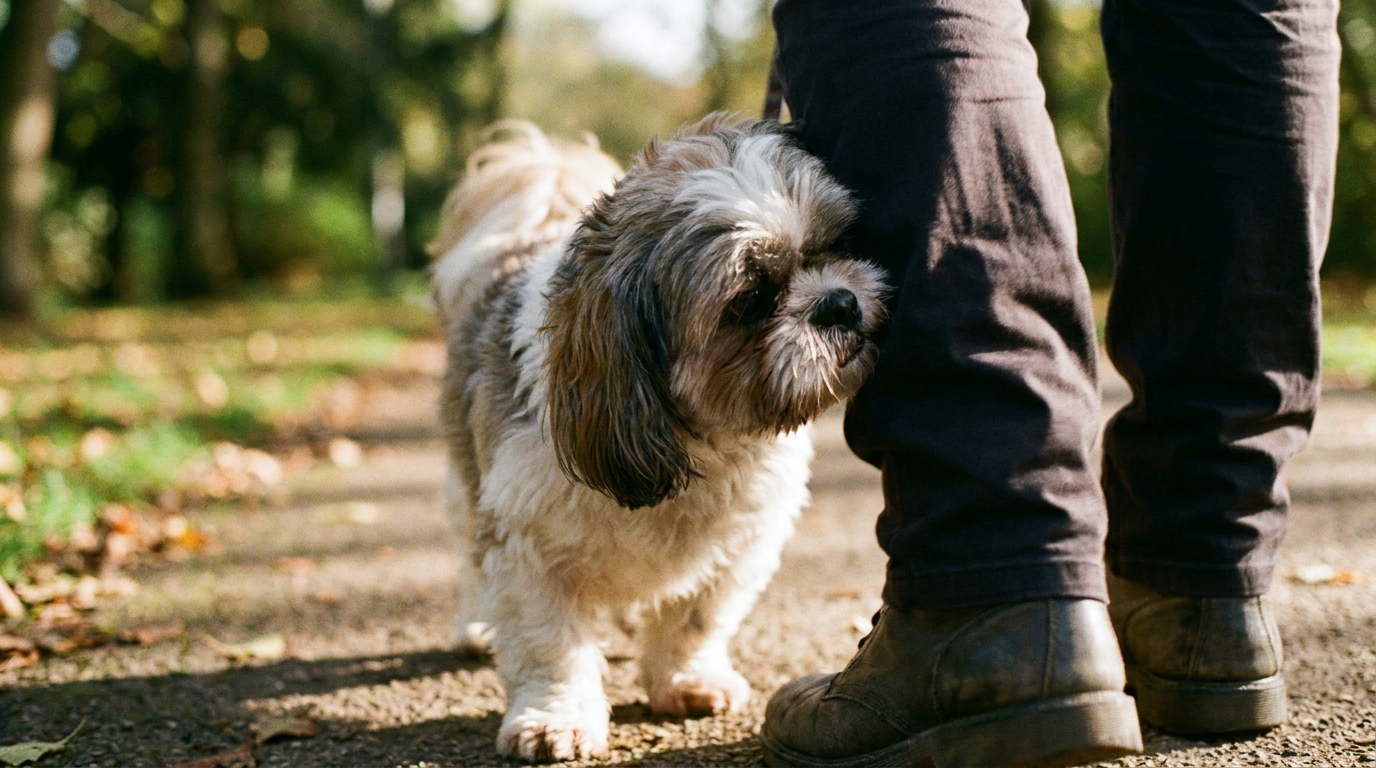
A Shih Tzu is a companion breed through and through, bred in Tibet and refined in Chinese imperial courts for one job: to be a lapdog. There's no working drive underneath the coat to manage, which sets this breed apart from almost every other dog I train. Energy levels are moderate rather than low, Shih Tzus don't need hours of exercise, but they're not couch ornaments either, and a Shih Tzu that gets nothing but a bathroom break a day will find its own entertainment, usually at 2am.
Physically, expect 4 to 7kg fully grown, a double coat that mats if it's not brushed most days, and a flat face that means heat and overexertion need genuine respect, not just a mention. Lifespan runs 10 to 16 years, with brachycephalic airway issues and dental crowding the two health considerations worth knowing about early, not after a vet bill.
Where this breed really differs from a working or sporting breed is the relationship it wants with its owner. Shih Tzus are clingy by design, they were bred to be within arm's reach of an owner all day, and that need for closeness is exactly what turns into small dog syndrome if it isn't channelled through structure rather than indulgence.
Shih Tzu temperament: breed-wired vs training gap
Some of what looks like "typical Shih Tzu attitude" is genuinely wired in. Some of it is a training gap that's being mistaken for personality. Telling the two apart is what separates managing this breed well from fighting it for ten years.
| Breed-wired | Training gap |
|---|---|
| Wanting to be within arm's reach of you constantly | Nudging, pawing or barking for attention on demand |
| Alert barking at doorway or window sounds | Jumping up to greet, or ignoring a recall when distracted |
| A degree of independence that can look like stubbornness | Selective listening that only shows up around visitors or the couch |
The closeness and the alertness are genuinely bred in. The nudging, the jumping, the selective listening, those are learned, usually because the household has been letting them slide since the puppy was small enough to get away with it.
Common behaviour challenges with Shih Tzus
In my sessions with Shih Tzus, the pattern I see most often by far is small dog syndrome, and it's rarely the dog's fault when it shows up. Every time a Shih Tzu noses for attention and gets it, jumps up and gets picked up, or barks from the couch and gets acknowledged, it learns the same lesson a Rottweiler would learn from the same leniency: that it's the one steering the interaction. The fix isn't correction, it's calmly and silently withdrawing the reward, no raised voice, no "no", just a quiet gap where the attention would have been.
Grooming and handling resistance is the second issue I see constantly, and it's almost always because handling tolerance was never built gradually. A Shih Tzu that fights the brush or the groomer isn't being difficult for its own sake, it's reacting to touch and restraint it was never given the chance to get used to at its own pace.
Third is toilet training regression, more common in this breed than most because a small bladder and an easy-to-miss signal combine badly with an apartment where "outside" is a lift ride away, not a back door.
Training Shih Tzus: what works and what doesn't
Shih Tzus respond best to calm, consistent leadership delivered in short sessions, and respond worst to anything that reads as confrontation, including a raised voice.
This breed doesn't need high-value food rewards stacked ten deep to stay motivated, most Shih Tzus work well for a small, consistent reward and genuine praise, because the relationship itself is the motivator, not the food. Sessions should stay short, five to ten minutes, twice a day beats one long session that both of you dread.
What doesn't work is anything that escalates. A Shih Tzu that's told off for jumping or nudging doesn't learn faster from a firmer tone, it just learns that attention, even negative attention, is still attention, and the behaviour holds or gets worse.
The single technique I recommend most for this breed is Golden Rule 4, Everything On Your Terms. Interaction starts with the owner, not the dog. If the Shih Tzu noses, paws or leans in for attention, the response is a calm, silent gap, no name used, no scolding, just a quiet withdrawal until the dog offers calm behaviour instead. Applied consistently for two to three weeks, this alone resolves most of the demanding behaviour owners assume is "just how Shih Tzus are."
Exercise and mental stimulation needs
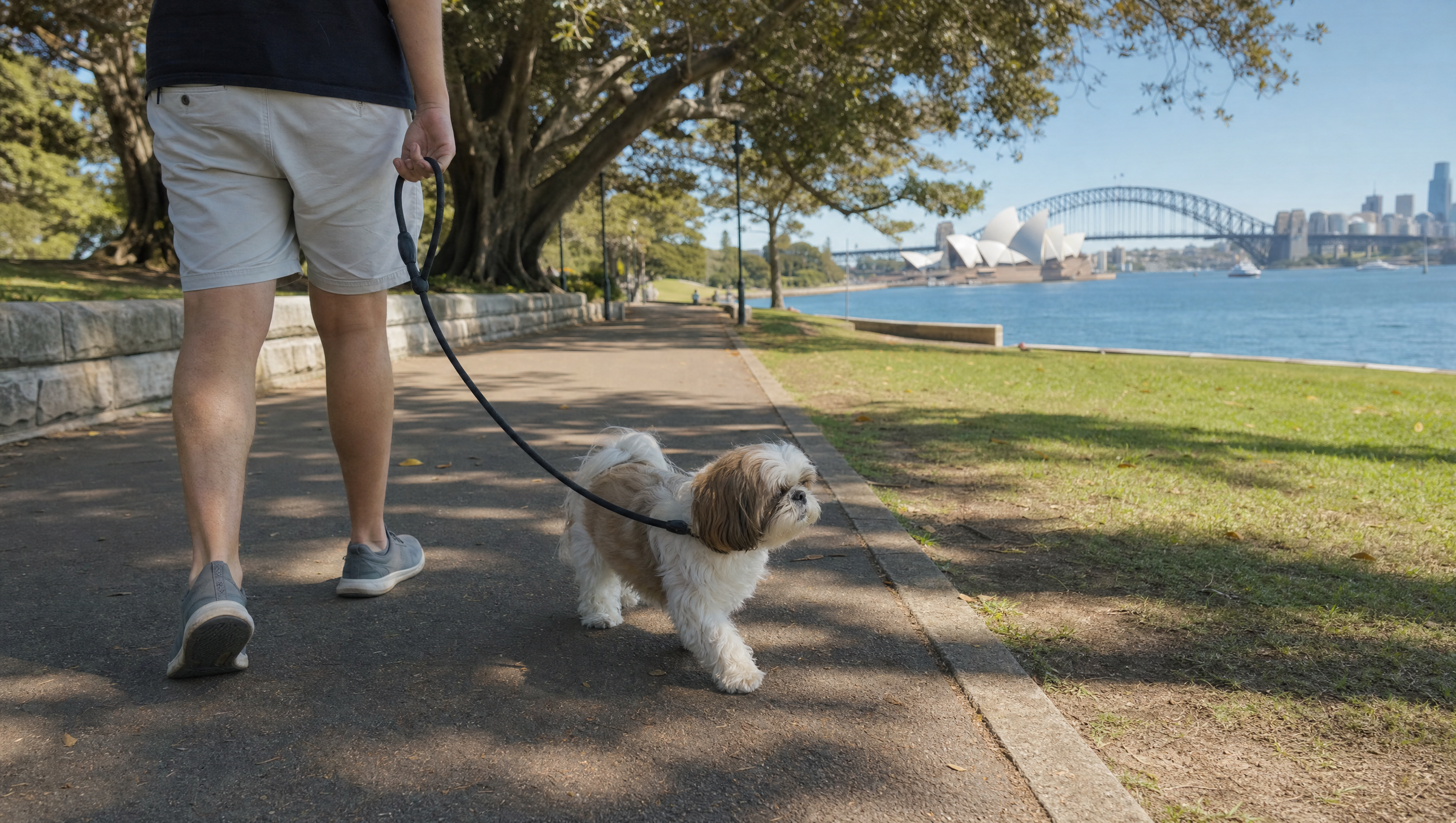
A Shih Tzu needs 20 to 30 minutes of physical exercise daily, split across one or two walks, not a single long outing, small legs and a flat face mean short and frequent beats long and taxing, especially in Sydney's summer heat.
Mental stimulation matters just as much as the walk itself. Scent work, a stuffed food toy, or five minutes of training drills covers what a Shih Tzu needs mentally, and skipping this is usually where the "why is my dog suddenly demanding and barky" phone calls come from.
In the Eastern Suburbs, an early morning or evening lap of Centennial Park or a short walk along the Bondi to Bronte path suits this breed well. Avoid the midday heat entirely given the breathing risk, and keep walks on grass or shaded paths where possible.
Is a Shih Tzu right for you? An honest assessment
The best-fit owner for a Shih Tzu wants a dog that's genuinely by their side most of the day, works from home or brings the dog along often, and is willing to commit to regular grooming, either learning to do it themselves or budgeting for a groomer every 6 to 8 weeks without fail.
The worst fit is an owner who's out 10 hours a day expecting the dog to self-entertain, or someone who wants a low-maintenance coat, because this breed's coat is the opposite of that regardless of what a puppy photo suggests.
If you're unsure whether the commitment fits your routine, my advice is simple: talk to current Shih Tzu owners about the grooming reality before you commit to the breed, not after.
Want help putting this into practice?
The Toe Beans Co runs a free SKOOL community where Sydney dog owners get access to training guides, Q&As, and direct support from me. It's free to join.
Upcoming Puppy Schools in Sydney
I run regular puppy schools at Paddington, Edgecliff, Zetland, Alexandria, Marrickville and Neutral Bay. The Paddington venue at 308 Oxford Street is the flagship, and anyone in Sydney can attend any location.
Check upcoming dates and book your spot
Frequently asked questions
How much exercise does a Shih Tzu puppy need each day?
A Shih Tzu puppy needs short, frequent outings rather than one long walk, aim for two 10 to 15 minute walks a day once fully vaccinated, building toward 20 to 30 minutes total as an adult. Watch for overheating given the breed's flat face, especially during a Sydney summer.
Are Shih Tzus easy to train for first-time owners?
Yes, provided the owner understands this is a companion breed that responds to calm, consistent leadership rather than food-heavy drilling. The Toe Beans Co finds first-time owners do well with this breed once they stop mistaking closeness for compliance and start applying simple boundaries from day one.
Why does my Shih Tzu get demanding or barky out of nowhere?
This is almost always small dog syndrome showing up, attention-seeking behaviour that's been unintentionally rewarded because the dog is small enough to get away with it. It's fixable with consistent, calm boundaries rather than more attention or a firmer tone.
Is there puppy school in Sydney for small breeds like Shih Tzus?
Yes, The Toe Beans Co runs puppy school at Paddington, Edgecliff, Zetland, Alexandria, Marrickville and Neutral Bay, with small class sizes suited to toy breeds who can otherwise get overwhelmed in a larger group.
How often does a Shih Tzu need grooming?
Daily brushing at home and a professional groom every 6 to 8 weeks is the realistic minimum for this breed's double coat, less than that and matting becomes a genuine welfare issue, not just a cosmetic one.