
How to Teach Loose Lead Walking to a Puppy

Most loose lead training starts in the wrong place: on the lead, at the front door, already fighting tension that wasn't there a minute ago. That's backwards. A puppy trying to learn a brand new skill while already stressed by leash pressure is set up to fail before the first step.
Luke Buchanan, Owner of The Toe Beans Co and Sydney's Puppy Trainer, teaches this the other way round: build the pattern off-lead first, then transfer it onto the lead once it already exists. The lead becomes almost irrelevant, because you're teaching your puppy what walking together looks like, and then adding a lead to something they already do.
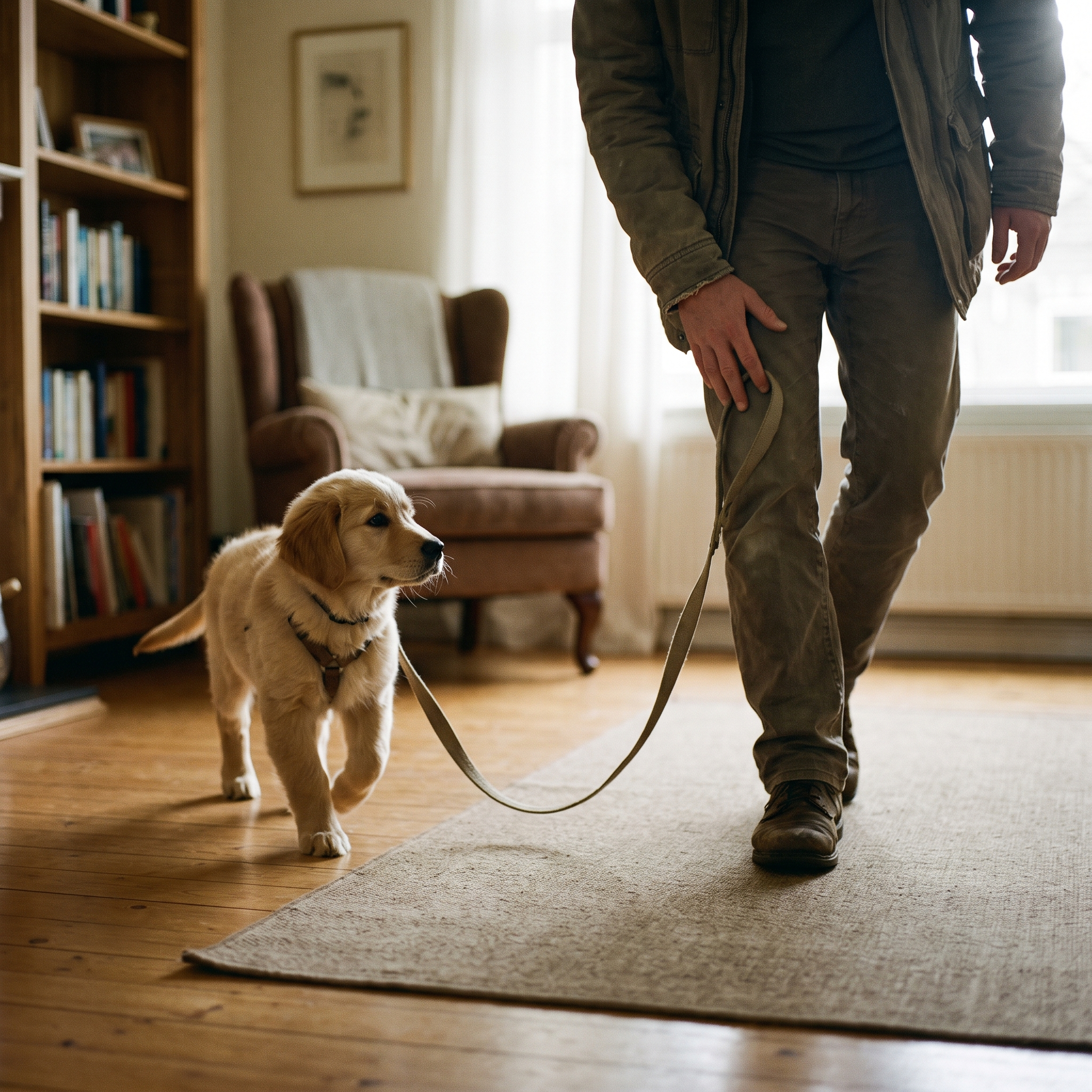
Start indoors, off-lead, with zero leash stress
Pat your thigh, say your cue word, "Walk" works well, and move off. Lure with food at hip height if needed, 5 to 10 paces at a time, then reward. Gradually fade the food lure so your puppy is responding to the thigh-pat cue alone, not the food in your hand.
This phase has no tension in it at all, which is exactly the point. Your puppy can absorb the pattern cleanly: follow the human, get rewarded, repeat. Once that pattern is solid, you're ready to add the lead.
The calm-before-each-step sequence
Don't go straight from indoor off-lead work to the street. Layer in a calm sequence at each stage instead:
- Pick up the lead, show it to your puppy, wait for its energy to settle before doing anything else.
- Attach it to the collar or harness, wait for calm again.
- Walk around inside on the lead until settled.
- Move to the doorway, practise going in and out calmly, you go through first, every time.
- Cross the threshold: stop, start, change direction, you lead the movement, always turning in front of your puppy rather than being pulled past it.
If your puppy struggles once the lead goes on, that's the cue to drop back a step, bring the energy down before continuing rather than pushing through.
Stance and handling rules that make or break this
Keep your puppy on one consistent side, no side-switching. Keep a loose arm and a loose lead at all times, tension in your arm transfers straight down the leash. And if your puppy pulls, turn around rather than continuing forward, the walk simply doesn't progress in the direction the pulling was aimed at. Continuing to walk forward when a puppy pulls is the single most common way owners accidentally reward the exact behaviour they're trying to stop.
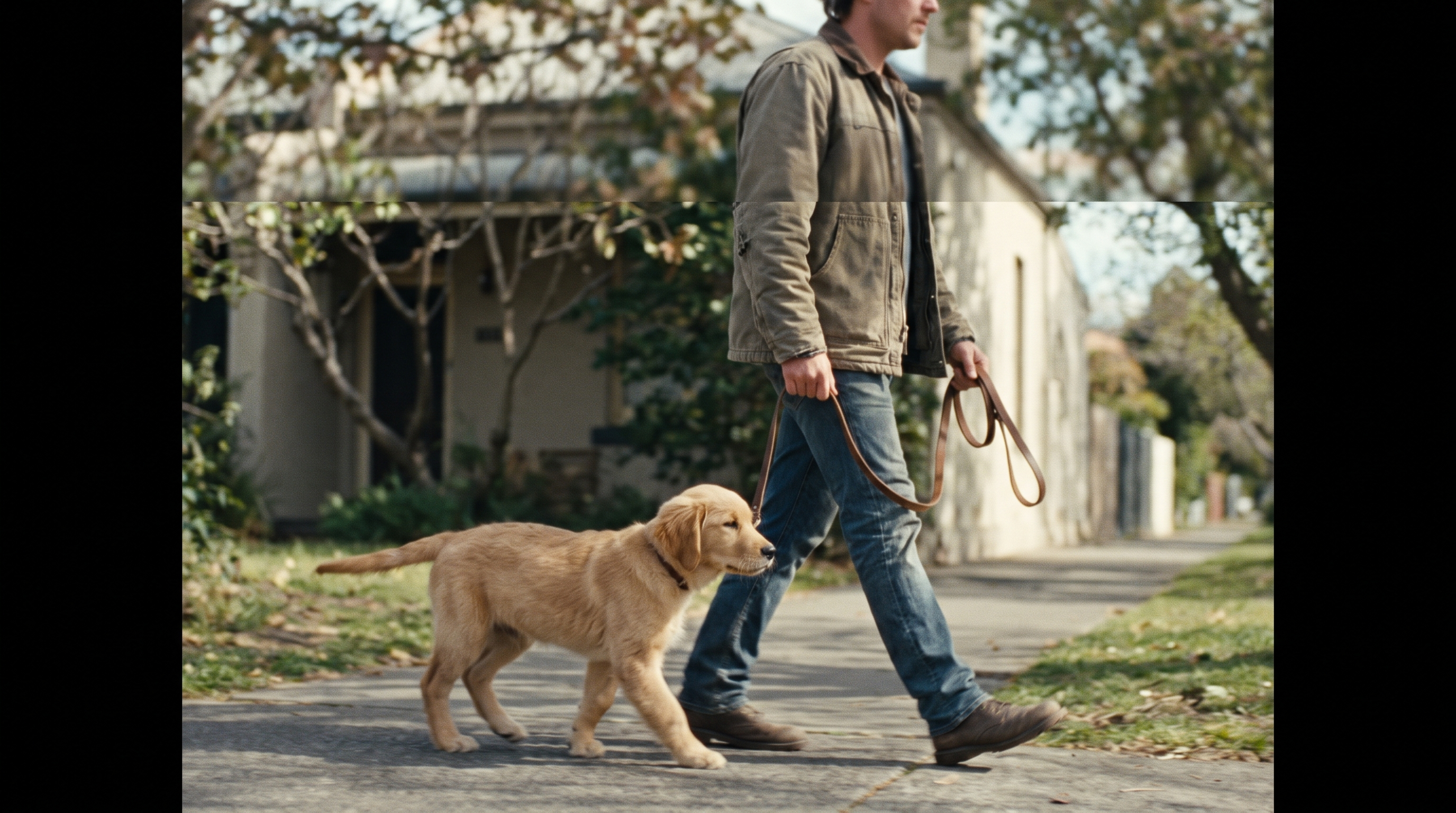
Building duration and distraction-proofing
Progress in small, deliberate increments. Lead, doorway, driveway, roughly 20 metres up the road, then further, each stage calm before moving to the next. A genuine first outdoor "walk" might only be 10 to 20 seconds of controlled movement, and that's a real win.
Build in a two-part structure from day one: structured walking with no self-directed sniffing, followed by a release word, "Go free" or "OK" works well, that signals the unstructured section where sniffing and exploring are allowed, then back to structured on cue. This stops the whole walk turning into one long negotiation, your puppy learns walks have a shape, and freedom shows up predictably rather than something it has to fight for.
If your puppy's energy spikes at any stage, a new distraction, another dog, general excitement, drop back to a calming reset rather than pushing through. Regain calm, then continue.
Equipment worth using
A front-attaching harness is the go-to for known pullers. A long line, around 10 metres, attached to a harness rather than a collar, is for recall and off-lead pattern work, not for the structured walk itself.
Common mistakes
Skipping the off-lead phase entirely and trying to install loose lead walking for the first time with tension already in the picture. Letting your puppy go through the door first, which undoes the calm sequencing before the walk has even started. Continuing to walk forward when your puppy pulls, instead of turning around. Treating the whole walk as one long unstructured ramble with no release cue, so your puppy never learns the difference between "we're working" and "you're free". Pushing for too much distance too soon. And holding the lead with a tense arm or a tight grip "just in case", your puppy feels that tension and mirrors it regardless of what you're saying.
Age and stage guidance
We start this with puppies from 8 weeks, using the same staged sequence, just scaled down further. "Baby steps" is literal at this age, lead in the house, doorway practice, driveway, then a short stretch up the road. Speed of duration-building should stay dictated by your puppy's calmness at each stage. An older dog working on this for the first time follows exactly the same off-lead-first sequence, just starting from wherever its current comfort level actually is.
Want help putting this into practice?
The Toe Beans Co runs a free SKOOL community where Sydney dog owners get access to training guides, Q&As, and direct support from Luke. It's free to join.
If you're in Sydney's Eastern Suburbs, Inner West, or North Shore and want hands-on help with this, the Complete Puppy Program covers loose lead walking from week one, starting with a meet and greet.
Frequently asked questions
Q: Should I start loose lead walking on-lead or off-lead?
A: Off-lead, indoors, first. Build the pattern with zero leash tension in the picture, then transfer it onto the lead once it already exists.
Q: What should I do when my puppy pulls on the lead?
A: Turn around rather than continuing forward. Continuing forward when a puppy pulls is the most common way owners accidentally reward the exact behaviour they're trying to stop.
Q: How long should a puppy's first outdoor loose lead walk actually be?
A: Often just 10 to 20 seconds of genuinely controlled movement. That's a real win at this stage, and duration builds from there.
Q: What age should I start teaching loose lead walking?
A: We start from 8 weeks, using the same staged, off-lead-first sequence, just scaled down. Progress is dictated by your puppy's calmness at each stage.
