
Puppy School vs Private Training: Which Is Better?

Neither format is universally better, and anyone who tells you otherwise is selling one of them. Group puppy school and private one-on-one training solve different problems, and the honest answer depends on what your puppy actually needs right now, not on price or whichever is more convenient to book.
Luke Buchanan, Owner of The Toe Beans Co and Sydney's Puppy Trainer, sees puppy development running on three tracks at once: behaviour, socialisation, and commands. Group school is built to nail one of those exceptionally well. Private training is built for the other two. Most owners pick based on budget rather than asking which track actually has the gap.
When group school clearly wins
If your puppy already eats, sleeps, and settles fine at home, and the real gap is controlled contact with unfamiliar dogs and people before the window closes at 24 weeks, group school is the more efficient spend. It delivers volume of exposure that one trainer and one household simply can't replicate.
It's also the better option if you're budget-conscious and need solid, broad coverage. Group format spreads the trainer's time and cost across several puppies, so it's the more affordable way to tick the socialisation box while picking up basic command exposure, sit, wait, loose lead basics, in a distraction-rich setting. And new owners often benefit just as much from watching other owners work through the same stage, mouthing, toileting accidents, digging, because it normalises a process that can otherwise feel like panic-inducing failure. Twelve to twenty weeks is the critical socialisation runway, and that's precisely the window group classes are built to serve.
When private training clearly wins
If there's already a specific behaviour problem, resource guarding, mouthing that hasn't reduced past sixteen weeks, separation-related crying or toileting, or a household leadership dynamic that's already gone sideways, that needs one-on-one diagnosis. A group instructor can't walk five other families through the fundamentals while also untangling one household's specific breakdown. That's relationship-first territory, and it needs eyes on that specific home.
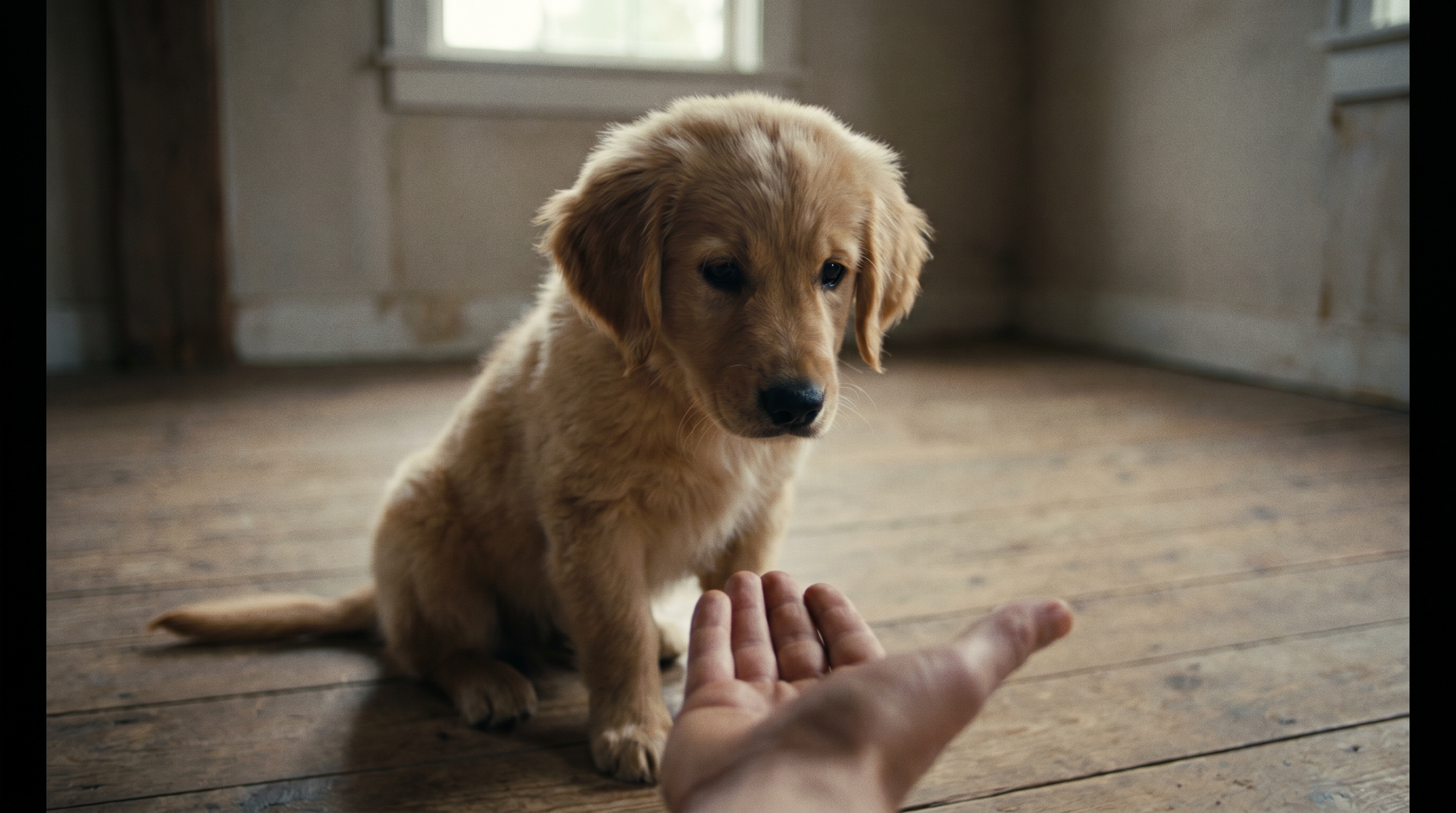
A nervous or under-socialised puppy is the other clear case. Throwing an anxious puppy into a group setting before it has any foundation can backfire badly, since an overexcited or unfamiliar dog crashing a nervous puppy creates fear associations rather than confidence. A private session first, building calm exposure at the puppy's own pace, is safer before any group exposure gets introduced.
Scheduling conflicts and household-specific logistics matter too. Shift workers, multiple pets already in the home, a household that needs training to happen where the problems actually occur, the kitchen, the front door, the walk route, all point toward private sessions, because they go where the problem lives. Group classes only ever happen in a neutral training venue. Multi-dog households and new-baby integration fall into the same category, needing tailored, in-home guidance a group format has no way to deliver.
The mistake most owners make
Treating this as a straight either-or budget decision, "I'll just do the cheaper one," without asking which of the three tracks is actually the gap. A puppy with a leadership problem sent straight to group school gets socialisation, but the issue at home doesn't move an inch. A well-adjusted, social puppy sent only to private sessions misses the volume of peer exposure it needs before the window shuts.
Why our program doesn't make you choose
This is where the honest comparison turns into a straight answer: you shouldn't have to pick. The two formats solve different problems, and a puppy needs both covered before 24 weeks regardless of which tier you book.
The Complete Puppy Program is structured around all three tracks precisely because none of them can be skipped. The private home session addresses the household-specific leadership foundation and any early behaviour signs in the environment where they're actually happening. The group school sessions deliver the volume of controlled, size-matched socialisation that a single household visit physically cannot replicate.
Across our Silver, Gold, and Platinum tiers, every level includes both formats. What scales with the tier is the depth of one-on-one support layered on top of the shared group school foundation. Booking group school alone leaves the home-specific leadership work undone. Booking private sessions alone leaves the peer-socialisation volume undone. The bundle isn't an upsell, it's what a puppy actually needs across all three tracks inside the same window, delivered once, without you having to coordinate two separate providers yourself. The socialisation window closes at 24 weeks and doesn't reopen. A program that guarantees both formats happen inside that window is doing something a standalone class or a standalone private package can't promise on its own.
For more on what group classes specifically deliver, read our breakdown of what puppy school actually costs in Sydney.
Want help putting this into practice?
The Toe Beans Co runs a free SKOOL community where Sydney dog owners get access to training guides, Q&As, and direct support from Luke. It's free to join.
Upcoming Puppy Schools in Sydney
Luke runs regular puppy schools at venues in Paddington, Edgecliff, Zetland, Alexandria, Marrickville and Neutral Bay. The Paddington venue at 308 Oxford Street is the flagship, and anyone in Sydney can attend any location.
Check upcoming dates and book your spot
Frequently asked questions
Q: Is private training worth the extra cost compared to group puppy school?
A: It depends what you're solving for. If there's a specific behaviour problem or a nervous puppy, yes, private sessions address that better. For a healthy puppy whose only gap is socialisation, group school is usually the better value.
Q: Can I do both group school and private training?
A: Yes, and it's usually the better outcome. Our Complete Puppy Program bundles both by design, so you're not choosing between the two.
Q: Which format is better for a nervous puppy in Sydney?
A: Private training first, building confidence and calm exposure at your puppy's own pace, before introducing it to a group setting.
