
What Vaccinations Does a Puppy Need Before Puppy School?

Every new puppy owner hits the same question in the first fortnight: when is it actually safe to start puppy school, and does "vaccinated enough" mean the first shot, the second, or fully done. Wait for full cover and you can lose weeks of a window that closes fast. Jump in too soon and you're taking on real risk. Neither extreme is the right answer.
Luke Buchanan, Owner of The Toe Beans Co and Sydney's Puppy Trainer, works with new puppies from 8 weeks old, which puts this exact question in front of him most weeks. The short version: the socialisation window and the vaccination course are running on two separate clocks, and the job is threading both safely, not picking one over the other.
Disclaimer: This guide is meant to be informative only and applies generally to dogs in Australia. Under no circumstances should this be considered medical or veterinarian advice. You should consult your veterinarian for the specific details of your situation
In Australia, core puppy vaccinations run at 6 to 8 weeks, 10 to 12 weeks and 14 to 16 weeks, while the socialisation window closes at 24 weeks. Group puppy school starts at the second vaccination, not the third, and that second shot is usually given between 12 and 14 weeks, most commonly at 12. Waiting for the final shot costs you a month or more of the window for no safety gain, because almost everything a puppy needs to be socialised to at that age is not another dog.
The vaccination question every new owner asks
Puppies typically get their core vaccinations in a series, commonly starting around 6 to 8 weeks, with further rounds at roughly 10 to 12 weeks and 14 to 16 weeks. The exact schedule, and when your puppy is properly covered, is a conversation for your vet, not a training blog. Every puppy, breeder, and vet practice varies the timing slightly, and getting the actual dates right matters more than any general rule written here.
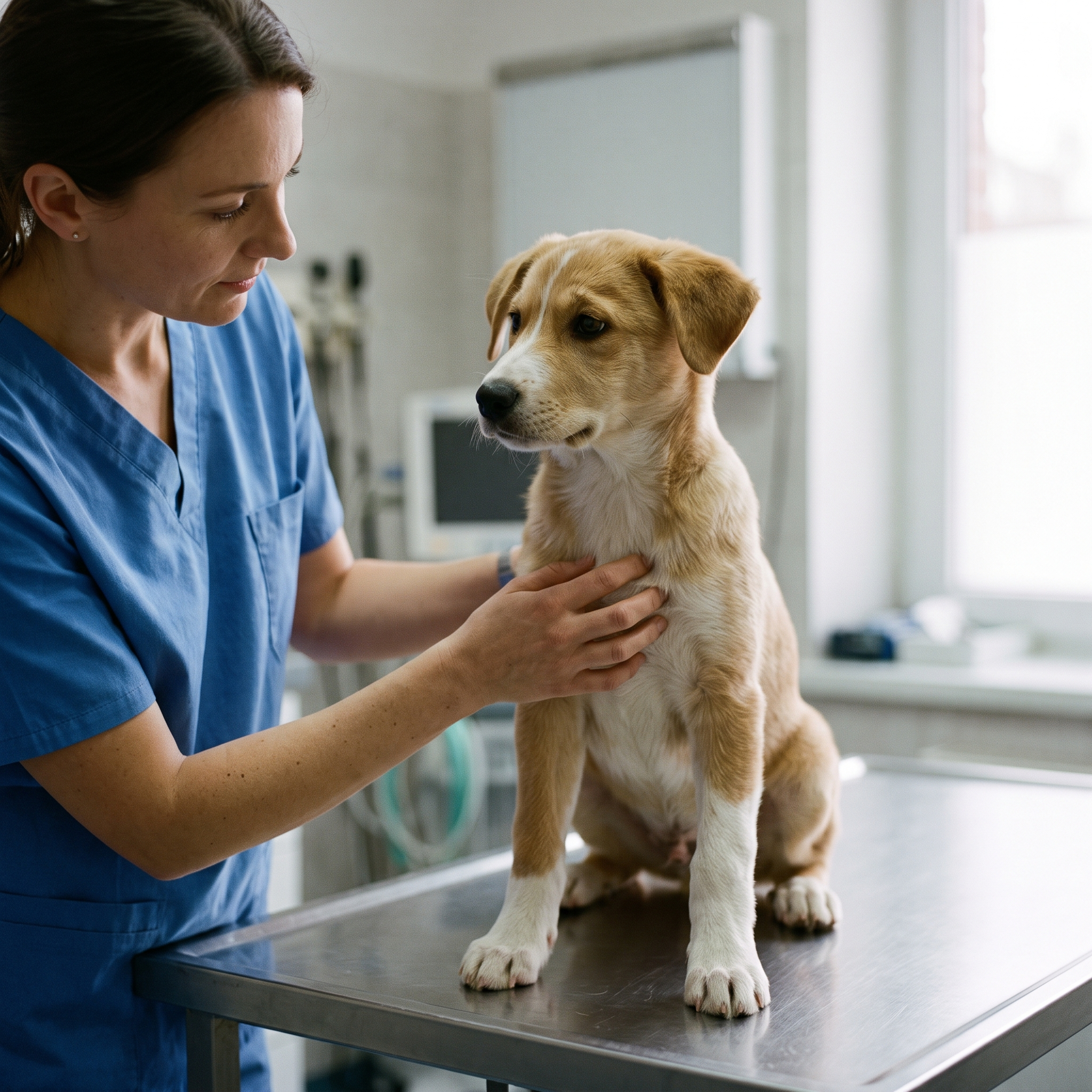
What we can tell you, from the training side, is what to do with the weeks while that course is still running.
Why waiting until fully vaccinated can cost you the window
The socialisation window closes at 24 weeks. That is not a soft guideline, it is the point past which fear-based and reactive behaviours become genuinely difficult to shift once your dog is an adult. If you wait until the full vaccination course is finished, typically somewhere around 16 to 18 weeks, before doing any socialisation at all, you have already used up most of the window doing nothing.
The mistake isn't vaccinating on schedule. The mistake is treating "fully vaccinated" as the starting gun for socialisation, when most of what actually builds a confident adult dog carries no disease risk at all.
What carries genuinely zero vaccination risk
This is the part most owners underestimate. Positive exposure to people of every age and appearance, children, different clothing, hats, prams, umbrellas. Different surfaces underfoot: grass, tiles, metal grates, wobbly things. Traffic noise, vacuum cleaners, doorbells, other household sounds. Novel objects around the house. Calm, positive practice visits to the vet or groomer, before there's a real appointment putting pressure on it. None of this involves another dog, so none of it carries any vaccination-related risk, and all of it can start the day your puppy comes home.
Dog-to-dog contact is the part that genuinely needs care while the vaccination course is still running. Our rule: only let your puppy interact with vaccinated dogs you actually know. We only split groups at genuine weight extremes, a giant-breed puppy paired with a teacup or toy breed, for safety, not by breed or general size. Outside that, a mixed group of breeds and sizes is exactly what builds good socialisation. Never let an overly excited dog crash into your puppy, that builds a fear association instead of a good one, and never call your puppy over just to interrupt play, that quietly damages recall later.
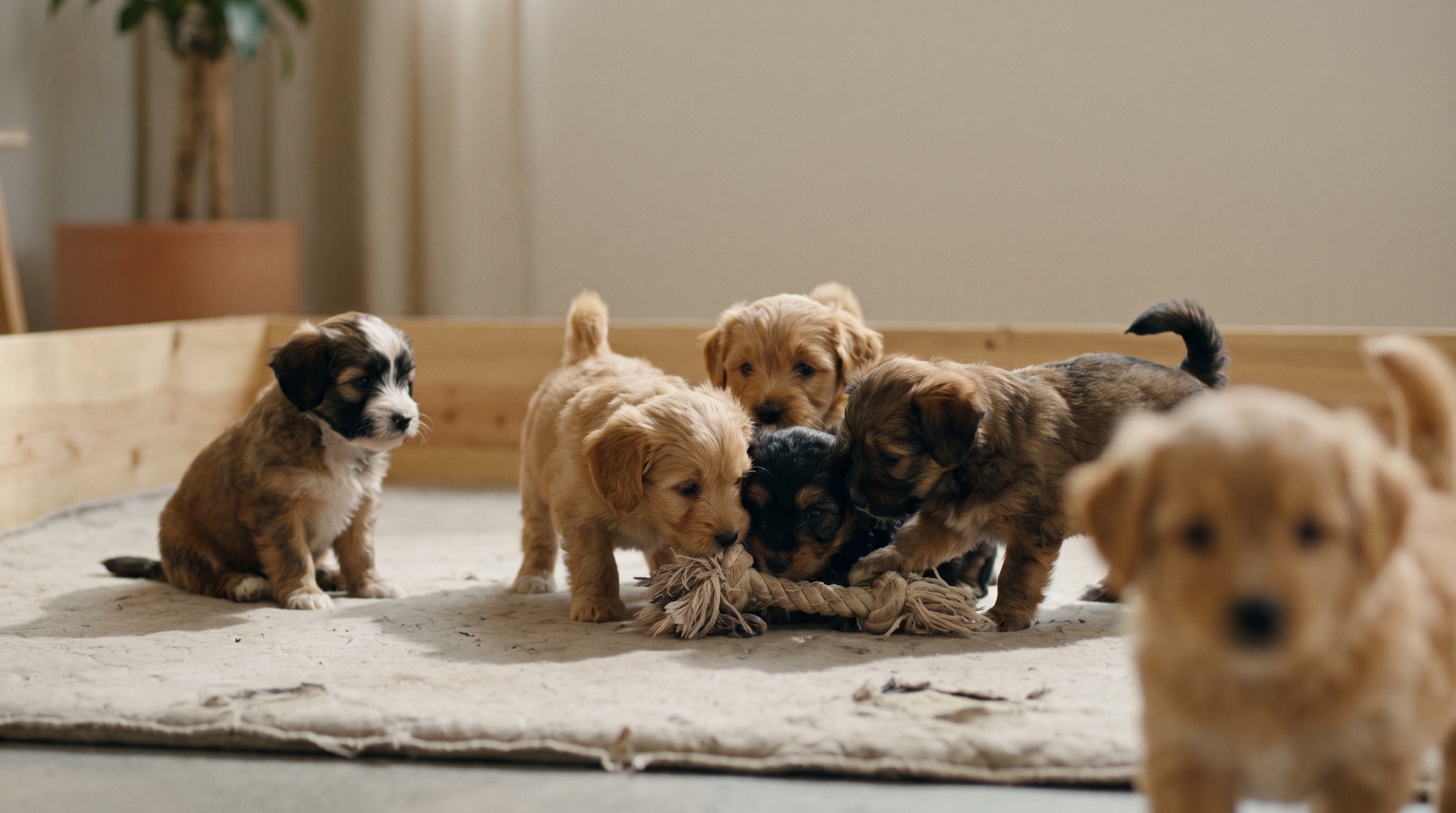
The at-home socialisation checklist for the weeks before the second vaccination
Every item on this checklist carries zero vaccination risk, because none of it involves another dog. That is the whole reason the list exists. These are the weeks between the first shot and the second, and most owners spend them convinced they are meant to be doing nothing at all.
In my sessions, the five-month-old dogs that struggle are almost never the ones who missed a dog park. They're the ones nobody ever picked the paws up on, or the ones who met their first hi-vis vest at six months.
Work through it over a few weeks, not a weekend. Two or three items a day is plenty. One rule governs all four groups: keep your puppy under threshold. Threshold is the point where arousal or worry tips over and calm behaviour stops being possible, so the aim is to stop before you reach it, not after.
Noises
- Doorbell, rung by someone else while you carry on as though nothing happened
- Vacuum, switched on in the next room first, with the door open
- Traffic, from a bench well back from the road
- A thunder recording, played almost silently to begin with
- Hairdryer
How to do it well: volume first, distance second. Start at a level your puppy barely registers, pair it with something they already like (dinner, a chew, a scrap of something good), and stop while they're still relaxed. If they freeze, tuck the tail, or stop eating, it's too loud. Drop back a level and sit there for a few days before you go up again.
Surfaces
- Tiles, the one most puppies slip on first
- Grass, wet and dry, because they feel completely different underfoot
- Timber
- A metal grate
- Wet concrete after rain
- Stairs, two or three steps at a time, never a full flight
How to do it well: let your puppy choose to step on it. Put the surface between you and something they want, then wait. Don't lure, don't lift them on. A puppy that walks onto a grate on its own has learned that grates are fine. A puppy that gets carried onto one has learned nothing, and you won't find out which until you're on a wet footpath in a hurry. Under a minute each, and finish while they're still curious.
Handling
- Ears, lift, look, let go
- Paws, held for a count of two and released before your puppy pulls away, because releasing after the pull is how you teach the pull
- Mouth, lip up, teeth seen, done
- Collar grab, so a hand on the collar predicts food rather than the end of the fun
- Being lifted, both hands, never from behind by surprise
- Being held still on your lap for ten seconds
How to do it well: this is the group owners skip, and it's the one your vet and your groomer will notice. Every touch gets paired with food, and every touch ends before your puppy wants it to. Release on stillness, never on a struggle. Ten seconds a day beats a ten-minute session on a Sunday.
People
- Hats, a cap and something with a wide brim
- Beards
- Hi-vis
- Walking sticks
- Prams
- Wheelchairs
- Children, watched from a distance to start with rather than handled
- Delivery drivers at the door, which is the one most dogs end up with an opinion about
How to do it well: nobody needs to touch your puppy for this to count. Most of it is your puppy watching from your arms, or from a mat, while somebody walks past at a distance, gets a look, and gets a bit of chicken. Ask a friend to put a hat on before they walk in rather than staging anything elaborate. Children are the group to move slowest with: distance, calm, and always your puppy's choice to approach.
None of this needs a vet's sign-off and none of it waits on a second vaccination. It's just the work, and the puppies who turn up to group puppy school having done it are noticeably easier to teach.
How this shapes a good puppy school
This is exactly why a well-run puppy school matters more than open dog parks or footpaths where unknown dogs toilet. An indoor or enclosed space, small known groups, a genuine mix of breeds, and a genuine vaccination check at the door gives you controlled dog-to-dog exposure inside the window, without needing a partially vaccinated puppy anywhere near an unknown dog or high-traffic public ground.
That's why our puppy program runs as follows:
- 1:1 at home sessions can start as soon as your puppy arrives. There are no other dogs involved
- For the group puppy school we require that the second vaccination has been completed (or proof that this is imminent). This is usually given at the 12 - 14 week range (in our experience, this is commonly at the 12 weeks)
- Puppy school runs at six fixed indoor venues, all of them currently taking bookings: Paddington (Dogs in Town, 308 Oxford Street, our flagship), Edgecliff (Dogs in Town, 500 Glenmore Road), Neutral Bay (DoggieLove, 71 Military Road), Zetland (Dogs in Town, 44 Epsom Road), Alexandria (Dogs in Town, 266 Mitchell Road) and Marrickville (Dogs in Town, 55 Addison Road). Each one is a day care space that has been cleaned before we arrive, which is the whole reason we do not run early sessions on public ground
Common mistakes
Waiting for the last vaccination before doing anything at all is the big one, it burns the window for no safety benefit, since most socialisation activities don't involve other dogs. Assuming any dog is safe once your puppy has had one shot is the opposite mistake, vaccination status protects your puppy, not the dog it's meeting. And skipping structure altogether, either extreme of "wait for everything" or "expose to everything", misses the actual answer, which is controlled, known, matched exposure running in parallel with the vaccination course.
When to get professional or veterinary help
Your vet is the right person for the exact vaccination schedule, timing between doses, and when your specific puppy is properly protected, confirm this before enrolling anywhere that involves other dogs. For the training side, structuring socialisation safely around that schedule, choosing a puppy school, or working through a puppy that's already showing early fear responses, that's where we come in.
Want help putting this into practice?
The Toe Beans Co runs a free SKOOL community where Sydney dog owners get access to training guides, Q&As, and direct support from Luke. It's free to join.
Puppy school runs at six fixed venues, Paddington, Edgecliff, Neutral Bay, Zetland, Alexandria and Marrickville, and all six are taking bookings right now. Anyone in Sydney can attend any of them. The 1:1 at home sessions cover all of Sydney within roughly a 45 minute drive of the Harbour Bridge, so where you live decides which venue is closest to you, not whether you can come at all. The Complete Puppy Program starts with a meet and greet.
Frequently asked questions
Q: Can my puppy start puppy school before it's fully vaccinated?
A: Often yes, provided the school runs in a controlled, indoor setting with a genuine vaccination check at the door and small, known groups. Confirm your puppy's specific readiness with your vet first.
Q: What socialisation can I do before any vaccinations are finished?
A: A great deal. People, surfaces, sounds, novel objects, and calm vet or groomer visits carry no disease risk at all and can start the day your puppy comes home, well before dog-to-dog contact is on the table.
Q: Does The Toe Beans Co require full vaccination before joining puppy school in Sydney?
A: All dogs that are attending our puppy school must have completed their second vaccination (or have proof that this is imminent). If for some reason, you are choosing not to vaccinate your dog you will not be allowed onto the course.
Q: What happens if I wait until my puppy is fully vaccinated to start socialising?
A: You risk losing most of the socialisation window, which closes at 24 weeks. Missing it makes fear-based and reactive behaviours significantly harder to shift once your dog is an adult.
