
Why Your Puppy Growls (and What Never to Do About It)

Your puppy just growled. Your instinct is probably to correct it, tell it off, or show it that you're in charge. If you do any of those things, you will not stop the puppy from growling. You will stop the puppy from warning you before it snaps. This is how dogs that bite "without warning" are created. Almost universally, the warning was there. It was punished away.
Luke Buchanan, Owner of The Toe Beans Co and Sydney's Puppy Trainer, regularly works with owners confused by growling. It is one of the most misread signals in puppyhood and one of the most consequential to mishandle. Here's what your puppy is actually telling you, and what to do about it.
A growl is information, not aggression
A growl is a dog's primary distance-increasing signal. It says: "I am uncomfortable. Please stop what you are doing or give me more space." It is the dog attempting to resolve a situation without escalating to physical contact.
By the time a puppy growls, it has usually already sent quieter signals and been ignored. A whale eye (whites of the eyes showing), a stiff body, a lip lick, a sudden freeze, turning the head away. Most humans miss these entirely. The growl is several steps into that sequence, not the opening move.
Aggression, in behavioural terms, is defined by intent to cause harm. A growl is the opposite: it is the dog's attempt to avoid harm by communicating before reaching the point of physical conflict. The dangerous puppy is the one that's been trained not to growl at all.
The four kinds of growling, and what each one means
Play growling
The whole body is loose and mobile. The mouth is open and relaxed. The movements are bouncy, reciprocal, and often include a play bow. This type of growling comes during tug games, chase, wrestling with other puppies. It is motor output during positive arousal, not communication of discomfort. What owners get wrong: stopping play growling out of fear it is a warning growl.
Warning growling
The body is stiff and still. The stare is hard and direct. The growl is low, sustained, and comes from the chest. This is distinctly different in tone to play growling. You will feel the difference before you consciously hear it. This type of growling is triggered by being disturbed during sleep, being handled in a way that feels threatening, a stranger approaching too fast. This is the growl most owners punish. It is also the most dangerous one to punish.
Resource guarding growling
The puppy hunches or lowers itself over whatever it is guarding. There is a direct, fixed stare at the person approaching. Resource guarding is normal behaviour in a dog. This is a deeply wired survival response, not a bid for status or defiance.
Fear growling
The body is low and pulled back. Ears are pinned flat. Tail is tucked. This is a puppy in genuine distress, backed into a corner, communicating that it will defend itself if necessary. The fear response needs to be addressed, not the growl.
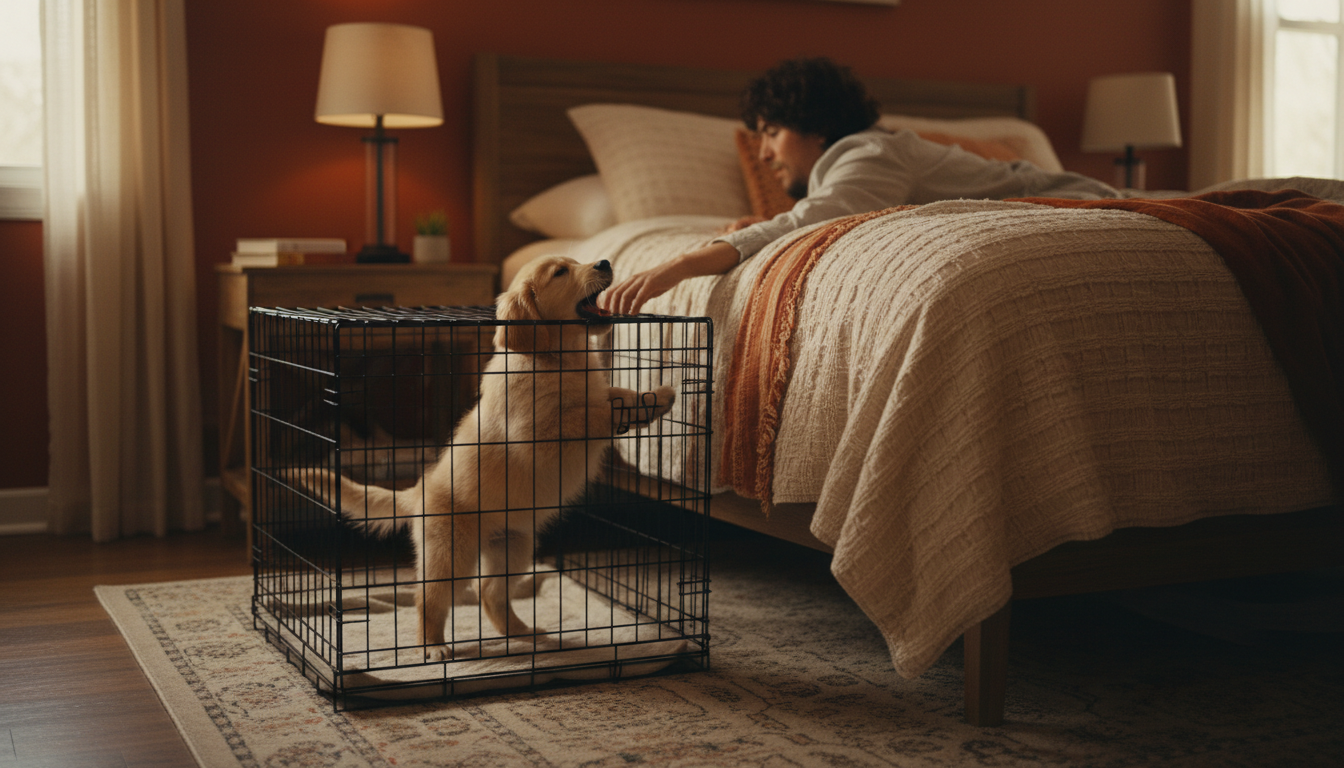
Why you should never punish a growl
Dogs communicate in a sequence. Before a bite, there are almost always warning signals. The sequence runs roughly: calming signals (yawning, looking away, lip licking), body stiffening and staring, growling, snapping, and then biting with contact and pressure.
When you punish a growl, you do not remove the fear, discomfort, or resource concern that produced it. You remove only the growl. The dog's internal state remains entirely intact. The next time that state is triggered, the dog skips from stiffening directly to snapping, because it has learned that growling produces punishment, not resolution. The technical term for this is sign suppression.
This is the mechanism behind dogs that "bite with no warning." The warning was there. Owners punished it out of the sequence. Punishing a growl is like disabling the warning light on a dashboard. The problem that triggered the light is still there. Now you cannot see it.
What to do in the moment
When the puppy growls, the governing principle is simple: remove the trigger, not the response.
Stop what you are doing the instant you hear it. Freeze briefly. Then calmly increase distance. Back away, or if it is a resource guarding situation, move away from the item. Do this slowly and without drama. Remove the trigger if possible.
Do not comfort frantically. "It's okay, it's okay" in a high-pitched voice signals to the dog that you are also anxious. Give the dog space to self-regulate. After a fear or warning growl, cortisol is elevated and it can take twenty to thirty minutes to return to baseline.
How to fix the underlying cause
Fear growling is addressed by working below threshold. Introduce the feared trigger at a distance where the puppy shows no stress response. Pair the presence of the trigger at that safe distance with something calm and positive. Reduce the distance over many sessions, weeks not days. Do not flood.
Resource guarding is addressed through leadership and managed access, never through anything done over the item itself. Confronting a puppy while it is guarding escalates the situation rather than resolving it. In the short term, put high-value chews and prized toys away when nobody is supervising, and feed somewhere quiet where there is nothing to defend. The lasting fix is Golden Rule 4, everything on your terms: your puppy waits to be invited onto furniture, and attention arrives because you called it over rather than because it asked. For guarding around the bowl specifically, Power Gesture Eating from Golden Rule 1 is the main tool. Split the meal into three portions across three bowls in different spots, eat something yourself in front of your puppy before each one goes down, and let the puppy finish each portion before you move to the next. Once somebody else is clearly managing who gets access to what, the guarding has nothing left to attach to.
Warning growling from handling sensitivity is common in puppies that were not habituated to being touched in the socialisation window. Start with parts of the body the puppy accepts readily: back and shoulders. Pair gentle touch with calm praise and high-value treats. Work toward sensitive areas incrementally.
When to call a trainer
A puppy at ten to sixteen weeks with identifiable triggers and no history of snapping or biting is typically addressable at home with the right approach. These are the situations where professional assessment is warranted: the puppy has growled and then snapped or bitten, even briefly. The frequency or intensity of growling is increasing rather than reducing. Growling is happening with no identifiable trigger. Any bite that has broken skin. And if children are in the home and the growling has been directed at them, get a professional involved sooner rather than later.
Want help putting this into practice?
The Toe Beans Co runs a free SKOOL community where Sydney dog owners get access to training guides, Q&As, and direct support from Luke. It's free to join.
Upcoming Puppy Schools in Sydney
If you're based in Sydney's Eastern Suburbs and want structured, in-person guidance for your puppy, Luke runs regular puppy schools at Paddington and Neutral Bay. The Paddington venue at 308 Oxford Street is the flagship, and anyone in Sydney can attend either location.
Check upcoming dates and book your spot →
Frequently asked questions
My puppy growls during play. Is that okay?
Yes. Play growling is a normal part of how dogs communicate. The distinction is in the rest of the body. During play, the puppy should be loose and mobile: wiggly, open-mouthed, bouncy. The growl is motor output during excitement, not a warning. Where to stay alert: if the body language shifts mid-play, the dog goes still, the eyes harden, the movements become deliberate rather than bouncy, that is the session escalating. A short break and a reset is the right move.
Should I let my children near the puppy when it growls?
Not in the moment of the growl. Calmly move the child away from the dog, remove the trigger, and give the dog space. A puppy that growls at a child should be professionally assessed sooner rather than later. The stakes are high enough to warrant expert eyes, even without a history of biting.
Will my puppy grow out of it?
It depends entirely on what is driving the growling. Play growling: yes, it tends to mellow as the dog matures. Fear and warning growling: will not resolve on its own, and typically gets worse without intervention. Resource guarding will not resolve on its own either. Without intervention, a puppy that guards its bowl at ten weeks will guard it more intensely at six months. The window to act is now.
