D
H
M
S
Offer
Provide additional details about the offer you're running
FLASHSALE


Remember: Your Groodle might be unpredictable, but that intelligence and gentle nature make them wonderful dogs. They inherit the best from both parent breeds.
Groodles (also called Goldendoodles) are a modern designer breed originating in 1990s North America. They were created to combine the friendly, gentle nature of Golden Retrievers with the intelligence and low-shedding coat of Poodles.
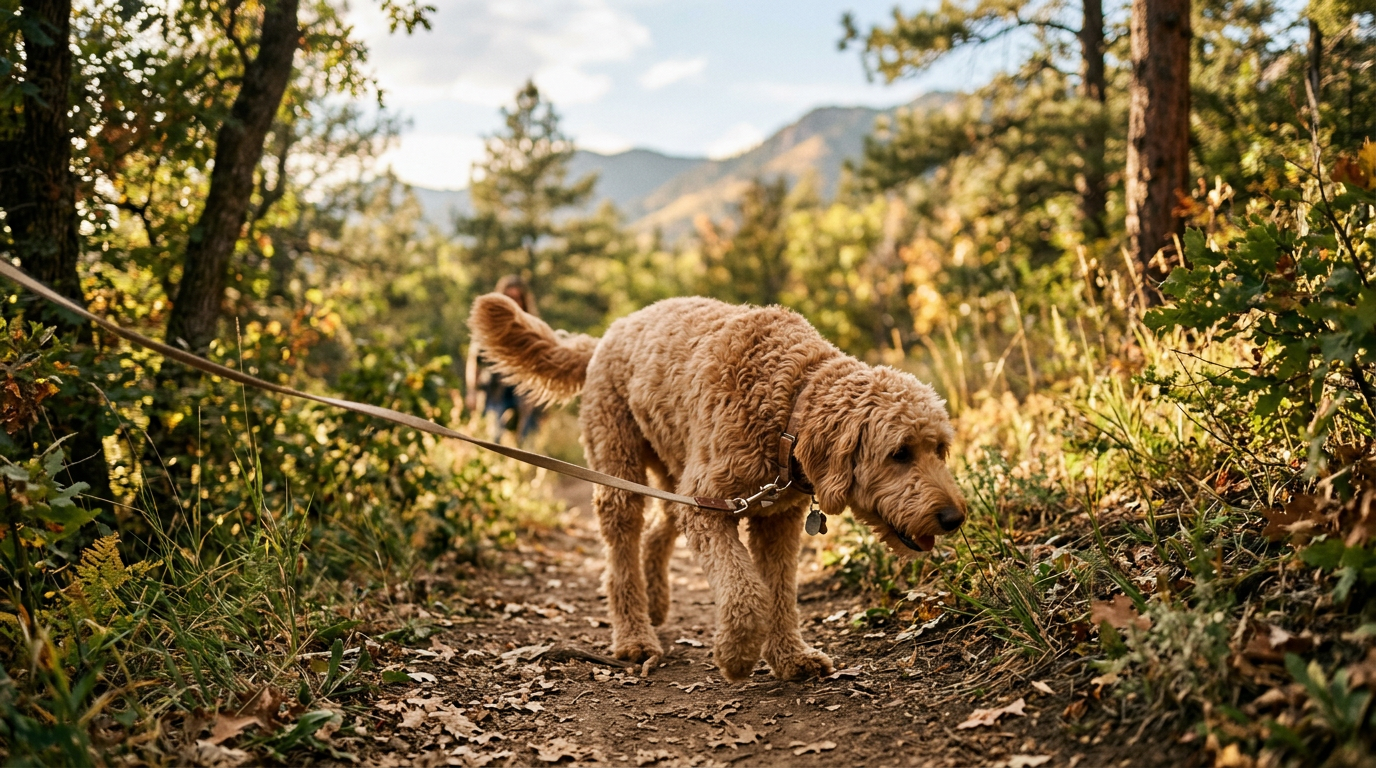
They were originally bred as service and therapy dogs for people with allergies. As a first-generation cross (F1) or multi-generation hybrid, traits vary significantly depending on which parent breed they favour.
What were they bred to do?
Key breeding traits: Groodles have unpredictable trait inheritance creating variation even within litters. They show high intelligence from both parent breeds, high energy and stamina from both working backgrounds, strong human-bonding drive from both sides, coats that require extensive professional grooming (often more difficult than either parent), and tendency towards separation anxiety (inheriting velcro genetics from both breeds). The lack of breed standardisation means behavioural traits vary wildly.
Here's the honest truth: Groodles inherit from two high-intelligence, high-energy working breeds. This creates dogs that need substantial physical and mental stimulation.
Golden Retriever stamina combined with Poodle intelligence is exhausting. The mix creates unpredictability, some get Golden energy with Poodle alertness (an extremely demanding combination), others get Poodle sensitivity with Golden enthusiasm. Trait inheritance is a genetic lottery.
Both parent breeds have intense human-bonding drives. Goldens from retriever partnership working intimately with hunters. Poodles from companion/working partnership requiring constant handler focus. Getting double doses of velcro genetics from both sides creates extreme attachment with no balancing independence traits.
What's happening: Your Groodle jumps on everyone, won't settle down, and seems wild when visitors arrive. You can't predict their energy levels day to day.
Why it happens: Inheriting from two high-intelligence, high-energy working breeds creates dogs that need substantial physical and mental stimulation. Golden Retriever stamina combined with Poodle intelligence is exhausting. The mix creates unpredictability, some get Golden energy with Poodle alertness (extremely demanding combination), others get Poodle sensitivity with Golden enthusiasm.
The fix:
Establish a clear rule from day one. All affection happens only when your dog is lying down and completely calm, muscles relaxed, soft eyes, not just position.
When they jump up or get wild, immediately freeze completely. No eye contact, speaking, or movement for 10 seconds. If they persist, calmly place them in a separate room for 3-5 minutes without a word.
When visitors arrive, remove your dog to another room for 5 minutes minimum. Bring them out only after guests are seated and any vocal excitement has stopped. Keep them on a house lead for control.
Teach them that answering the door is a non-event. Train them to sit before you open the door. Practice this when you leave or when someone arrives.
When jumping occurs, immediately turn your back and fold arms without a word. If jumping persists after two attempts, calmly place them in another room for 3-5 minutes.
Everything valuable, food, toys, going outside, affection, must come after a moment of calm behaviour first. Never reward excited energy with what they want.
Struggling with their unpredictable energy? Our Skool community's weekly live Q&As help you understand whether your Groodle's energy is normal or excessive and how to channel it productively without exhausting yourself.
What's happening: Your Groodle follows you everywhere, panics when you leave, and can't function unless they're near you constantly.
Why it happens: Both parent breeds have intense human-bonding drives. Goldens from retriever partnership working intimately with hunters. Poodles from companion/working partnership requiring constant handler focus. Getting double doses of velcro genetics from both sides creates extreme attachment with no balancing independence traits.
The fix:
Practice numerous mini-departures throughout the day, starting with just 20 seconds. Return without any greeting, eye contact, or touching for 5 full minutes until they're completely calm. You must wait them out.
Never make departures dramatic by picking up keys and putting on shoes only when leaving. Do these actions randomly throughout the day to desensitise the cues (if you're already struggling with separation anxiety).
Practice 20-30 mini-departures on weekends with very short absences, even just to your car and back, to rapidly build the skill.
When you return home and they're excited, freeze completely. No movement, speaking, or acknowledgement until they settle to a calm state. Then quietly invite interaction on your terms.
You cannot exercise separation anxiety out of your dog, but it's important they have sufficient mental and physical stimulation.
Separation anxiety feeling overwhelming? The Skool community offers video demonstrations showing exactly how to implement mini-departures when your Groodle is already in full panic mode, plus troubleshooting when progress stalls.
What's happening: Your Groodle's coat mats constantly, they hate being groomed, and professional grooming is expensive and stressful.
Why it happens: The combination coat (often curly or wavy like Poodle but softer and denser like Golden) requires extensive grooming that neither parent breed needed at the same level. They weren't bred with coat maintenance in mind. Many develop grooming sensitivity if not conditioned early. Mats cause pain leading to handling issues. Their coat often mats more easily than either parent breed.
The fix:
Implement daily grooming routine from 8 weeks old as absolutely non-negotiable. Make it positive with high-value treats given continuously throughout brushing sessions.
Practice handling desensitisation for all body parts weekly. Touch paws, ears, tail, face while feeding treats so they associate handling with rewards.
Keep coat short (1-2 inches) unless committed to daily brushing. Long coats are beautiful but require 15-20 minutes of brushing daily to prevent mats. Most owners underestimate this commitment.
Professional grooming every 6-8 weeks minimum, this is non-negotiable. Between appointments, brush thoroughly every 1-2 days focusing on high-mat areas (behind ears, armpits, tail).
Address matting immediately as it causes pain-based reactivity and behaviour problems. Painful grooming experiences create dogs that bite groomers. Prevention through regular maintenance is essential.
Grooming costs and stress mounting? Our Skool community connects you with other Groodle owners who share strategies for making grooming positive and help you decide whether to keep coats short or commit to the maintenance long coats require.
A Groodle might be perfect for you if you're looking for:
An intelligent, trainable dog - Groodles excel at training. Their intelligence from both parent breeds makes them quick learners.
Excellent with children - They're gentle and patient with kids. Their Golden Retriever temperament shines through with families.
An active companion - If you want a dog for adventures, Groodles deliver. They need 1-1.5 hours of daily exercise and thrive on activity.
Very good with other pets - They generally get along well with other dogs and pets when properly socialised.
Potential allergy-friendly option - While not guaranteed, many Groodles shed less than Golden Retrievers. This isn't universal, though.
Owning a Groodle requires serious commitment to high grooming needs (daily brushing, professional grooming every 6-8 weeks), unpredictable size and traits (especially F1 generation), significant mental stimulation requirements, and substantial costs. They're expensive to purchase and maintain.
This article gives you real, actionable solutions you can start using today. But here's the reality: managing Groodle behaviour challenges takes ongoing work, especially with unpredictable energy, separation anxiety, and grooming needs.
That's why we created our free Skool community, to give you continuous support every step of the way.
Inside the community, you'll get:
Best part? It's completely free. No subscription. No catch. Just dog owners helping dog owners.
Join The Toe Beans Co community today and get the ongoing support you need to build the best relationship with your Groodle.


Join the
puppy school in Sydney