
How to Choose a Puppy School in Sydney: What to Actually Look For

Most owners pick a puppy school in Sydney on whichever one is closest and has the nicest photos of puppies play-fighting on Instagram. Neither tells you whether the weeks you're about to spend there will set your puppy up properly, or quietly build the exact problems you'll be paying someone to undo in a year.
Luke Buchanan, Owner of The Toe Beans Co and Sydney's Puppy Trainer, sees the aftermath of both the good and the bad puppy school experiences in adult dog sessions across the Eastern Suburbs. The pattern's consistent enough to write down as a proper checklist rather than a vibe. If you want the baseline first, we've covered what puppy school actually does for a dog separately.
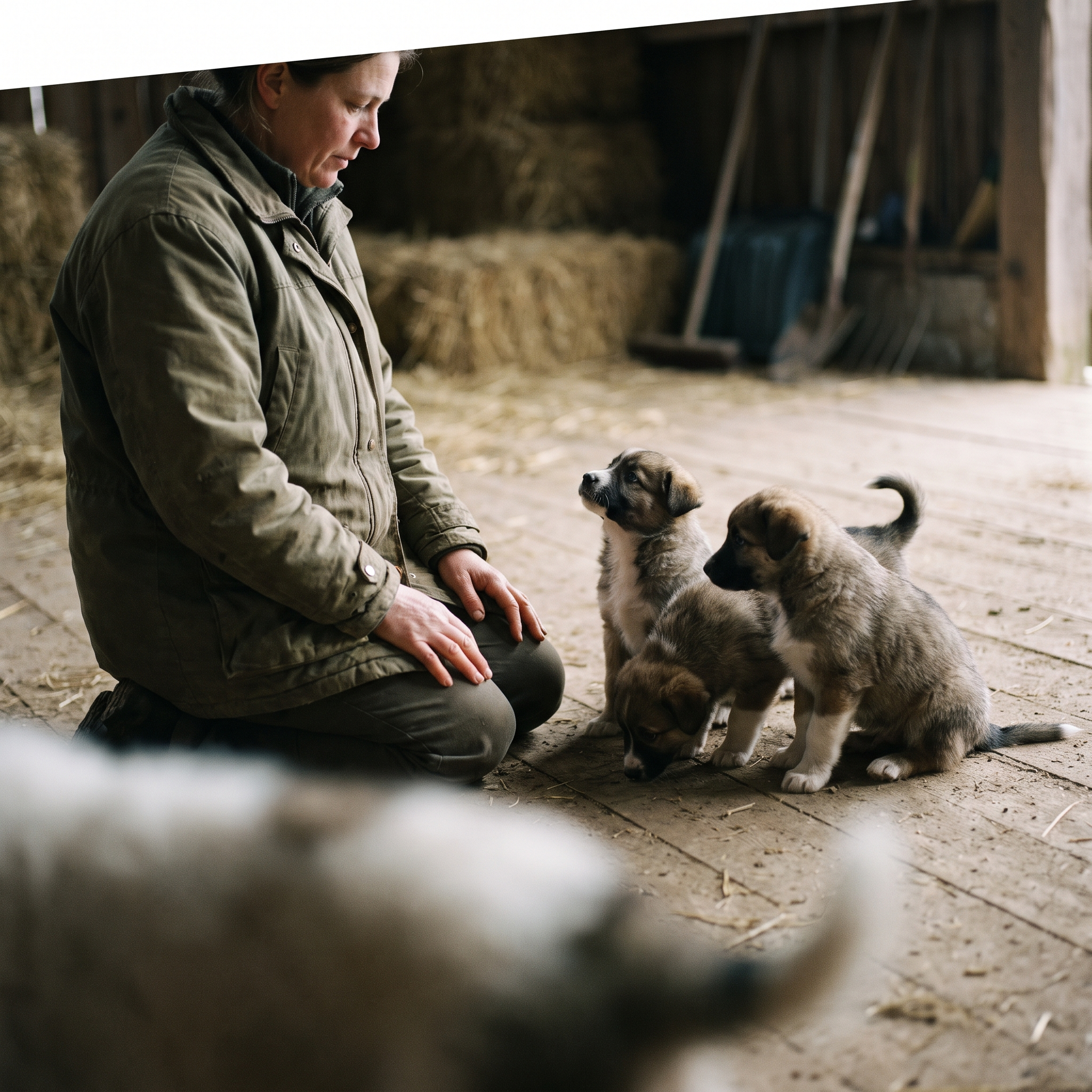
The red flags that should make you walk away
The clearest red flag in any puppy school is aversive handling of any kind: leash pops, physically pinning a puppy, raised voices, or any tool sold as a training aid that works through discomfort. That's Aversive Correction, and it has no defensible place in a room full of puppies. A school that meets fear or over-arousal with something unpleasant is teaching a puppy that the world is unpredictable, at precisely the age meant to teach them the opposite.
Correction-based "showing them who's boss" language is the next one. Describing a puppy as "testing" the instructor, then using that as grounds for a correction, misreads how behaviour actually works. Most problems come from a dog deciding they have to make the calls themselves, because nobody else clearly is.
Breed-restricted classes are worth questioning too. A group that only takes one breed, Cavoodles or doodles only, hands your puppy a very narrow sample of what dogs look like and how they move. Your puppy is learning to read other dogs in these weeks, and reading needs variety.
How a school groups puppies within that variety is a judgement call, and a good instructor will tell you how they make it. Some split only at genuine weight extremes and run mixed groups on purpose the rest of the time. Others separate the super XLs from the teacups and toys as a standing safety rule, on the basis that one paw can weigh more than the whole dog. Both positions are defensible. What matters is that somebody is actively making that call, watching the room, and can explain their reasoning when you ask. In practice the super XLs and the teacups are often well matched anyway: the teacup brings the energy and the XL falls asleep and lets them run all over the top.
No individual attention is another. One instructor "supervising" fifteen puppies with nobody reading individual body language means nobody is managing what's actually being learned in that room, and associations are forming the whole time regardless.
Watch how staff handle a frightened puppy. Scooping them up and soothing them rewards the fear response and confirms there was something worth being scared of. Forcing a hesitant puppy into contact to get it over with does the same damage from the other end. The right response is calm, almost bored energy, which tells the puppy there was nothing there worth reacting to in the first place. We call that making nothing of it, and in my sessions it's the single most useful thing I see a good instructor do.
And watch for a school calling a puppy's name purely to interrupt play. That quietly poisons the puppy's response to their own name, and most owners don't notice until recall starts failing months later.
The green flags worth paying for in a Sydney puppy school
A good puppy school states its methodology plainly and runs force-free, with no correction tools and never punishment dressed up as discipline. Ask how they manage introductions before puppies meet. A school that runs a free-for-all and calls the result socialisation isn't managing anything.
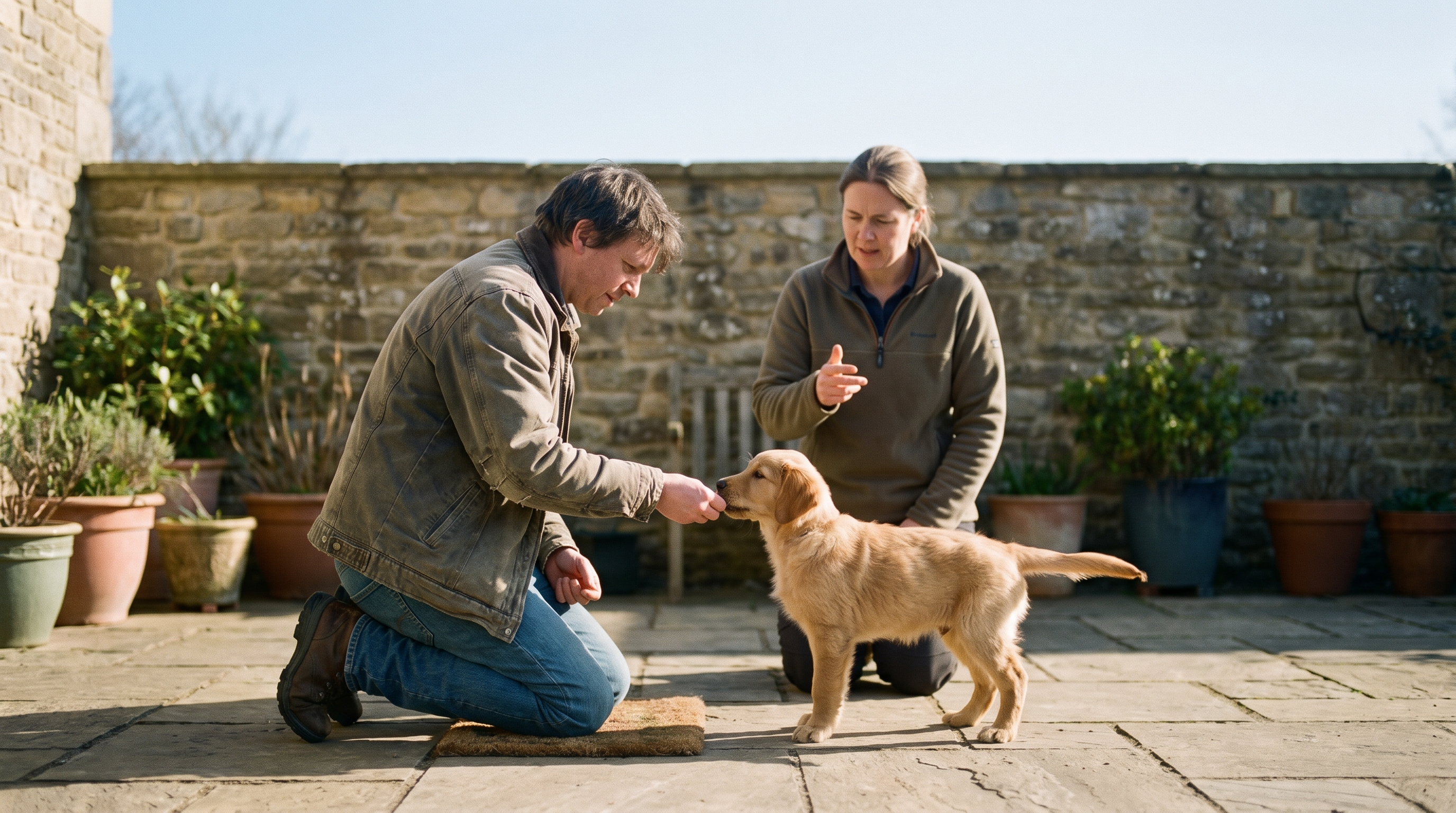
Look for individual coaching inside the group. You want an instructor watching each puppy and stepping in before a bad interaction happens rather than after it. Structured exposure matters far more than raw play time: deliberate introductions to unfamiliar people, different surfaces underfoot, traffic, loud noises, and objects that move in ways a puppy doesn't expect, plus gentle handling practice and positive vet-style and grooming-style handling. Forty-five minutes of puppies bouncing off each other isn't a curriculum.
A good school spends as much time on you as on the puppy. Real programmes build calm, consistent leadership into the curriculum, because none of it holds if you go home and undo the work by accident the same evening. Visible health protocols matter too: vaccination checks and illness screening before puppies mix. If you're not sure what your puppy needs before their first class, we've set out the vaccinations required before puppy school.
Last, a good school is honest about the clock. The socialisation window closes at six months, which is 24 weeks, and a programme that treats a nine-week-old and a twenty-two-week-old identically, with no urgency or structure around that fact, isn't working from what we actually know about how puppies develop. The working target is somewhere around 100 different socialisation experiences before that six-month mark, so it's worth doing the arithmetic on a once-weekly class before you commit to one. The adult dogs I see struggling hardest are almost always the ones whose owners were told there was plenty of time.
One more thing worth holding in your head while you're touring these places. Socialisation is a measure of what your puppy learns in each interaction. The head count is close to irrelevant. A school that maximises how many puppies yours meets while ignoring how those meetings actually go can do more damage than a slower, more structured programme with fewer and calmer interactions.
Where this leaves you
Hold every option against this list, including ours. The Complete Puppy Program starts from 8 weeks and runs week by week to twenty-four weeks, because a single weekly class can't cover leadership, training, energy and consistency together, and those four have to be in place at once for anything to hold. Group sessions are matched and structured rather than free-for-all, and they're run force-free with no correction tools. If you're still weighing group classes against one-to-one work, our guide to dog training classes in Sydney goes through the trade-offs.
Want help putting this into practice?
The Toe Beans Co runs a free SKOOL community where Sydney dog owners get access to training guides, Q&As, and direct support from Luke. It's free to join.
Upcoming puppy schools in Sydney
Luke runs regular puppy schools across Sydney, with venues in Paddington, Edgecliff, Zetland, Alexandria, Marrickville and Neutral Bay. All six are taking bookings, and anyone in Sydney can attend any location.
Check upcoming dates and book your spot →
Frequently asked questions
Q: What's the biggest red flag to watch for in a Sydney puppy school?
A: Any correction-based handling, leash pops, physical pinning, or dominance language. These teach a puppy the world is unpredictable rather than safe, at exactly the age that's meant to build confidence.
Q: Should puppies be grouped by age or by size at puppy school?
A: Whether your dog is a teacup or an XL it is important they are exposed to a variety of breeds and sizes. We do our best to help give your puppy a wide experience but in some instances we will not put dogs together. For instance, a 14 week Mastiff puppy may not be paired with a 12 week old Chihuahua puppy because one paw weighs more than their entire body. Ironically, in some cases teacups and super XLs make a great match. The super XLs are tired from growing and are generally laid back, and the teacups get to run around and get used to giant dogs.
Q: Does a good puppy school only train the puppy, or the owner too?
A: Both. A programme that only works with the puppy for an hour a week and sends the owner home with nothing rarely holds, because the other 167 hours matter more than the class itself. That is why we have our online puppy program: week by week guides, breed specific tutorials, and Ask Luke, which you can put a question to at any time, alongside a support period that runs from one month to twelve depending on your level.
Q: How does The Toe Beans Co's puppy school in Sydney measure up to this checklist?
A: Puppy school is force-free, and we make sure your puppy gets the best and safest exposure to new experiences we can give them.
Q: Is it too late to start puppy school if my puppy is already a few months old?
A: Our puppy school is only available for puppies between 12 and 16 weeks. If your puppy is an XL breed and older than 14 weeks, we can only accept them once we have seen the exact class they would be joining. If your dog is older than 16 weeks we run a Puppy Training program that gives you all the puppy program support but swaps the group puppy school for one to one sessions.
