Most calls I get about Siberian Huskies aren't about aggression. They're from owners standing in a garden looking at a hole under the fence, wondering how a dog that was there ten minutes ago is now three streets away. That's not a training failure on the owner's part and it's not the dog being difficult. It's a working sled breed with almost no domestic job, and the instinct has to go somewhere.
I'm Luke Buchanan, Owner of The Toe Beans Co and Sydney's Puppy Trainer, and I see the same three patterns with almost every Husky that comes through my Eastern Suburbs practice: unmanaged energy, an escape instinct that outruns most standard fencing, and a vocal range that surprises owners who assumed "talkative" meant the occasional bark. None of it is bad behaviour in the sense most owners mean it. It's breed-wired, and once you know which parts are wired and which parts are a training gap, the dog gets a lot easier to live with.
Siberian Husky: what you're actually getting
A Siberian Husky is a working sled dog bred for endurance over distance, not for sitting in a yard. That's the single fact that explains most of what surprises new owners. Expect a dog that needs a genuine hour or more of real physical output daily, not a lap around the block, and a coat that blows twice a year in a way that will cover every surface in the house.
Huskies typically live 12 to 14 years, sit around 16 to 27kg, and carry a double coat built for snow, which means Sydney summers need real management around exercise timing and shade, not just water top-ups. Socially, they tend to be friendly rather than clingy. Most Huskies bond to the household as a whole rather than fixating on one person, which is part of why the breed doesn't always respond to the same one-on-one relationship-building techniques that work well with more single-handler breeds.
Siberian Husky temperament: breed-wired vs training gap
This is the distinction that actually matters, and it's the one most generic breed guides skip. Some things about a Husky are instinct, hardwired by more than a thousand years of selective breeding for endurance and independent decision-making on the trail. Other things that get blamed on "the breed" are actually gaps in structure that would show up in any dog.
| Breed-wired | Training gap |
|---|---|
| Roaming and escape drive, bred to run distance, not stay put | Ignoring recall in the yard, a training and management issue, not a Husky trait |
| Vocal range (howling, talking, chatter), used to communicate across sled teams | Demand howling at the owner, attention-seeking, fully addressable |
| Strong prey drive toward small, fast-moving animals | Reacting to every dog on a walk, an arousal and threshold issue, trainable |
In my sessions, the pattern that trips owners up most is treating the whole first column as something to fix. You don't train the roaming drive out of a Husky. You manage it and redirect it. What you can genuinely change is the second column, and that's where the actual training work happens.
Common behaviour challenges with Siberian Huskies
Three issues account for almost every Husky consultation I run.
Escaping fences and blowing off recall. A Husky going over or under a boundary isn't being defiant. It's an unmanaged roaming instinct with nothing physically stopping it, or the dog hasn't yet been given a reason to believe coming back beats whatever's on the other side. Recall only holds up when the dog trusts the person calling and has been properly taught what the cue means. Trust on its own isn't training.
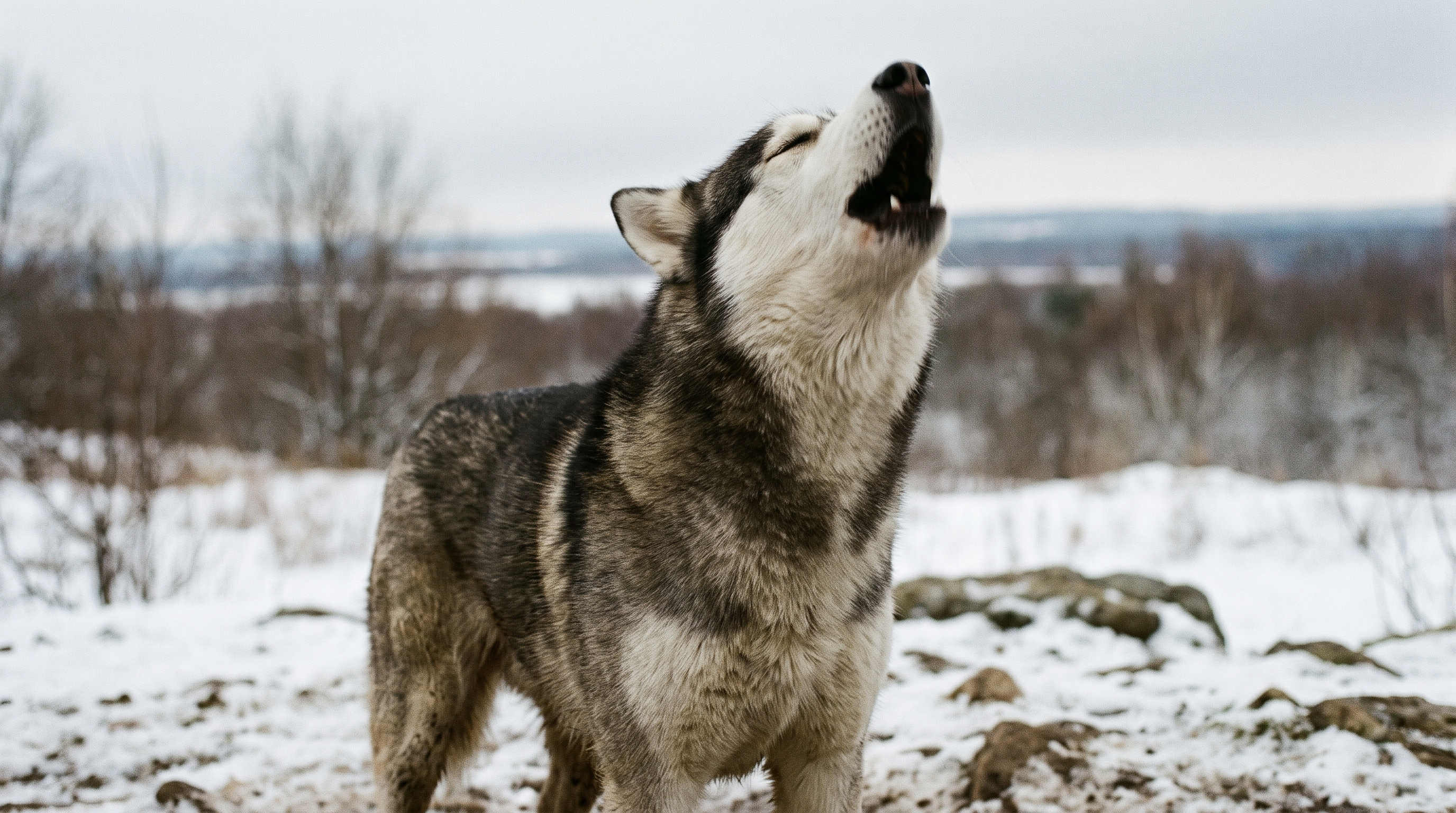
Howling and vocalisation. This is communication, not defiance, and the fix depends entirely on what's driving it. Alert howling, attention howling and left-alone howling are three different problems that need three different responses, not one blanket "stop the noise" fix.
Prey drive around small animals. Chasing or reacting to cats and small dogs isn't one behaviour with one cause. It has to be worked gradually, over weeks, with the setup managed so the dog can only succeed rather than rehearse the chase.
Training a Siberian Husky: what works and what doesn't
A Husky's training response comes down to whether the leadership piece is in place before you ask for compliance. Food-only training runs out of road fast with this breed, because Huskies are typically far less food-driven than a Labrador or a Cavoodle, which is exactly why owners who lean entirely on treats hit a wall.
For the escape and recall piece, physical management always comes first. A secure, Husky-proofed boundary isn't optional while recall is being built. Train recall on a long line, ten metres, attached to a harness rather than a collar, since a line puts real force through the point of attachment. Call once, step onto the line as the dog approaches, take the collar gently on arrival to build a positive association with contact, then reduce line length only once it's reliable at the current distance. Never call the dog toward something it dislikes, a bath, the crate, isolation. Go and collect it instead, or recall breaks down fast in a breed already inclined to keep moving.
For howling, split the response by trigger. Alert howling gets a calm, level "thank you" on the first sound, a walk toward the trigger with a second "thank you" if it continues, then immediate calm isolation on anything further. That sequence tells the dog the situation's been assessed and handled by the leader, so it doesn't need to keep raising the alarm. Attention howling gets total ignore, no touch, no eye contact, no talking, with calm isolation if it continues. Left-alone howling is almost always separation-related rather than boredom, and needs the same consistent response applied to home triggers, since the dog generalises the pattern either way.
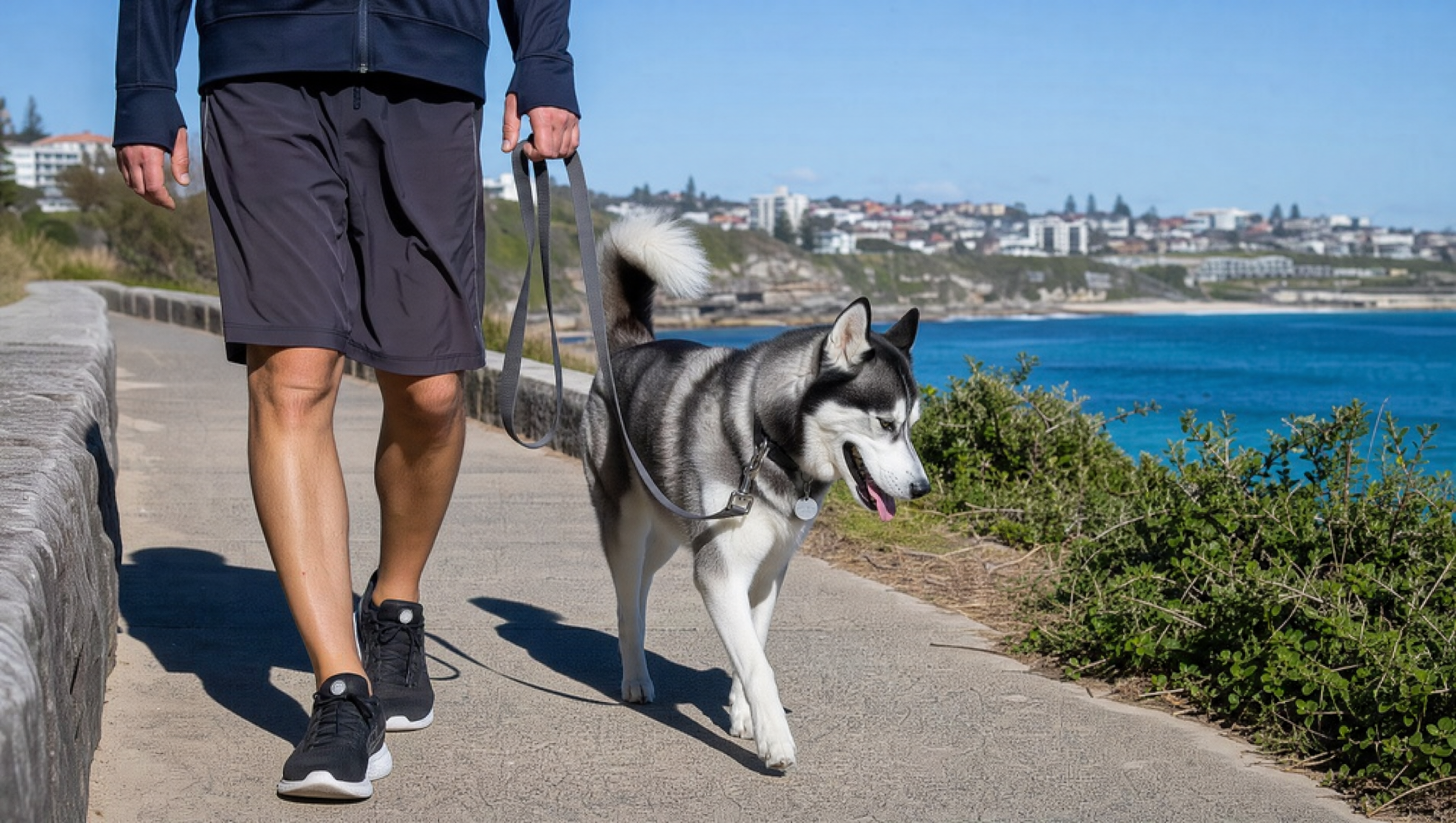
On the walk itself, Stop-Start-Change-Direction works well for this breed specifically because it interrupts the self-directed pulling pattern without a single correction. Stop without warning, start again, change direction, always turning in front of the dog rather than behind it. It keeps the dog checking in with the handler instead of running its own agenda down the footpath.
What doesn't work: raising the food reward instead of addressing the leadership gap underneath it, and reading independence as a character flaw. A Husky that's "ignoring" you usually hasn't been given a consistent enough reason yet to treat you as the one steering. That's a leadership problem to build, not a temperament to fight.
Exercise and mental stimulation needs
Budget for genuine daily output, not a token walk. Most adult Huskies need somewhere in the region of 60 to 90 minutes of real physical activity a day, and on a hot Sydney afternoon that needs to shift to early morning or evening, since the double coat isn't built for midday heat. Mental work matters just as much as distance. Scent-based games, structured training reps, and decompression sniff walks all count as genuine mental output, and a Husky that's physically tired but mentally under-stimulated will still find its own job, usually digging or fence-testing.
Centennial Park's longer loop trails and off-leash areas around Sydney's eastern beaches both suit the breed's need for sustained movement better than a quick lap of a small local park. Whatever the location, the exercise needs to be consistent, not just occasional big efforts on weekends followed by nothing during the week.
Is a Siberian Husky right for you? Honest assessment
Best fit: an owner with a genuinely secure yard, time for 60-plus minutes of real exercise most days, and the patience to work through a breed that won't respond to food bribery alone. Least fit: anyone renting a place with a low or borderline fence, working long hours with no plan for exercise or company, or expecting a dog that stays quiet and settled without daily mental and physical input. If you're unsure which camp you fall into, my honest take is to talk it through before bringing a Husky puppy home rather than after, since most of the problems in this guide are far easier to prevent than to unwind.
Want help putting this into practice?
The Toe Beans Co runs a free SKOOL community where Sydney dog owners get access to training guides, Q&As, and direct support from me. It's free to join.
Upcoming Puppy Schools in Sydney
I run regular puppy school classes at Paddington, Edgecliff, Zetland, Alexandria, Marrickville and Neutral Bay. The Paddington venue at 308 Oxford Street is the flagship, and anyone in Sydney can attend any location.
Check upcoming dates and book your spot
Frequently asked questions
Why does my Siberian Husky keep escaping the yard?
A Husky's roaming and endurance instinct means standard fencing often isn't enough on its own. The fix is physical management (secure, dig-proof, high enough fencing) combined with genuine recall training on a long line, not a single quick fix.
Is it true Siberian Huskies can't be off-lead trained?
No, but recall in this breed takes longer and needs to be built on a long line before any off-lead freedom, because the roaming instinct is strong enough that a half-trained recall will fail exactly when it matters most.
Is there puppy school in Sydney for Husky puppies?
Yes. The Toe Beans Co runs puppy school across Sydney at Paddington, Edgecliff, Zetland, Alexandria, Marrickville and Neutral Bay, and Husky puppies benefit from starting structured training and socialisation early given how quickly the breed's independence sets in.