D
H
M
S
Offer
Provide additional details about the offer you're running
FLASHSALE


You search "puppy school Sydney" and get prices ranging from $80 to $500 for what's described as roughly the same thing. Six weeks of classes. Some sits, some recalls, some time with other dogs. The price gap doesn't make sense until you understand what the gap is actually measuring.
Puppy school cost in Sydney varies for reasons that matter: group size, trainer qualifications, session length, curriculum depth, and what happens when something goes wrong with your specific puppy. A class at the lower end of the range might be a perfectly reasonable introduction to basic commands. It might also be fifteen puppies in a pet store car park with one trainer who runs on a fixed six-week script and can't adjust when your dog isn't responding. Luke Buchanan, Owner of The Toe Beans Co and Sydney's Puppy Trainer, runs small-group puppy school across Bondi, Paddington, and Surry Hills. This post explains what the pricing tiers actually represent, what you should expect at each level, and how to decide what's worth the money for your specific situation.
The Sydney market sits across three rough tiers. These aren't hard lines, but they describe what's typically available.
Entry tier: approximately $80-180 for a 5-6 week block
This tier covers large-group classes, often run through pet stores, council programs, or vet clinics as an add-on service. Group sizes tend to run eight to fifteen puppy-owner pairs per session. The trainer is often working from a standard curriculum that covers sit, stay, recall, and some socialisation time. For owners who want a low-cost introduction and have a puppy that's generally social and easy to handle, these classes can provide value. The problems arise when the group is too large for the trainer to notice what your specific puppy needs, or when the curriculum can't flex around a dog that's struggling.
Mid tier: approximately $200-320 for a 5-6 week block
Smaller groups, often six to eight pairs, run by trainers with formal qualifications. Curricula are typically more structured, with more attention to individual progress. Sessions are usually longer (45 to 60 minutes) with a clearer progression between weeks. Trainers at this tier are more likely to be able to adjust for a puppy showing stress signals, anxiety, or difficulty with specific skills. If you have a puppy that's reactive, nervous, or showing any early behaviour concerns, this is the minimum tier worth considering.
Premium tier: approximately $350 and above for a 5-6 session block
Small groups (typically six pairs or fewer), specialist trainers, and a curriculum that goes beyond commands into owner education. The focus shifts from what the puppy can do by week six to what you understand about your dog's learning and behaviour by the end of the program. Follow-up support between sessions (access to the trainer, homework guidance, and the ability to flag problems as they arise) is what separates this tier from the ones below it. Puppies get one critical socialisation window. What happens in it has a long tail.
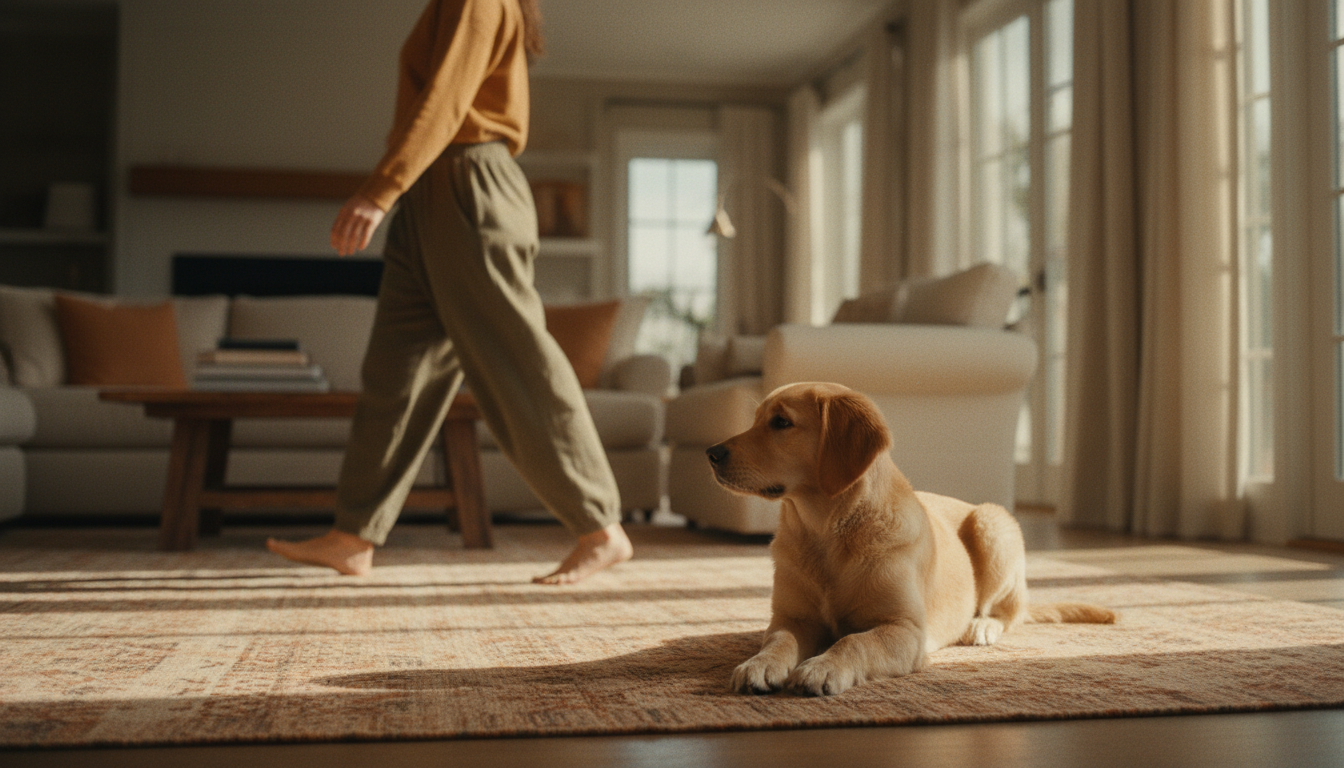
The biggest driver of price is group size, because group size determines what the trainer can actually see.
In a class of twelve puppies, a trainer is managing the room: keeping dogs from overwhelming each other, handling the inevitable on-lead tangles, fielding basic questions from twelve owners simultaneously. There is no capacity to notice that your puppy lip-licked every time another dog approached, or that it's been doing a freeze-and-look-away response that suggests it's heading toward threshold. Those signals are there. They're just invisible at scale.
Trainer qualifications matter, but they're not the whole story. A highly qualified trainer running a class of fourteen does less for your puppy than a well-trained practitioner running a group of five. Ask both questions: how many dogs, and what are your qualifications.
Curriculum depth is the third variable. The difference between a class that teaches sit, shake hands, and recall, and a class that covers bite inhibition, crate introduction, handler education, socialisation protocols, arousal management, and loose lead beginnings, is substantial. One gives you six weeks of exercises. The other gives you the tools to keep training for twelve more years.
Behaviour problems that weren't addressed early are far more expensive to fix than those caught in the socialisation window.
A puppy that develops a fear response to other dogs from an overwhelmed class environment doesn't just present a training challenge. It limits where you can walk, whether you can take it to the beach, whether it can be around the dogs at your friends' houses. Resolving that fear response as an adult dog takes months of careful counter-conditioning work, specialist trainer involvement, and sometimes medication. That's not a hypothetical. It's a pattern Luke sees regularly in one-on-one sessions with dogs whose owners report "they were fine until puppy school."
The parallel argument applies to household management: a puppy that doesn't get crate training right, or whose bite inhibition is left to resolve on its own, creates problems that compound. The cost of the right class in the first twelve weeks is rarely the most expensive part of the decision. The cost of the wrong class sometimes is.
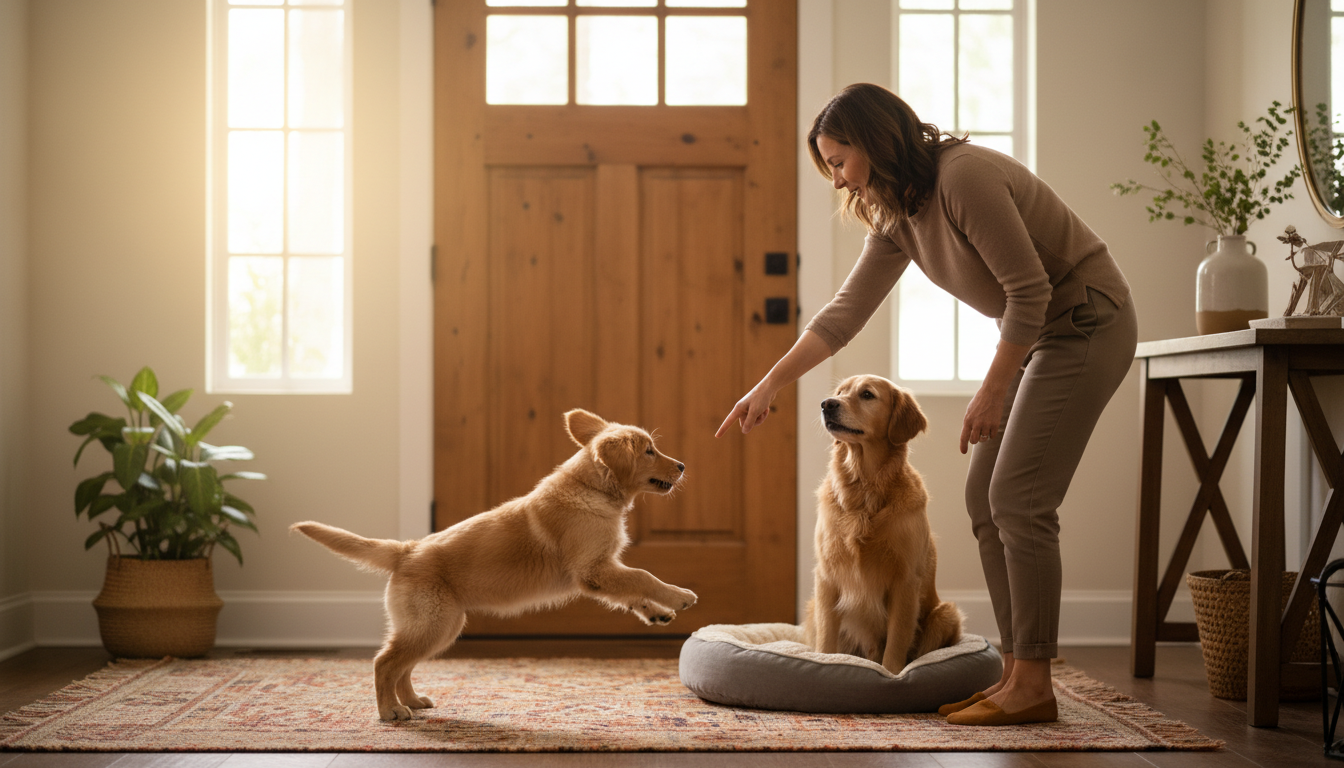
Luke runs puppy school across Bondi, Paddington, and Surry Hills. Maximum six pairs per class, two trainers, and a curriculum built on the Relational Leadership approach: the relationship comes first, commands second.
Session one covers bite inhibition, crate introduction, and settling. These are the three things that make the first twelve weeks liveable for most new puppy owners. From there, sessions build in recall, loose lead beginnings, reading arousal and body language, socialisation work with the other dogs in the group, and homework that extends the work between sessions.
Between sessions, owners have access to the TBC SKOOL community for questions, troubleshooting, and the full written guides from each session's topic. The class doesn't end when the six weeks does.
If you're also working through specific behaviour issues alongside the class, those get addressed directly. Jumping, biting, barking, crate resistance, separation distress: these come up in the context of the class, not as separate referrals.
Pricing and upcoming dates are on the puppy school booking page. Book the meet and greet first if you want to talk through whether the class is right for your puppy before committing.
The Toe Beans Co runs a free SKOOL community where Sydney dog owners get access to training guides, Q&As, and direct support from Luke between sessions. It's free to join.
If you're based in Sydney's Eastern Suburbs and want in-person guidance for your puppy, Luke runs regular puppy schools across Bondi, Paddington, Surry Hills, and surrounding areas.
Check upcoming dates and book your spot →
Q: How much does puppy school cost in Sydney? A: Sydney puppy school runs from around $80-180 for large-group entry-level classes through to $350 and above for small-group specialist programs. The price difference reflects group size (more than anything else), trainer qualifications, curriculum depth, and whether you get support between sessions. Cheaper isn't always worse, but the range is wide enough that price alone tells you very little about what you're getting.
Q: Is puppy school worth the money? A: For most puppies in the socialisation window, yes. What happens in the first twelve to sixteen weeks has a long tail on behaviour and temperament. A class that gets the socialisation and the basic training right reduces the likelihood of the behaviour problems that are expensive to fix later. The question is less "is it worth it" and more "which class is worth it for my specific puppy."
Q: Where can I find puppy school in Sydney's Eastern Suburbs? A: The Toe Beans Co runs small-group puppy school sessions across Bondi, Paddington, Surry Hills, and surrounding suburbs. Maximum six pairs per class, two trainers, force-free throughout. Check upcoming dates and book your spot →


Your puppy has drawn blood twice this week. You've yelped, said "ouch," walked away, used a firm "no." Nothing has...


Join the
puppy school in Sydney