Your six-month-old dog has not forgotten their training. They are testing whether they still have to listen.
This is adolescence. It hits between six and nine months for most dogs, sometimes later for the big breeds. It is the single biggest drop-off point in dog ownership in Sydney, and most owners who give up on training give up here. They feel they have done everything right, attended puppy school, done the homework, and now their dog ignores everything. They wonder where they went wrong.
You did not go wrong. The dog's brain is being rewired. Here is what is actually happening and how to get through it without losing the relationship.
What adolescence in a dog actually is
Adolescence is a neurological event, not a behaviour choice. Between roughly five and eighteen months, with the peak intensity landing in the six to nine month window, your dog goes through a hormonal surge comparable to human puberty. Oestrogen and testosterone flood the system for the first time. The prefrontal cortex, the part of the brain responsible for impulse control, decision-making, and the ability to pause before acting, is in active reconstruction. In practical terms, your dog's executive function is temporarily offline.
This is not a metaphor. MRI work on adolescent dogs shows higher reactivity in the limbic system, the bit that handles fear and arousal, and lower regulation from the prefrontal cortex. Your dog is operating on instinct and emotion rather than learned behaviour, because the part of the brain that holds learned behaviour is under construction.
Alongside this, your dog's relationship with hierarchy is being actively renegotiated. In natural canine development, this is the phase where a young dog tests where they sit in the pack structure. It is biological and entirely predictable. Your dog is not being defiant. They are asking a developmental question. Is the structure I grew up with still the structure I need to operate inside?
The timeline is not permanent. In medium breeds, things often start to stabilise around twelve to fourteen months. In large and giant breeds, full cognitive maturation can run to eighteen or twenty-four months. The six to eight month window is typically the first wave. Intense. Disorienting. The most common drop-off point. The 5 to 12 month development guide breaks down what changes at each stage in more detail.
The four behaviours that show up first
Selective hearing
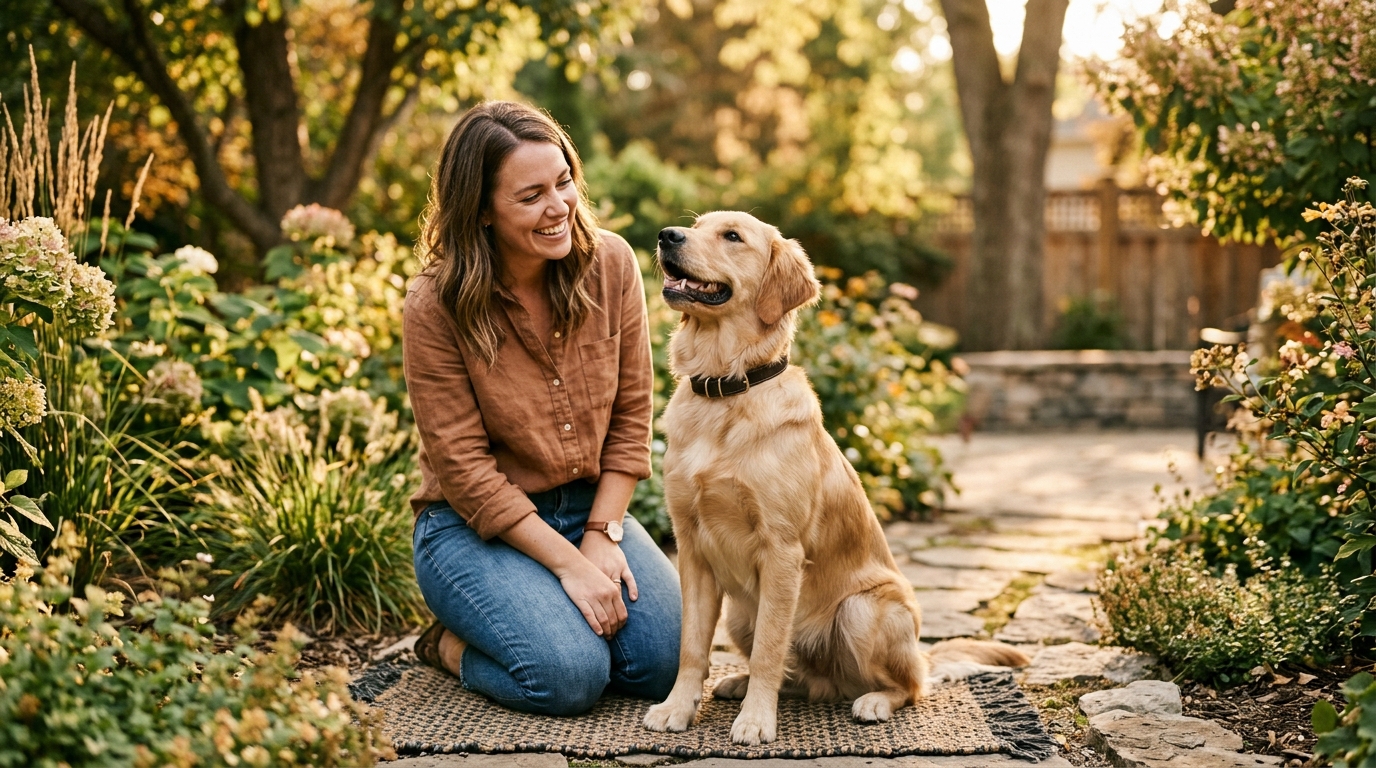
Bella is a seven-month-old Golden Retriever. At twelve weeks she sat reliably every time. Now she will sit in the lounge when nothing is happening, but at the park, in front of guests, or when another dog is near, she stares past her owner as if she has never heard the word.
What is happening. "Sit" was learned in low-distraction, low-arousal environments. It was never truly generalised. Now that arousal is up and the environment is competing for attention, the command has less pull than the environment. Combined with the reduced impulse-control capacity of the adolescent brain, your dog is not choosing to ignore. They literally cannot orient away from the stimulus quickly enough to process and respond to a verbal cue. There is also a quiet test running underneath. Bella is checking whether it is still worth checking in with her owner. If your response to non-compliance is frustration, inconsistency, or repeating the command ten times, the answer she gets is no.
Lead pulling returning
Max is a six-month-old Labrador. He walked reasonably well at fourteen weeks. Short walks, close attention, good treat focus. Now he hits the end of the lead within twenty metres of leaving the house and the walk becomes a constant battle. His owner has started cutting walks short to avoid the scene.
Max is now significantly stronger. The arousal response on hitting the street, all that hormonal energy finding an outlet, overrides the inhibition that kept him close as a puppy. Treat lures that worked at twelve weeks now compete with a dog in a biological drive state. The pulling is not defiance. It is arousal management. Your dog is trying to regulate by moving forward. The relevant technique is the long line combined with a calm stop. The goal is not to out-muscle the dog. The goal is to establish that forward movement only happens when arousal drops.
Recall breaking down
Ruby is a seven-month-old Kelpie cross. She had excellent recall at puppy school. Off-lead in a fenced yard she came reliably. Now she blows off recall the moment something is more interesting. Another dog, a person, a smell. She returns eventually. On her own terms.
Recall relies on you being the most compelling option in the environment. At twelve weeks, a puppy is wired for proximity to the human. That dependency fades in adolescence. Ruby's world has expanded. You are now familiar, and therefore less novel. The hormonal flood amplifies social drive. Other dogs are dramatically more interesting than you. Inside Relational Leadership, Ruby has not lost her recall. She has concluded, based on current evidence, that returning to you is not the most rewarding option. That is a relationship signal, not a training failure. The long line is the key tool here. It removes the failure opportunity while the relationship is being rebuilt. You cannot proof a recall that does not yet exist. The full recall training breakdown covers how to rebuild it step by step.
Reactivity emerging
Oscar is a six-month-old Border Collie cross who has been fine around other dogs his whole life. Attended puppy school. Played well. No issues. Now he barks and lunges at dogs on lead, and his owner cannot understand what has changed.
Dogs go through sensitive developmental windows, stretches where they become more sensitive to novelty and things that did not bother them before suddenly do. It is driven by the same neurological change. The limbic system is heightened while the regulatory prefrontal function is reduced. A dog with no obvious fearfulness as a puppy can become reactive seemingly overnight. The fear threshold has temporarily lowered. Puppy socialisation did not inoculate Oscar permanently. It gave him a baseline. The adolescent phase needs a different kind of exposure work. The reactivity guide covers how to work with a dog at this stage without pushing them over threshold.
Why most owners give up at this stage
Three things converge at the same time.
The effort-to-outcome ratio reverses. Puppy training had immediate visible results. Adolescence makes those results less visible. You put in the same effort and get less compliance. It starts to feel futile.
Your dog is now physically difficult to manage. At eight weeks, a dog who pulls can be redirected. At seven months, a Labrador pulling into traffic is a real physical problem. The gap between the dog's size and your ability to manage them grows at exactly the same time the behaviour deteriorates. Owners say "he is too strong for me now."
The guilt loop. Owners who attended puppy school, did the homework, invested in the early months feel like they have personally failed when their six-month-old ignores everything. That shame often prevents them seeking help. They assume the window has passed and this is just who their dog is.
The result. Owners stop training. They stop enforcing structure. They start managing the dog reactively. Avoiding situations, shortening walks, keeping the dog on a short lead permanently. The relationship drifts. The dog picks up on the frustration. The behaviour gets worse. Almost every adult client at The Toe Beans Co has a dog who hit an adolescent wall and was never brought back through it.
How Relational Leadership handles the testing phase
The reframe is this. Your dog is not regressing. They are testing whether the relationship still holds.
Adolescence is biologically designed to test the structure. In a natural pack, a young dog approaching social maturity needs to understand their position before they can operate confidently within it. The testing behaviour, the non-compliance, the selective hearing, the recall failures, is your dog asking. Is this still the deal? Are you still the one I should look to?
If your response to the test is inconsistency, frustration, or giving up on enforcement, your dog gets an answer. No. The structure is not solid. I need to take responsibility for my own decisions. That is when owners lose the dog. Not to the dog being untrainable. To the dog concluding they cannot rely on you for leadership.
The Relational Leadership position is that this is a feature of the relationship, not a bug. Your dog is giving you an opportunity to reaffirm the dynamic. Passed correctly, adolescence produces a more solid relationship than the one that existed during the easy puppy phase. Because it has been tested and held.
Passing the test looks like this. Calm, consistent enforcement of structure. Not anger. Not punishment. Calm persistence. The five Golden Rules applied without gaps. Your dog cannot be given leadership at home and then expected to defer outside. Your energy becomes the signal. A dog operating in heightened arousal is looking, often unconsciously, for a reference point. If your energy is anxious or frustrated, that confirms there is something to be worried about. If your energy is calm and certain, that creates a counter-signal. Settle. I have got this.
A 30-day plan for a 6 to 8-month-old dog
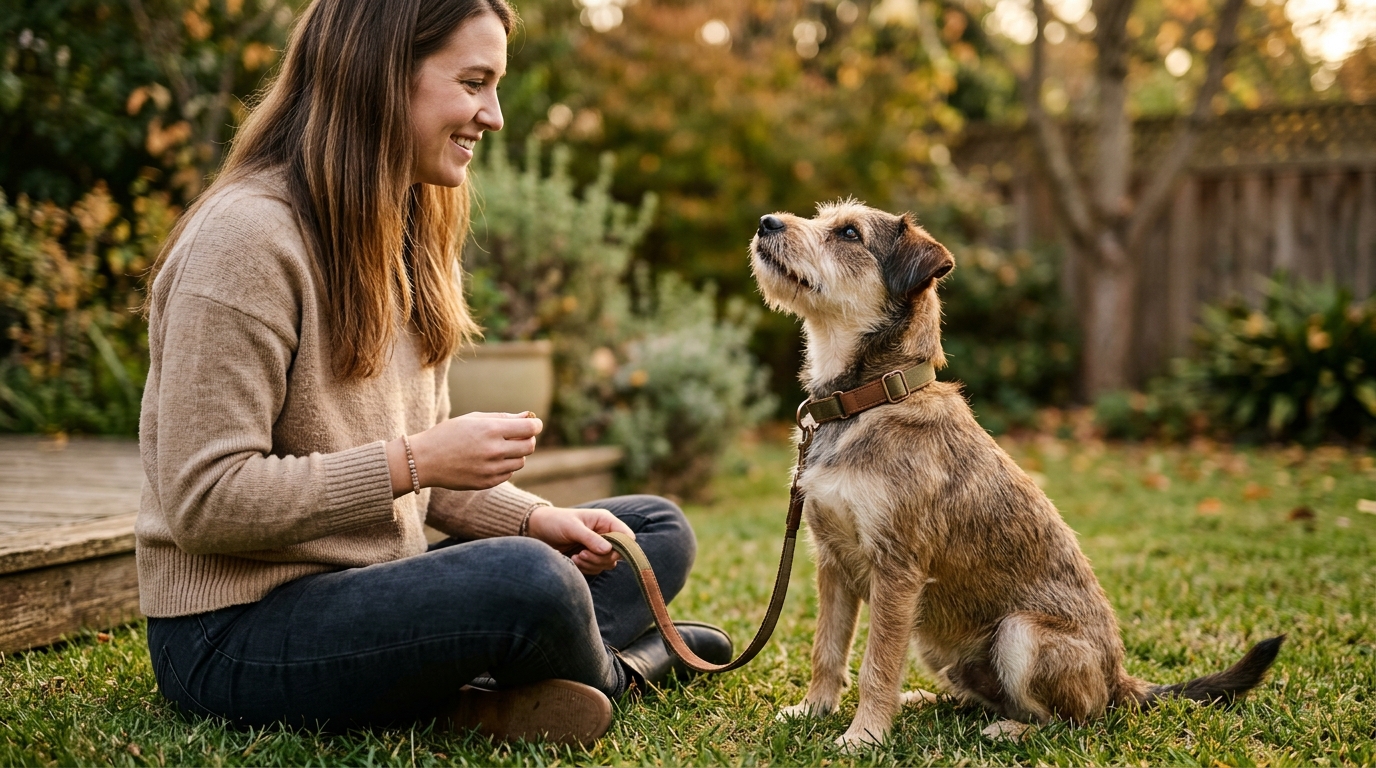
Week 1, reset the structure at home first. Do not start by fixing the walk, the recall, or the reactivity. Start inside the house. Reintroduce the five Golden Rules from the beginning, as if your dog has not seen them before. With the brain rewiring underway, in many ways they have not. No excited greetings. Ignore the dog until all four paws are on the floor. Do not feed until calm. Do not give the bowl to a jumping, spinning, excited dog. Everything your dog values, the garden, the walk, attention, play, is preceded by a moment of calm. Not a trained sit. Just a pause and a drop in arousal. Manage the environment so they are not practising the problem behaviours. If they bolt out the front door, use a lead in the house. If they counter-surf, keep them out of the kitchen. You are reducing the failure repetitions while the relationship recalibrates. The Relational Leadership piece walks through the framework.
Week 2, rebuild the walk. Introduce the long line for all off-lead or semi-off-lead time. No exceptions this month. The calm freeze technique on lead. The moment your dog hits the end of the lead, stop. No words. No jerk. Stop and wait. The moment the lead slackens and your dog checks in, move forward. This teaches the rule in the dog's language. Forward movement is connected to checking in with you. Keep walks shorter than usual. Twenty to thirty minutes of quality beats sixty minutes of practising pulling. End every walk on a calm moment.
Week 3, rebuild recall in controlled conditions. Do not practise recall off-lead in open environments yet. The long line is the tool. Call your dog in low-arousal moments only. Build ten successful repetitions before calling in a slightly higher-distraction context. When they reach you, make it meaningful. Calm praise, brief touch, then release back to what they were doing. Do not always end recall with the lead going on. That teaches them recall ends the fun. Use recall as a check-in, not just a retrieve. Call. Reward the arrival. Send them back.
Week 4, generalise into harder environments. Practise the calm walk in environments where distractions are present, but manage the setup. Earlier in the morning. Quieter parks. Build up gradually. Practise the calm freeze near mild triggers before approaching. If reactivity is present, stay well under threshold. Distance is not defeat. It is the training environment. Reinforce every check-in your dog offers spontaneously. If they look at you without being asked, reward it, calmly. That is the behaviour to build on. Your dog is starting to re-select you as the reference point.
When the Adolescent Program is the right step
The thirty-day plan works for dogs where the behavioural foundation is still basically intact. Your dog is not dangerous. The pulling is manageable. The reactivity is mild. You have the capacity and confidence to implement structure consistently at home.
The Adolescent Program is the right step when:
Your dog is showing reactivity you cannot manage safely. Lunging, sustained barking at dogs or people, difficulty redirecting. These need in-person assessment and technique coaching, not a written plan. Your dog's size has made them physically difficult or dangerous to manage. A 30kg adolescent Labrador bolting at dogs needs a trainer on the ground, not a video. You have tried to implement structure and are not getting results. This usually means a technique issue. The way the calm freeze is being executed. The timing of the timeout. The energy you are projecting. A trainer can see it in one session. You attended puppy school at twelve to sixteen weeks, did the early work, and have had no further contact with a trainer since. The Adolescent Program picks up exactly where puppy school ends. You are losing confidence. You have started avoiding situations, shortening walks, or dreading going out with your dog. When that begins, the problem is already compounding.
The right time to get help is not when things hit breaking point. It is right now, at the first signs that adolescence has started. The earlier the structure is reinforced, the less ground there is to recover.