
Why Your Puppy Goes Feral at 7pm (and How to Fix It)

Every puppy owner knows the pattern. Six or seven in the evening, the dog that was fine an hour ago turns into something else entirely, biting anything within reach, zooming around the lounge room, demand-barking at the cat, unable to settle for more than four seconds. You've tried redirecting. You've tried a walk. You've tried the toy. Nothing works, and the biting is getting harder.
This is the witching hour, and it's real. Luke Buchanan, Owner of The Toe Beans Co and Sydney's Puppy Trainer, sees it in almost every puppy that comes through the programme. The owners are exhausted. The puppy looks unhinged. And the most common advice, "just tire them out more", is actively making it worse.
The witching hour is a real thing
Young puppies run on a tight cortisol and sleep cycle. Cortisol (the alertness and stress hormone) rises through the day as the puppy processes every sound, smell, interaction, and piece of novel stimulus. For a puppy living in a Sydney apartment, particularly in the Eastern Suburbs where foot traffic, city noise, lifts, strangers in corridors, and other dogs on the street are constant, the cortisol load accumulates fast.
By late afternoon, the system is near its daily peak. But the puppy hasn't had the kind of low-stimulation rest that would allow that load to drop gradually. There's been no quiet grazing in a paddock, no unhurried sniffing in a garden. Every interaction has been a deliberate human-initiated event, a walk, a training session, a play session. The nervous system has never fully rested between those events.
So between six and eight in the evening, the whole thing tips. The puppy is simultaneously exhausted and neurologically overstimulated. Their capacity for self-regulation collapses. And because this is a biological cycle tied to light, feeding, and the day's activity pattern, it happens at roughly the same time every day.
What I tell every owner who comes to me about this: the witching hour isn't your puppy misbehaving. It's your puppy hitting a neurological wall. How you respond in those two hours sets the pattern for the next several months.
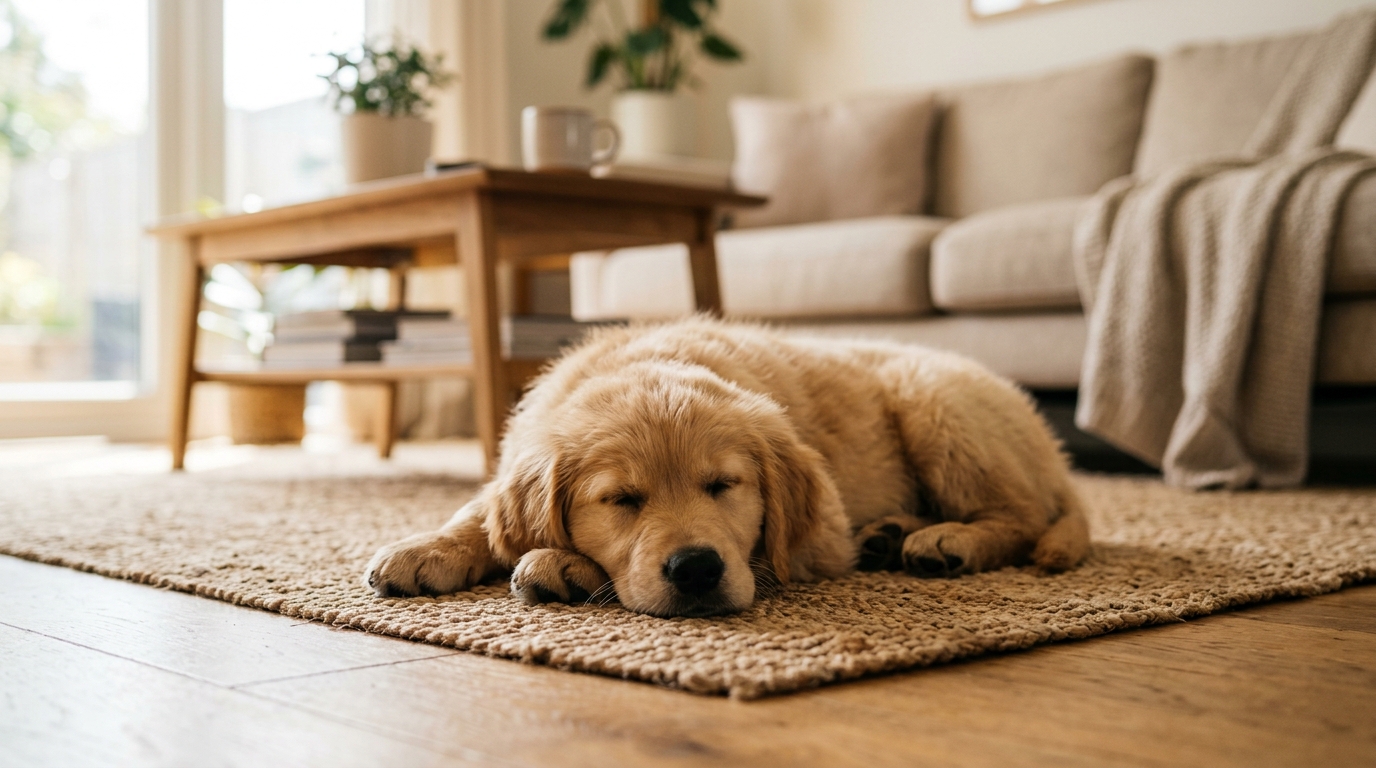
Why overtiredness looks like over-energy
This is the most misunderstood thing about puppies in this state. When a child is overtired, they cry and go quiet. When a puppy is overtired, they go feral.
The reason is arousal threshold. When a puppy is rested and calm, their threshold for reacting to a stimulus is relatively high. They see something interesting and they make a choice about it. But when they're overtired and cortisol is elevated, that threshold drops close to zero. Everything triggers a reaction. A hand moving becomes something to bite. A person standing up becomes something to chase. A noise from outside becomes an emergency that requires an immediate response.
The puppy's capacity for impulse inhibition, already underdeveloped at this age, is effectively offline. What you're watching isn't a dog full of energy. It's a dog that is over-threshold and can't bring itself back down without external structure.
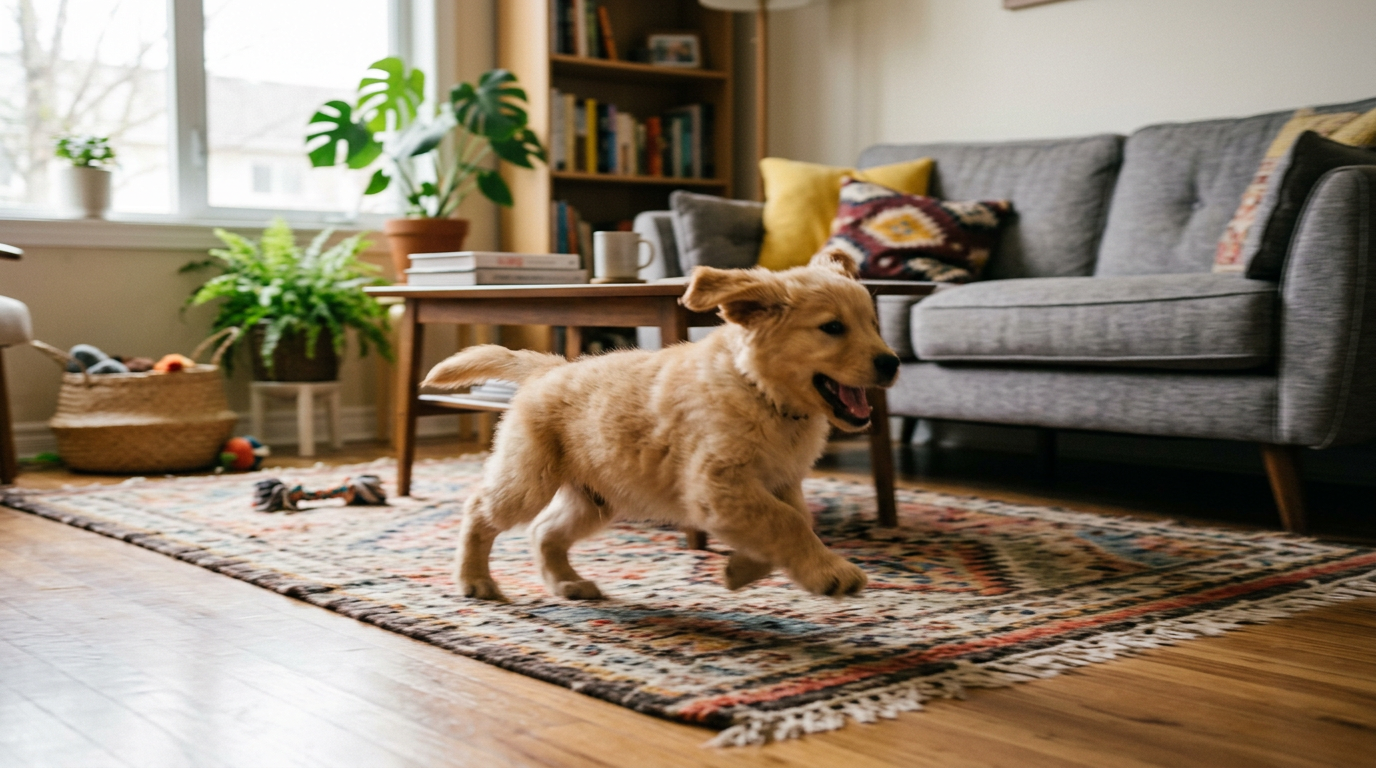
The paradox is that it looks identical to excess energy. Zoomies, biting, spinning, frantic movement, all the hallmarks of what owners interpret as "he just needs to run it out." That interpretation leads directly to the worst possible response.
How owners accidentally make it worse
In my sessions, the single biggest mistake I see at this time of day is owners escalating the arousal level while believing they're reducing it.
More exercise at 7pm. A tired puppy taken for another walk at this hour is not burning off energy. It's adding cortisol to an already saturated system. The arousal level climbs. By the time you get home, the biting is worse than when you left.
Chasing the puppy. When a puppy has the zoomies and an owner chases them through the apartment, the owner has just become the most exciting thing in the room. The puppy's nervous system reads being chased as high-intensity social play. Arousal climbs.
Rough-housing and tug games. Both are excellent activities at the right time of day. At 7pm, they're the wrong tool. Both require arousal to function. The puppy's arousal is already maxed. You're pouring more in.
High-pitched or urgent voices. "No! Stop it! Down!" said in an urgent, sharp pitch sounds to a puppy like excited social engagement. It has the opposite of the intended effect.
All of these mistakes share the same root error: treating an arousal problem as an energy problem, and reading the puppy's behaviour as a request for more stimulation rather than a signal that they need less of it.
The settle reflex (and how to build it)
The settle reflex isn't something puppies are born with. It's a trained skill. Some dogs develop a rough version on their own if the household is naturally calm. For most puppies in an urban environment, it needs to be deliberately built.
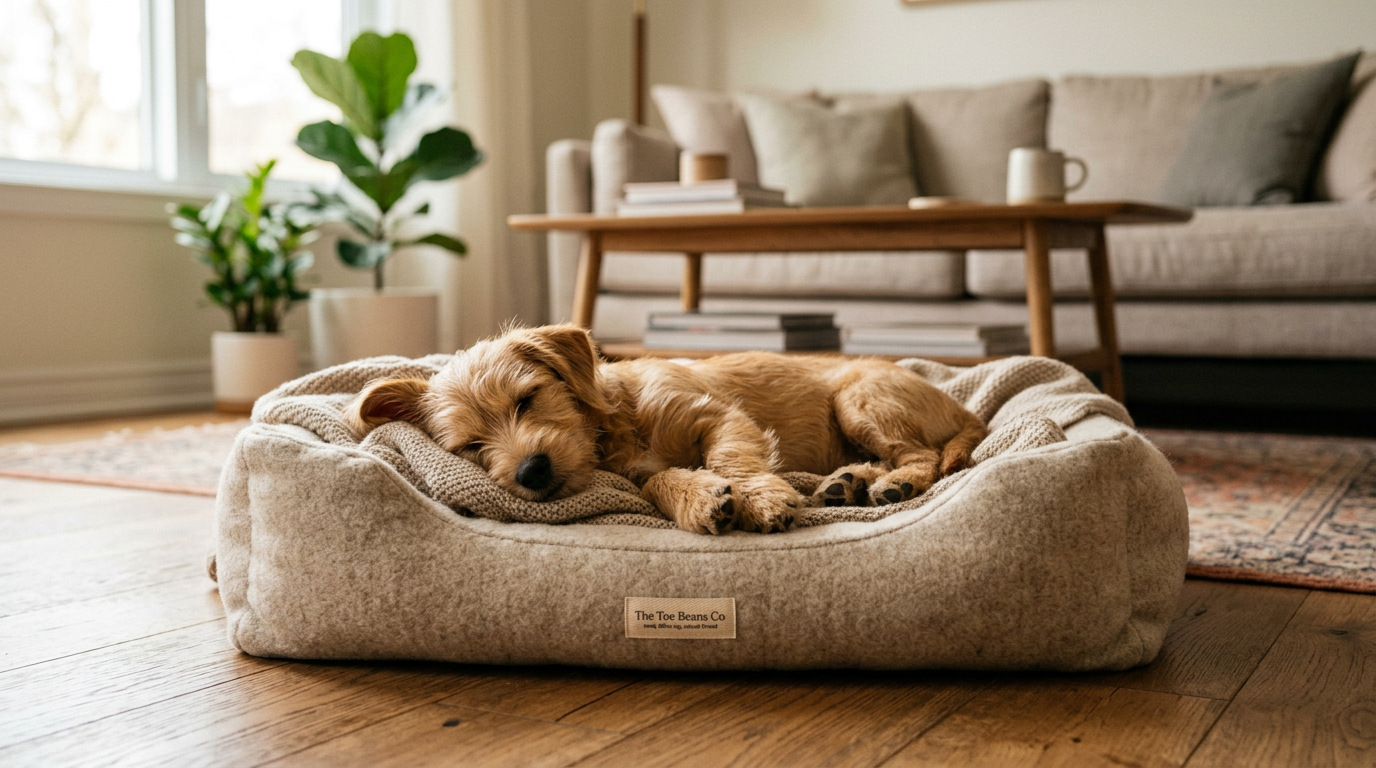
What it looks like when it's working: the dog moves to their mat or bed, lies down, and holds that position even when there's activity around them. Not because they're crated. Not because you forced them down. Because the mat cue has been conditioned strongly enough that going there produces a genuine state of lower arousal. The mat becomes a neurological cue in itself.
Building it from eight weeks: place a mat or flat bed in a consistent location in the main living area. Use positive reinforcement to reward all four paws on the mat. A treat dropped onto the mat while your puppy is on it. At this stage, duration is irrelevant. You're building a strong association between the mat and good outcomes.
Introduce the "place" cue once your puppy is regularly choosing the mat voluntarily. Say the word, guide them there, treat. Then build duration incrementally. Short sessions are what wire the pattern in at this developmental stage. Three minutes of deliberate mat work done consistently beats a single twenty-minute session once a week. The repetition is what matters.
The settle reflex is also a core component of the Complete Puppy Program.
A predictable evening routine that actually works
The puppy's cortisol response is pattern-sensitive. A puppy that has experienced the same sequence of events between 5pm and 8pm every day for three weeks will begin anticipating calm before it arrives. The nervous system genuinely prepares for what it's learned to expect.
The TBC structure for the evening window works like this:
5:00 to 5:30pm, last active session of the day. Keep it short and structured. End it cleanly. Don't let it drift into extended play that bleeds into dinner.
5:30pm, evening feed. Feeding triggers a natural calm response. The digestive system activating draws energy toward it. Use this. It's one of the most useful natural resets in the day.
6:00pm, quiet time begins. This is not crate time unless your puppy needs it. It's the household deliberately dropping its activity level. Television volume lower. Voices calmer. No spontaneous rough play initiated. Your puppy can settle wherever they like, but no one is starting anything.
6:30 to 7:00pm, mat time. Actively reinforce the settle behaviour. A chew or a frozen Kong works well here, it gives your puppy something to do with their mouth and jaw that is self-soothing rather than escalating.
7:00pm onwards, wind-down. If crate training is underway, this is the natural window to crate your puppy for the night. If not, the mat remains the anchor. No more interactions that spike arousal.
The discipline here is as much about the owner as the puppy. When your puppy starts going feral and you have a clear structure ready, you don't get pulled into reactive management. You move calmly to the mat cue. You reinforce the settle. You hold the structure. Predictability is the medicine. Seven to ten days of a consistent evening routine produces measurable change in most puppies, not because they've suddenly developed more self-control, but because the pattern itself has become the cue for calm.
When over-arousal becomes a bigger problem
The witching hour is a developmental phase. Most puppies grow through it with a consistent evening routine in place by fourteen to sixteen weeks. But there are signs that what you're dealing with is more than typical puppy exhaustion.
Biting hard enough to break skin during the witching hour is outside the normal range past twelve weeks. Bite pressure should be getting softer as bite inhibition develops, not staying the same or worsening. If it's worsening, that's worth an assessment.
Redirected aggression, where the puppy, when redirected away from something, turns and bites the handler with clear force and directness, is a different category of behaviour from over-aroused mouthing. It warrants professional eyes.
And if a puppy still can't settle with a calm, consistent evening routine firmly in place past five or six months of age, the issue may be anxiety-based arousal rather than tiredness-based arousal.
Want help putting this into practice?
The Toe Beans Co runs a free SKOOL community where Sydney dog owners get access to training guides, Q&As, and direct support from Luke. It's free to join.
Frequently asked questions
Should I exercise my puppy more in the evening?
No, this is the most common mistake and it makes things worse. The witching hour is an arousal and overtiredness problem, not an energy surplus problem. Adding exercise at 6 or 7pm raises cortisol and extends the over-threshold state. The fix is structured calm, not more activity. If your puppy isn't getting enough physical exercise across the day, address that by adding short sessions in the morning and early afternoon, not by extending the evening.
My puppy bites me only during this time. Why?
Because their arousal threshold is at its lowest point of the day. A puppy that handles stimulation fine at 10am is running on fumes by 7pm. Their impulse inhibition is offline, their cortisol is elevated, and they're reacting to everything. The biting isn't directed at you specifically, you're the nearest moving object. The fix is removing the triggers that escalate the state (no rough play, no chasing, no high-pitched voices) and actively building the settle reflex so your puppy has something to default to when the system tips.
How long before the witching hour stops?
With a consistent evening routine in place, most puppies show clear improvement within seven to ten days and are largely through it by fourteen to sixteen weeks. Puppies with higher drive or those in more stimulating environments (apartments, busy households) can take a few weeks longer. If you're still dealing with the same intensity at five or six months despite a solid routine, it's worth a session to assess whether there's an underlying anxiety component that needs addressing separately.
